
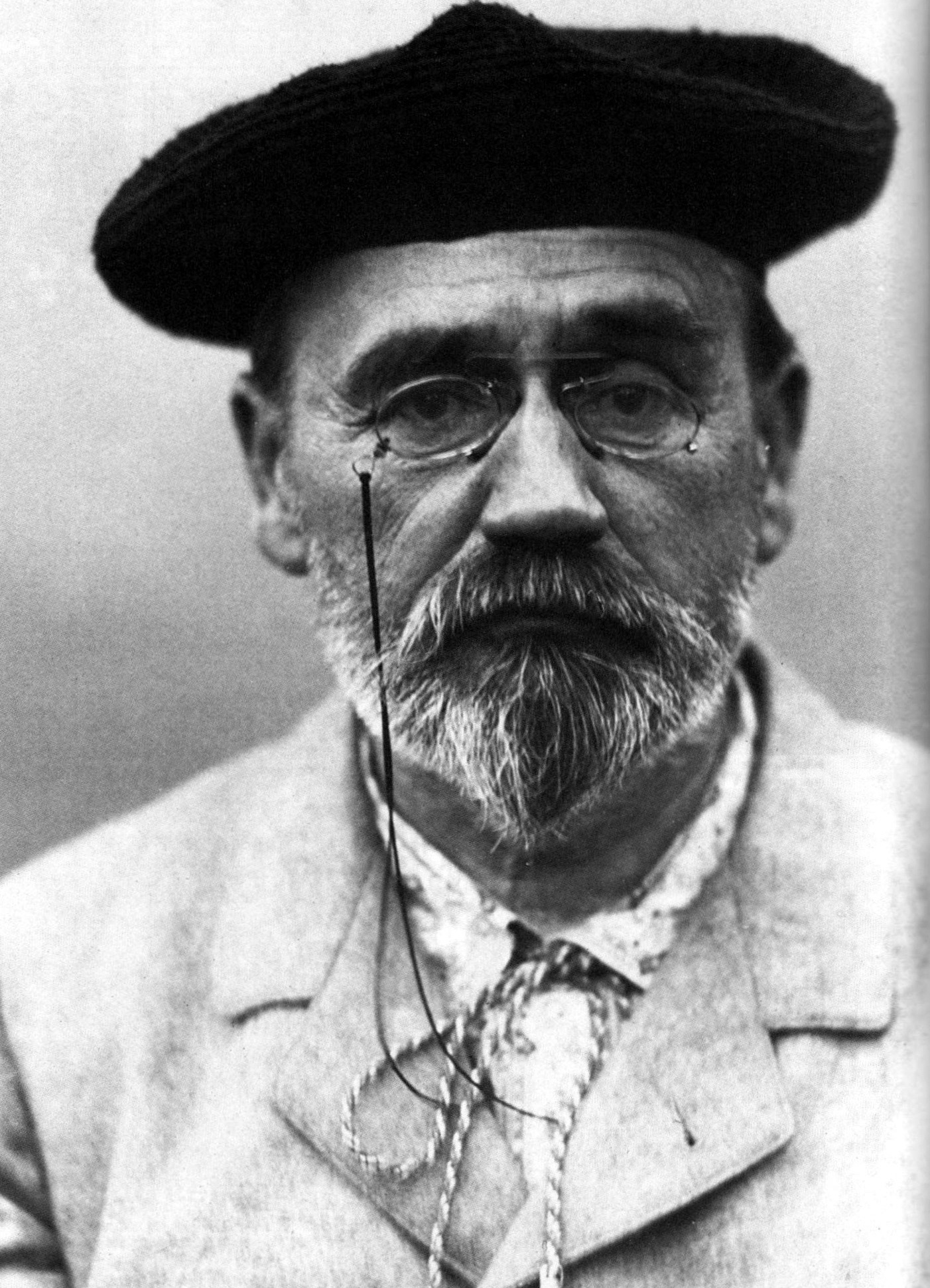
Émile Zola, born on April 2, 1840, in Paris, is widely regarded as one of the most significant literary figures of the 19th century. His contributions to literature, particularly through his development of the naturalist movement, have had a profound and lasting impact on both French and global literature. Zola’s life and work were marked by a relentless pursuit of truth, both in his writing and in his personal convictions, as exemplified by his involvement in the Dreyfus Affair. This article explores Zola’s life, his rise to fame, his literary achievements, and the historical context that shaped his work.
Early Life and Influences
Émile Zola’s early life was one of hardship and struggle. Born in Paris to François Zola, an Italian engineer, and Émilie Aubert, a Frenchwoman, Zola’s family moved to Aix-en-Provence when he was young, where his father worked on the construction of a canal. However, tragedy struck early in Zola’s life when his father died in 1847, leaving the family in dire financial straits. This period of poverty and instability would profoundly influence Zola’s later works, particularly his focus on the struggles of the working class.
Despite the financial difficulties, Zola was able to attend school thanks to a scholarship. He studied at the prestigious Collège Bourbon in Aix-en-Provence, where he formed a close friendship with Paul Cézanne, who would later become one of the most famous painters of the post-impressionist movement. This friendship with Cézanne would have a lasting impact on Zola’s understanding of art and the role of the artist in society.
Zola’s academic journey, however, was not without its setbacks. After moving to Paris in 1858, Zola struggled to pass the baccalauréat exam, failing it twice. These failures led him to abandon his formal education, but they also marked the beginning of his career as a writer. During this time of uncertainty, Zola began to write poetry and short stories, finding solace and purpose in the written word.
Early Career and Literary Beginnings
In 1862, Zola secured a job at the publishing house Hachette, where he worked until 1866. This job provided Zola with the financial stability he desperately needed and allowed him to make connections in the literary world. It was during this period that Zola began to establish himself as a writer, contributing to various literary journals and newspapers, including “L’Événement” and “Le Figaro.”
Zola’s early works were heavily influenced by the realist movement, which sought to depict life as it was, without the embellishments or idealizations common in romantic literature. Zola admired the works of Honoré de Balzac, whose series “La Comédie Humaine” served as an inspiration for Zola’s own literary project, the Rougon-Macquart series. This ambitious series, consisting of 20 novels, was intended to depict the lives of a single family over several generations, set against the backdrop of the Second French Empire.
The first novel in the series, “La Fortune des Rougon” (1871), introduced readers to the Rougon-Macquart family and set the stage for the exploration of themes such as heredity, environmental determinism, and the influence of social conditions on human behavior. Zola’s commitment to depicting the harsh realities of life, combined with his meticulous attention to detail, laid the groundwork for what would become known as the naturalist movement in literature.
The Naturalist Movement and Literary Success
Zola’s development of naturalism was rooted in his belief that literature should be as rigorous and objective as science. Influenced by the positivist philosophy of Auguste Comte and the scientific methods espoused by figures like Claude Bernard, Zola sought to apply the principles of observation, experimentation, and analysis to his novels. He saw the novelist as a scientist of human nature, exploring how factors such as heredity, environment, and social conditions shaped individuals and their actions.
Zola’s most famous works, including “L’Assommoir” (1877), “Nana” (1880), and “Germinal” (1885), exemplify his naturalist approach. These novels delve into the lives of the working class, exploring themes of poverty, alcoholism, prostitution, and labor struggles with an unflinching eye. “Germinal,” in particular, is considered one of Zola’s masterpieces, offering a powerful portrayal of the struggles of coal miners in northern France. The novel’s title, which refers to the seventh month of the French Revolutionary calendar, symbolizes the idea of germination and the potential for social change, a theme that resonates throughout Zola’s work.
Zola’s commitment to naturalism extended beyond the content of his novels to their structure and style. He meticulously researched the settings and social conditions he depicted, often visiting the locations where his stories were set and interviewing people who lived and worked there. This dedication to accuracy and detail gave Zola’s novels a sense of authenticity that resonated with readers and critics alike.
Personal Life and Relationships
Zola’s personal life was as complex and multifaceted as his literary career. In 1870, Zola married Gabrielle-Alexandrine Meley, a woman he had been involved with for several years. Their marriage was marked by mutual support and companionship, though it was not without its challenges. Zola’s literary success allowed the couple to enjoy a comfortable lifestyle, but their relationship was tested by Zola’s affair with Jeanne Rozerot, a young seamstress who worked in their household.
Zola’s affair with Rozerot began in 1888, when he was 48 and she was 21. The relationship resulted in two children, a son named Jacques and a daughter named Denise. The affair was a source of great personal turmoil for Zola, who struggled to reconcile his love for both women. Despite the difficulties, Zola maintained relationships with both Alexandrine and Jeanne, and after his death, the two women even met and reconciled.
Zola’s complex personal life is reflected in the themes of his novels, particularly his exploration of the tensions between duty and desire, social conventions and personal freedom. His portrayal of female characters, in particular, is often nuanced and sympathetic, reflecting his deep understanding of the struggles faced by women in a patriarchal society.
The Dreyfus Affair and Political Activism
One of the defining moments of Émile Zola’s life was his involvement in the Dreyfus Affair, a political scandal that rocked France in the late 19th and early 20th centuries. The affair centered on Alfred Dreyfus, a Jewish French army officer who was falsely accused of treason and sentenced to life imprisonment. The case exposed deep-seated anti-Semitism within the French military and society, and it became a flashpoint for broader debates about justice, equality, and the role of the state.
Zola was one of the most vocal supporters of Dreyfus, risking his career and reputation to speak out against the injustice. On January 13, 1898, Zola published an open letter titled “J’Accuse…!” in the newspaper “L’Aurore,” addressing it to the President of the French Republic. In this letter, Zola accused the French military and government officials of conspiring to convict Dreyfus despite knowing he was innocent. The letter was a scathing indictment of the corruption and prejudice that pervaded the French establishment, and it played a crucial role in bringing the Dreyfus Affair to public attention.
The publication of “J’Accuse…!” had immediate and far-reaching consequences. Zola was charged with libel and convicted in February 1898. To avoid imprisonment, he fled to England, where he spent almost a year in exile. Despite the personal and professional risks, Zola remained steadfast in his support for Dreyfus, and his efforts eventually contributed to Dreyfus’s exoneration in 1906, four years after Zola’s death.
The Dreyfus Affair solidified Zola’s legacy as not only a literary giant but also a champion of human rights and justice. His willingness to speak truth to power, regardless of the personal cost, has inspired generations of writers, activists, and intellectuals.
Later Years and Legacy
In the final years of his life, Zola continued to write and publish, producing several more novels as part of his series “Les Trois Villes” and “Les Quatre Évangiles.” These later works reflected Zola’s evolving concerns, including his interest in social and spiritual renewal. However, his involvement in the Dreyfus Affair took a toll on his health and well-being.
On September 29, 1902, Émile Zola died under mysterious circumstances in his Paris home. Officially, his death was attributed to carbon monoxide poisoning caused by a blocked chimney, but rumors persisted that it was an assassination linked to his involvement in the Dreyfus Affair. Zola’s sudden death shocked the literary world, and his funeral was attended by thousands, including many of the leading figures of French society.
Zola’s legacy is immense. He is best known as the father of naturalism, a literary movement that sought to apply the principles of scientific observation and analysis to the study of human behavior. His works, particularly the Rougon-Macquart series, remain essential reading for anyone interested in 19th-century literature and the social and political issues of the time.
Beyond his literary contributions, Zola is remembered for his unwavering commitment to justice and truth. His involvement in the Dreyfus Affair demonstrated the power of the written word to challenge injustice and effect social change. Zola’s life and work continue to inspire writers, activists, and thinkers around the world.
Conclusion: Zola’s Enduring Influence
Émile Zola’s life was a testament to the power of literature to reflect and shape society. His commitment to depicting the realities of life, whether through his exploration of the struggles of the working class or his fearless critique of social injustice, has left an indelible mark on the world of literature.
Zola’s work remains relevant today, as readers continue to grapple with the same issues of inequality, injustice, and the search for truth that Zola so passionately addressed in his writing. His legacy as a writer and activist serves as a reminder of the importance of standing up for what is right, even in the face of overwhelming opposition.
Émile Zola’s influence extends far beyond his own time, and his works continue to be studied, admired, and debated. He was a man of immense talent and courage, whose life and work exemplify the profound impact that one individual can have on the world.


