
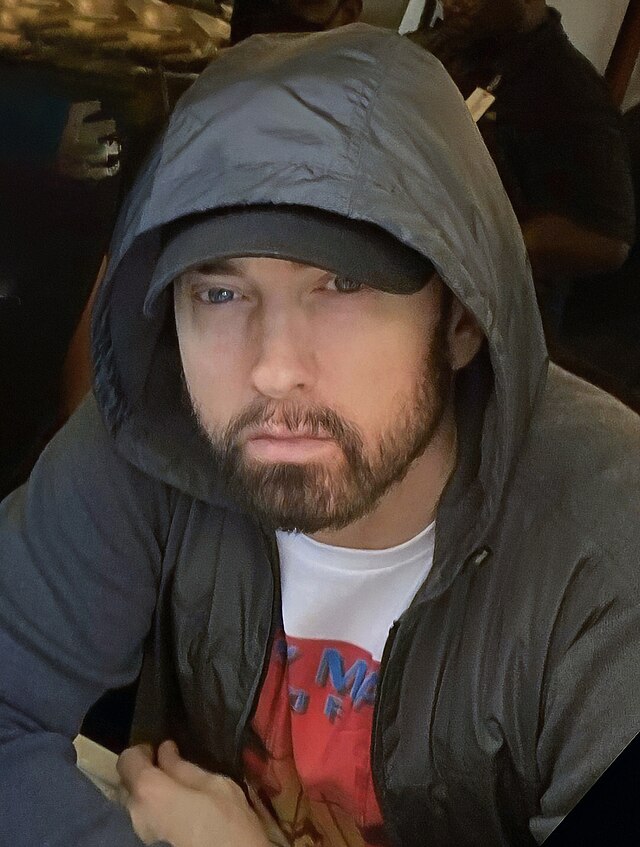
Eminem, born Marshall Bruce Mathers III on October 17, 1972, in St. Joseph, Missouri, is one of the most influential and controversial figures in modern music. Known for his sharp lyrics, emotional depth, and provocative themes, Eminem has redefined the boundaries of hip-hop and rap. His journey from a troubled childhood in Detroit to global stardom is a story of resilience, creativity, and an unwavering commitment to his craft. In this article, we will explore Eminem’s age, fame, and life highlights, offering detailed insights into the man behind the music.
Early Life and Struggles
Eminem’s early life was marked by hardship and adversity. Born to a young mother, Debbie Mathers, who was only seventeen at the time, and an absent father, Eminem’s childhood was anything but stable. He was raised in a predominantly African American, lower-income neighborhood in Detroit, where he faced frequent bullying and racial tension.
From a young age, Eminem was exposed to the harsh realities of life. His mother struggled with substance abuse, and their relationship was fraught with conflict. The absence of a stable father figure further complicated his upbringing. Eminem has often spoken about the challenges he faced during these formative years, including poverty, neglect, and the constant threat of violence. At the age of 15, he was hospitalized after a brutal assault that left him in a coma for ten days. This incident was just one of many that would shape his perspective and fuel his music.
Despite these challenges, Eminem found solace in music. His uncle Ronnie, who introduced him to hip-hop, became a significant influence in his life. Eminem’s passion for rap grew, and he began to hone his skills as a lyricist. However, the struggles continued. He dropped out of high school after failing the ninth grade three times, and he took on various odd jobs to make ends meet. His early life was a constant battle for survival, and this struggle is reflected in the raw, unfiltered lyrics that would later define his career.
Breakthrough in the Rap Scene
Eminem’s entry into the rap scene was not easy. As a white rapper in a predominantly black industry, he faced significant resistance and skepticism. However, his talent was undeniable. In 1996, he released his debut album, “Infinite,” which received little commercial success but caught the attention of the local Detroit rap community. The album’s lack of success only fueled his determination to succeed.
In 1997, Eminem’s fortunes began to change. He released the EP “Slim Shady,” which showcased his alter ego, a darker, more violent persona that would become a central theme in his music. This caught the attention of Dr. Dre, one of the most prominent figures in hip-hop. Dr. Dre saw potential in Eminem and signed him to his label, Aftermath Entertainment. This partnership would prove to be a turning point in Eminem’s career.
In 1999, Eminem released “The Slim Shady LP,” which was met with critical acclaim and commercial success. The album, featuring hits like “My Name Is,” introduced the world to Eminem’s unique style—provocative, unapologetic, and brutally honest. “The Slim Shady LP” won a Grammy Award for Best Rap Album, and Eminem quickly became a household name.
The Marshall Mathers LP and Mainstream Success
Eminem’s success continued with the release of “The Marshall Mathers LP” in 2000. This album solidified his status as one of the most important voices in music. It became the fastest-selling solo album in U.S. history, with over 1.76 million copies sold in its first week. The album featured some of Eminem’s most iconic tracks, including “Stan,” “The Real Slim Shady,” and “The Way I Am.”
“The Marshall Mathers LP” was a commercial and critical triumph, but it also attracted significant controversy. Eminem’s lyrics, often laced with violent imagery and explicit language, were criticized for promoting misogyny, homophobia, and violence. Despite—or perhaps because of—this controversy, Eminem’s fame skyrocketed. He became the voice of a generation, expressing the anger, frustration, and disillusionment of young people around the world.
Personal Struggles and Public Scrutiny
As Eminem’s fame grew, so did the scrutiny of his personal life. His troubled relationship with his mother, Debbie Mathers, became public knowledge, particularly after he released the song “Cleanin’ Out My Closet,” in which he aired their grievances. Debbie Mathers responded by suing her son for defamation, further fueling the media frenzy around Eminem’s life.
Eminem’s relationship with his on-and-off girlfriend, Kim Scott, was another source of public fascination. The couple had a tumultuous relationship, which included a brief marriage, a bitter divorce, and numerous public spats. Their daughter, Hailie Jade, born in 1995, became a central figure in Eminem’s life and his music. Eminem’s struggles with addiction, particularly to prescription drugs, were also well-documented. His battle with substance abuse reached a critical point in 2007 when he overdosed on methadone. This near-death experience prompted him to seek treatment and eventually led to his sobriety in 2008.
The Eminem Show and Continued Success
In 2002, Eminem released “The Eminem Show,” which further cemented his place in music history. The album was another commercial success, debuting at number one on the Billboard 200 and selling over 1.3 million copies in its first week. “The Eminem Show” won the Grammy Award for Best Rap Album, making Eminem the first artist to win the award for three consecutive albums.
The album included hits like “Without Me,” “Sing for the Moment,” and “Till I Collapse.” It was also more introspective than his previous work, reflecting on his fame, his role as a father, and his struggles with addiction. The album’s success demonstrated Eminem’s ability to evolve as an artist while staying true to his roots.
8 Mile and Acting Career
In 2002, Eminem made his acting debut in the semi-autobiographical film “8 Mile.” The film, directed by Curtis Hanson, tells the story of a young, white rapper trying to make it in Detroit’s hip-hop scene. Eminem’s performance was widely praised, and the film was a box-office success.
The film’s soundtrack included the hit single “Lose Yourself,” which became one of Eminem’s most successful songs. “Lose Yourself” won the Academy Award for Best Original Song, making Eminem the first rapper to win an Oscar. The song’s success further solidified Eminem’s status as a cultural icon.
Relapse, Recovery, and Revival
After taking a hiatus from music to focus on his sobriety, Eminem returned in 2009 with the album “Relapse.” The album marked his comeback but received mixed reviews, with some critics arguing that it lacked the emotional depth of his earlier work. However, it still achieved commercial success, debuting at number one on the Billboard 200.
In 2010, Eminem released “Recovery,” which was a more personal and introspective album. “Recovery” was a critical and commercial success, winning the Grammy Award for Best Rap Album. The album included hits like “Not Afraid” and “Love the Way You Lie,” featuring Rihanna, which became one of the best-selling singles of all time.
Eminem’s continued success in the 2010s demonstrated his resilience and ability to adapt to the changing music industry. In 2013, he released “The Marshall Mathers LP 2,” a sequel to his groundbreaking 2000 album. The album received positive reviews and debuted at number one on the Billboard 200, making Eminem the first artist to have seven consecutive number-one albums.
Eminem’s Legacy and Influence
Eminem’s impact on music and culture is undeniable. He is one of the best-selling music artists of all time, with over 220 million records sold worldwide. His influence extends beyond music, as he has also made significant contributions to the film industry and pop culture.
Eminem’s ability to blend raw emotion with technical skill has earned him respect from both fans and critics. His lyrics often tackle difficult subjects such as addiction, poverty, and mental health, making him a voice for those who feel marginalized and misunderstood. Despite facing criticism for his controversial lyrics, Eminem has consistently pushed the boundaries of what is acceptable in music, challenging societal norms and sparking important conversations about free speech and artistic expression.
Eminem’s influence can be seen in the work of countless artists who have followed in his footsteps. He paved the way for other white rappers, breaking down racial barriers in a genre that was once dominated by African American artists. His success has also inspired a new generation of rappers who use their music to address personal and social issues.
Conclusion: The Man Behind the Music
Eminem’s journey from a troubled childhood in Detroit to global superstardom is a testament to his talent, resilience, and determination. Despite facing numerous obstacles, he has managed to build a career that has spanned over two decades and continues to thrive.
Eminem’s life and music are a reflection of the complexities of the human experience. His ability to channel his pain and struggles into his art has made him one of the most influential and respected artists of his generation. As he continues to evolve as an artist and a person, Eminem’s legacy will undoubtedly continue to grow, leaving an indelible mark on the music industry and beyond.


