
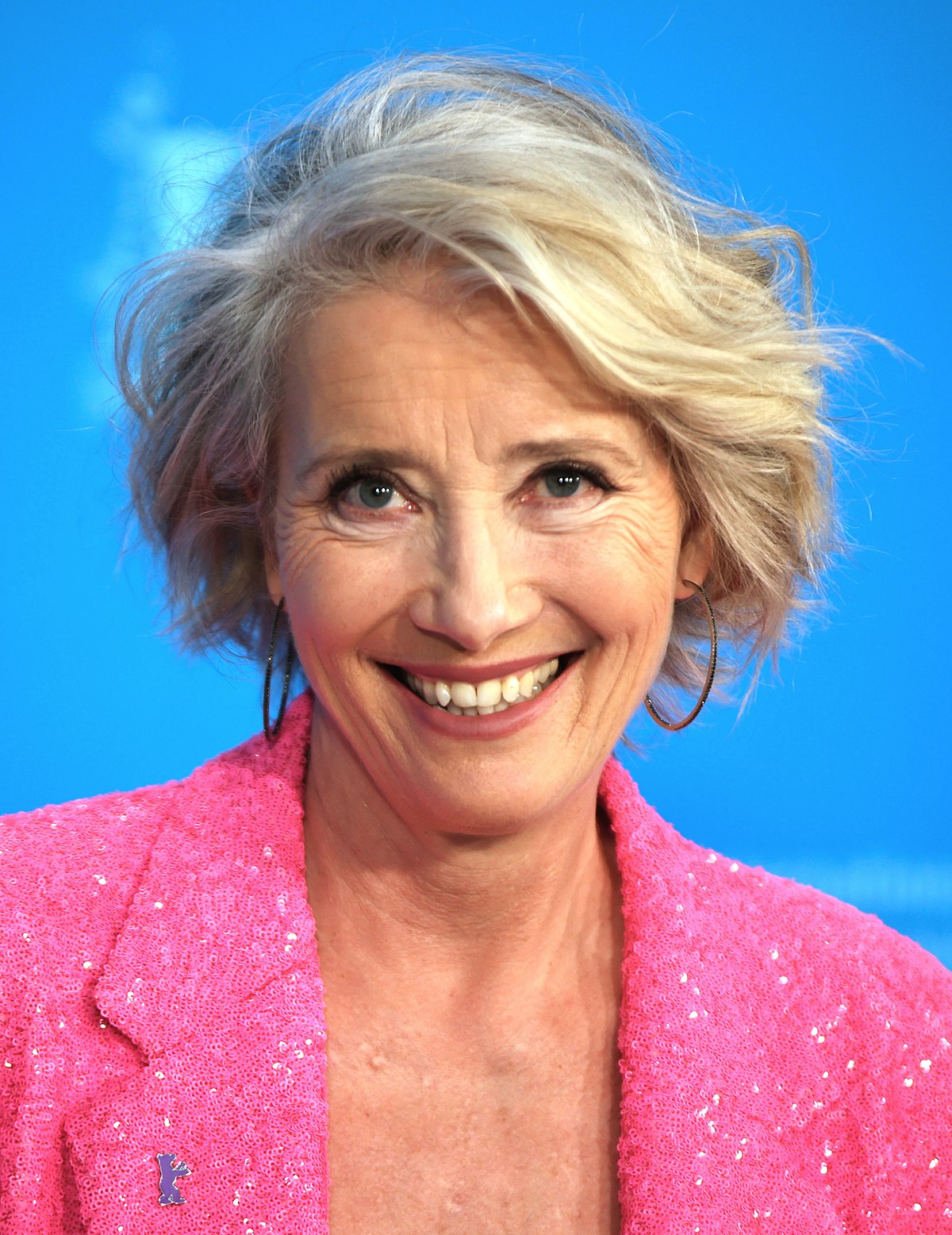
Emma Thompson, born on April 15, 1959, in London, is an iconic figure in the world of film and theater, celebrated for her versatility as an actress, screenwriter, and producer. Over the years, she has become synonymous with excellence in acting, known for her roles in both dramatic and comedic genres. This article provides a detailed exploration of Emma Thompson’s age, rise to fame, and the key highlights that have shaped her illustrious career.
Early Life and Family Background
Emma Thompson was born into a family deeply rooted in the arts. Her mother, Phyllida Law, is a well-respected actress, and her father, Eric Thompson, was a renowned actor and the creator of the popular children’s television series The Magic Roundabout. Growing up in such a creative environment, it was almost inevitable that Emma would pursue a career in the performing arts. Her younger sister, Sophie Thompson, also followed in the family tradition, becoming an accomplished actress in her own right.
Thompson attended the Camden School for Girls and later enrolled at Newnham College, Cambridge, where she studied English literature. Her time at Cambridge was transformative, as it was here that she became involved with the Footlights, a famous comedy troupe that has produced many notable British comedians and actors, including John Cleese and Stephen Fry. This early exposure to performance and comedy set the stage for her future career in the entertainment industry.
Breakthrough in Television and Early Career
Emma Thompson’s early career was marked by her work in television. She initially gained recognition for her comedic talents, starring in the BBC sketch comedy show Alfresco alongside Stephen Fry, Hugh Laurie, and Robbie Coltrane. This was followed by her critically acclaimed performance in the television series Tutti Frutti (1987), which earned her a BAFTA award for Best Actress. Her success on television opened doors for her in the film industry.
Transition to Film and Rise to Fame
Thompson’s transition from television to film was seamless, and she quickly established herself as one of the most talented actresses of her generation. Her breakout role came in 1992 when she starred in Howards End, directed by James Ivory. Her portrayal of Margaret Schlegel, a strong-willed and compassionate woman navigating the complexities of early 20th-century British society, earned her widespread acclaim and numerous awards, including an Academy Award for Best Actress and a BAFTA Award for Best Actress in a Leading Role.
Following the success of Howards End, Thompson’s career continued to soar. She starred in several high-profile films, including The Remains of the Day (1993) alongside Anthony Hopkins, where she played the role of Miss Kenton, a housekeeper in a grand English manor during the interwar period. Her performance in this film earned her another Academy Award nomination, further cementing her status as a leading actress.
Acclaimed Screenwriter and Adaptations
In addition to her acting prowess, Emma Thompson is also a highly regarded screenwriter. One of her most significant achievements in this domain was her adaptation of Jane Austen’s novel Sense and Sensibility (1995). Thompson not only wrote the screenplay but also starred as Elinor Dashwood, the eldest of the Dashwood sisters navigating love and loss in Regency-era England. Her screenplay won the Academy Award for Best Adapted Screenplay, making her one of the few individuals to have won Oscars for both acting and writing.
Thompson’s adaptation of Sense and Sensibility is widely praised for its fidelity to Austen’s original text while also bringing a fresh, modern sensibility to the story. The film was a critical and commercial success, and Thompson’s dual role as writer and actor showcased her extraordinary range of talents.
Continued Success in Film and Theater
Throughout the 1990s and 2000s, Emma Thompson continued to deliver remarkable performances in a variety of genres. She reunited with Kenneth Branagh, her then-husband, to star in several Shakespearean adaptations, including Much Ado About Nothing (1993) and Henry V (1989). These films demonstrated her ability to handle the complexities of Shakespearean language and characters, further establishing her as one of the most versatile actresses of her generation.
Thompson’s talent for balancing drama with comedy was evident in films like Love Actually (2003), where she played Karen, a middle-aged woman grappling with the discovery of her husband’s infidelity. Her portrayal of Karen’s quiet heartbreak in the film’s famous “Joni Mitchell scene” remains one of the most memorable moments in modern cinema.
In addition to her film work, Thompson has also made significant contributions to theater. She has appeared in numerous stage productions, including Me and My Girl and King Lear, showcasing her versatility as a performer. Her commitment to the craft of acting, both on stage and screen, has earned her a reputation as one of the most respected actresses in the industry.
Emma Thompson and Hollywood
Emma Thompson’s success is not confined to British cinema; she has also made a significant impact in Hollywood. Her work in American films such as Primary Colors (1998), where she played a character loosely based on Hillary Clinton, demonstrated her ability to navigate the complexities of American politics and culture. The film, directed by Mike Nichols, was well-received, and Thompson’s performance was lauded for its nuance and depth.
Thompson’s collaboration with Hollywood continued with her role in the Harry Potter film series, where she played the eccentric Professor Sybill Trelawney. Her portrayal of the divination professor added a layer of humor and whimsy to the series, endearing her to a new generation of fans.
Advocacy and Philanthropy
Beyond her work in film and theater, Emma Thompson is also known for her activism and philanthropy. She has been an outspoken advocate for human rights, environmental issues, and gender equality. Thompson has worked with organizations such as Amnesty International and Greenpeace, using her platform to raise awareness about critical global issues.
In 2006, Thompson was appointed as a Commander of the Order of the British Empire (CBE) for her services to drama. She has also received numerous honorary degrees from universities around the world in recognition of her contributions to the arts and her advocacy work.
One of Thompson’s most notable philanthropic efforts is her involvement with the Helen Bamber Foundation, an organization that supports survivors of human rights abuses. Thompson has been a vocal advocate for the rights of refugees and has worked tirelessly to bring attention to the plight of displaced people around the world.
Personal Life
Emma Thompson’s personal life has been as rich and varied as her professional career. She was married to actor and director Kenneth Branagh from 1989 to 1995. The couple was considered a powerhouse in the British film industry, frequently collaborating on projects. However, their marriage ended in divorce, reportedly due to Branagh’s affair with actress Helena Bonham Carter.
In 2003, Thompson married actor Greg Wise, whom she met on the set of Sense and Sensibility. The couple has a daughter, Gaia, and an adopted son, Tindyebwa Agaba, a former child soldier from Rwanda. Thompson has spoken openly about the challenges and joys of motherhood, as well as her experience with fertility issues.
Thompson’s relationship with Wise is one of mutual respect and collaboration. The couple has worked together on several projects, and their partnership is often cited as an example of a successful marriage in the entertainment industry.
Legacy and Influence
Emma Thompson’s legacy in the world of film and theater is undeniable. Her ability to move effortlessly between comedy and drama, as well as her success as both an actress and a screenwriter, has set her apart as one of the most accomplished figures in the industry. Her work has inspired a generation of actors and writers, and her influence continues to be felt across the globe.
Thompson’s commitment to using her platform for social good is another aspect of her legacy that will endure. Her activism and philanthropy have made a tangible difference in the lives of countless individuals, and her voice continues to be a powerful force for change.
As she continues to take on new and challenging roles, both on screen and off, Emma Thompson remains a beloved and respected figure in the entertainment industry. Her contributions to film, theater, and society have earned her a place in the pantheon of great artists, and her story serves as an inspiration to all who aspire to make a difference in the world.
Conclusion
Emma Thompson’s life and career are a testament to the power of talent, determination, and a deep commitment to one’s craft. From her early days as a comedian at Cambridge to her status as an Academy Award-winning actress and screenwriter, Thompson has continually pushed the boundaries of what is possible in the world of entertainment.
Her work, both on screen and off, has had a profound impact on the industry and society as a whole. As she continues to evolve and take on new challenges, there is no doubt that Emma Thompson will remain a central figure in the world of film and theater for years to come.


