
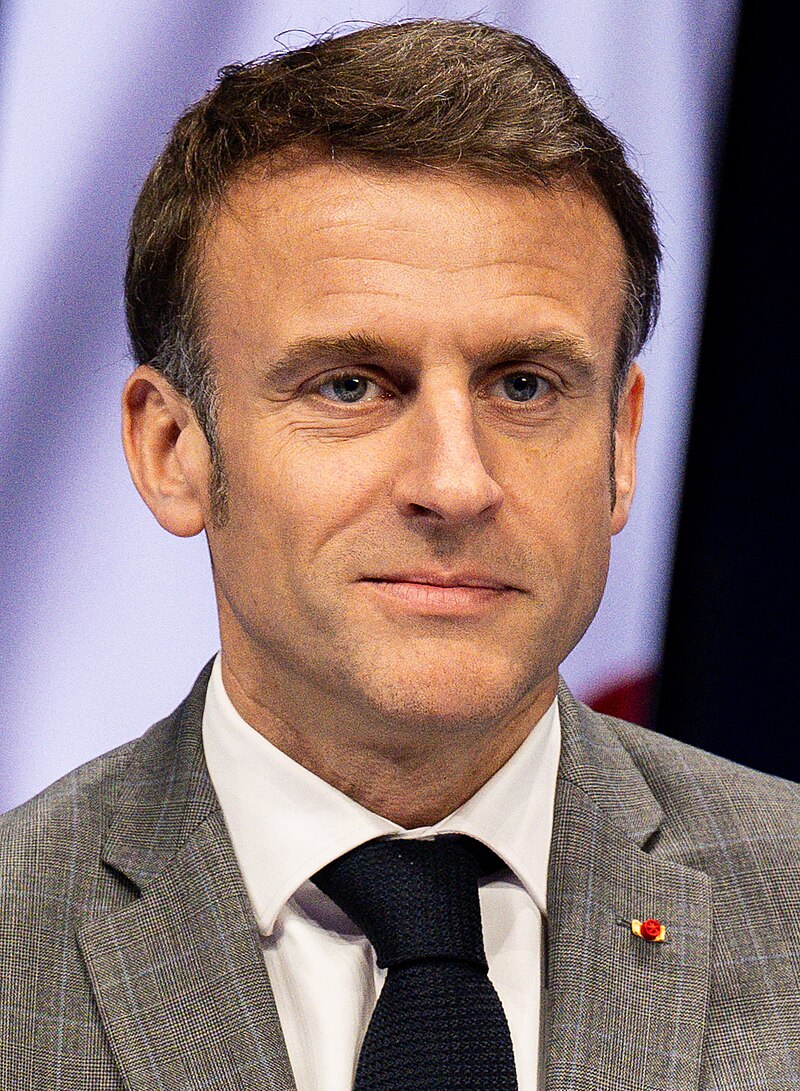
Emmanuel Macron, born on December 21, 1977, in Amiens, France, has emerged as one of the most significant political figures of the 21st century. As the youngest President in French history, his rise to power was meteoric and marked by a blend of youthful energy, intellectual rigor, and a commitment to breaking traditional political molds. This article explores the life of Emmanuel Macron, delving into his age, ascent to fame, and the key moments that have defined his career.
Early Life and Education: A Foundation in Excellence
Emmanuel Macron was born into a family that valued education and intellectual achievement. His father, Jean-Michel Macron, was a professor of neurology, and his mother, Françoise Noguès, a physician. Growing up in an environment that fostered a love for learning, Macron excelled academically from a young age. He attended the prestigious Lycée Henri-IV in Paris, where he developed a passion for literature, philosophy, and politics.
Macron’s academic journey took him to the University of Paris-Nanterre, where he studied philosophy. His intellectual curiosity led him to the Institut d’Études Politiques de Paris (commonly known as Sciences Po), and later to the École Nationale d’Administration (ENA), France’s elite graduate school for civil service. Graduating from ENA in 2004, Macron joined the Inspection Générale des Finances, a government body responsible for auditing public institutions. This role provided him with a deep understanding of the French economy and public administration, laying the groundwork for his future political career.
Early Career: From Finance to Politics
Macron’s early career was marked by a blend of public service and private sector experience. In 2007, he became a rapporteur for the Attali Commission, tasked with proposing reforms to boost economic growth in France. This experience positioned him as a reform-minded technocrat, eager to challenge the status quo.
In 2008, Macron transitioned to the private sector, joining the Rothschild & Cie Banque. His work at Rothschild was notably successful; he played a key role in brokering a multi-billion euro deal between Nestlé and Pfizer, earning him a reputation as a skilled negotiator and a significant financial windfall. This success also provided him with the financial independence that would later support his political ambitions.
Despite his success in finance, Macron’s interest in public service never waned. He maintained close ties with the French Socialist Party, having been a member since the age of 24. His connections within the party, particularly with François Hollande, the future President of France, would prove instrumental in his political ascent.
Entry into Politics: The Road to the Elysee
Emmanuel Macron’s formal entry into politics came in 2012 when François Hollande, newly elected as President, appointed him as Deputy Secretary-General of the Élysée. In this role, Macron was a key advisor on economic and financial matters, helping to shape Hollande’s policy agenda during a challenging period for the French economy.
In 2014, Macron was appointed Minister of Economy, Industry, and Digital Affairs in the government of Prime Minister Manuel Valls. As minister, Macron pushed for significant economic reforms aimed at liberalizing the French economy, including the controversial Macron Law, which sought to increase labor market flexibility and reduce regulation in key sectors. These reforms, though met with resistance, highlighted Macron’s commitment to modernizing the French economy and positioned him as a rising star in French politics.
However, Macron’s ambitions extended beyond his role as a minister. In 2016, he resigned from the government and launched his own political movement, En Marche! (meaning “Onward!”). The movement was positioned as centrist, aiming to transcend the traditional left-right political divide in France. Macron’s message of reform, innovation, and a new political order resonated with many voters disillusioned with the established parties.
The 2017 Presidential Campaign: A New Political Star
Emmanuel Macron’s 2017 presidential campaign was nothing short of extraordinary. At the start of the campaign, Macron was a relative newcomer to national politics, with no established party machinery behind him. Yet, his youth, charisma, and promise of change captured the imagination of the French electorate.
Macron’s campaign focused on a centrist platform that promised economic reform, social liberalism, and a pro-European Union stance. He positioned himself as a candidate who could bridge the deep divisions in French society, offering a vision of a more dynamic and open France. His message of hope and renewal stood in stark contrast to the populist and nationalist rhetoric that was gaining ground in other parts of Europe and the United States.
The campaign was also marked by Macron’s unconventional personal life, particularly his marriage to Brigitte Trogneux, a woman 24 years his senior, whom he had met when she was his teacher in high school. Their relationship, often scrutinized by the media, became a symbol of Macron’s rejection of conventional norms, both personally and politically.
In the first round of the 2017 presidential election, Macron emerged as the front-runner, securing 24% of the vote. He advanced to the second round, where he faced Marine Le Pen, the far-right candidate from the National Front. The runoff between Macron and Le Pen was seen as a battle for the soul of France, with Macron representing openness and progress, and Le Pen embodying nationalism and protectionism.
On May 7, 2017, Emmanuel Macron was elected the 25th President of France, winning 66.1% of the vote. At 39 years old, he became the youngest President in French history. His victory was hailed as a triumph of centrist, pro-European values in the face of rising populism and marked a new chapter in French politics.
Macron’s Presidency: Challenges and Achievements
Emmanuel Macron’s presidency has been characterized by both bold reforms and significant challenges. Upon taking office, he quickly set about implementing his ambitious agenda for economic reform, including changes to labor laws, tax policies, and the pension system. These reforms were aimed at reducing unemployment, increasing economic growth, and making France more competitive on the global stage.
However, Macron’s reformist zeal has not been without controversy. His policies, particularly labor market reforms and tax cuts for the wealthy, have sparked widespread protests, most notably the “Yellow Vests” movement, which began in 2018. The movement, which started as a protest against fuel tax increases, quickly grew into a broader expression of discontent with Macron’s policies and leadership style, which many perceived as out of touch with ordinary citizens.
Despite these challenges, Macron has remained steadfast in his commitment to his reform agenda. He has also played a prominent role on the international stage, advocating for stronger European integration, a robust response to climate change, and multilateralism in global affairs. His efforts to position France as a leader in the European Union and a key player in global diplomacy have earned him recognition but have also tested his diplomatic skills, particularly in managing relations with other major powers such as the United States, China, and Russia.
The 2022 Presidential Election: A Test of Endurance
As Macron approached the end of his first term, the political landscape in France remained deeply polarized. The COVID-19 pandemic added a new layer of complexity to his presidency, forcing him to navigate the public health crisis while balancing the economic and social impacts of lockdowns and restrictions.
The 2022 presidential election was seen as a referendum on Macron’s first term. Despite the challenges, Macron managed to secure re-election, defeating Marine Le Pen once again in a runoff. His victory, while narrower than in 2017, demonstrated his enduring appeal among a significant portion of the French electorate. However, the election also highlighted the growing divisions within French society and the continued strength of populist and nationalist sentiments.
Legacy and Impact: A President for the 21st Century
Emmanuel Macron’s presidency represents a new era in French politics, characterized by a break from the traditional party system and a focus on centrist, reformist policies. His rise to power, marked by a rapid ascent through both the public and private sectors, reflects a broader shift in global politics towards leaders who combine technocratic expertise with a populist appeal.
Macron’s legacy will likely be defined by his efforts to modernize the French economy, his advocacy for European integration, and his response to the challenges of populism and nationalism. His ability to navigate these complex issues, while maintaining a commitment to his core principles, will be the key to his long-term impact on France and the world.
As the youngest President in French history, Macron’s political journey is far from over. His re-election in 2022 suggests that he remains a significant force in French and global politics, with the potential to shape the future of Europe and the international order for years to come.
Conclusion: The Enduring Enigma of Emmanuel Macron
Emmanuel Macron’s life and career are a testament to the power of ambition, intellect, and vision in shaping the course of history. From his early days as a student in Amiens to his rise as a global political leader, Macron has consistently challenged conventional wisdom and pushed the boundaries of what is possible in politics.
As France continues to navigate the challenges of the 21st century, Emmanuel Macron’s leadership will remain a subject of both admiration and debate. His ability to adapt to changing circumstances, his commitment to reform, and his vision for a united and prosperous Europe will be the defining features of his presidency and his legacy.
In the years to come, Emmanuel Macron’s impact on France, Europe, and the world will be studied and analyzed by historians, political scientists, and the public alike. Whether he is ultimately remembered as a transformative leader or a polarizing figure, there is no doubt that Emmanuel Macron has left an indelible mark on the history of his nation and the world.


