
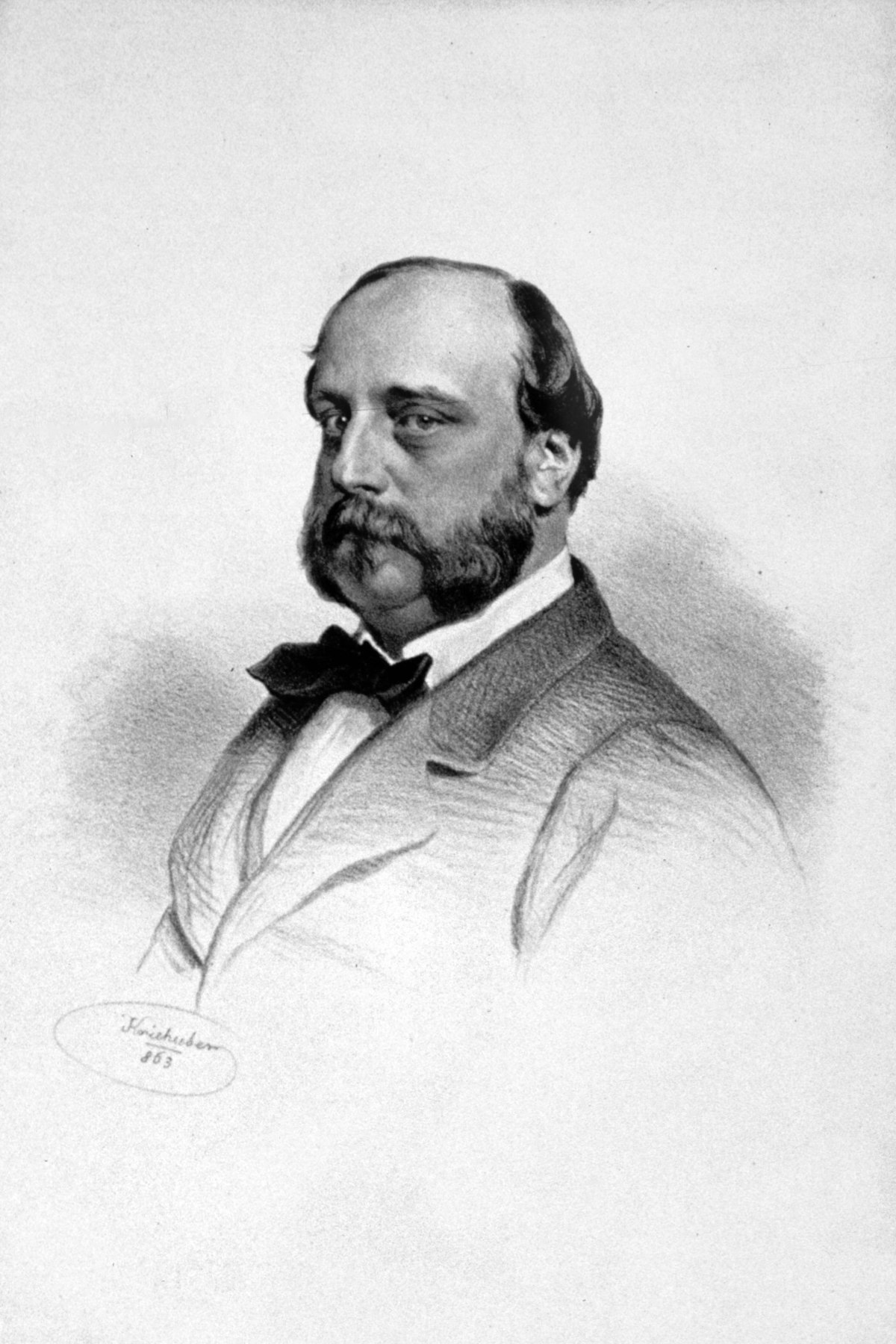
Enrico Dieudonné d’Artois, also known as the Count of Chambord, was born on September 29, 1820, in Paris. His birth came seven months after the death of his father, Charles-Ferdinand, Duke of Berry, who was assassinated due to his extreme monarchist views. Enrico was born into the royal House of Bourbon and was considered a legitimate heir to the French throne, despite the turbulent political landscape that would eventually deny him the crown.
Early Life and Background
Enrico’s father, Charles-Ferdinand, was a nephew of King Charles X of France, and his untimely death left Enrico’s mother, Carolina of Naples, a widow even before her son was born. The political climate of the time was deeply influenced by the French Revolution and the rise of constitutionalism, movements that the House of Bourbon opposed fervently. Enrico inherited his father’s political inclinations, which were staunchly anti-revolutionary and anti-constitutional, positioning him as a controversial figure in the royalist circles of the time.
The Struggle for the French Throne
Despite being born into royalty, Enrico’s path to the throne was far from straightforward. After the abdication of King Charles X on August 2, 1830, some legalistic and legitimist factions in France considered Enrico to be the rightful king, bestowing upon him the title of King Henry V. However, this claim was never officially recognized, and he was forced to flee France due to the political unrest that ensued after the July Revolution of 1830.
The July Revolution saw the rise of Louis-Philippe, Duke of Orléans, from the cadet branch of the Bourbon family, who was proclaimed King of the French. This marked a significant shift in the French monarchy, as Louis-Philippe’s reign was seen as more liberal and aligned with constitutional principles, starkly contrasting the ultra-royalist views held by Enrico and his supporters.
Exile and Marriage
In exile, Enrico sought refuge in Austria, where he would spend much of his life. On November 7, 1846, he married Maria Theresa of Austria-Este, the daughter of Duke Francis IV of Modena and Maria Beatrice of Savoy. Maria Theresa was three years older than Enrico, and their marriage, while politically significant, did not produce any heirs. This lack of direct descendants would later prove to be a critical factor in the extinction of the senior Bourbon line upon Enrico’s death.
The Fall of Napoleon III and the Bourbon Restoration Attempt
Enrico’s political inactivity lasted for much of his life until the fall of Napoleon III in 1870, which reignited his hopes of reclaiming the French throne. Napoleon III’s ill-fated decision to declare war on Prussia in July 1870 led to a disastrous defeat for France, culminating in his capture and the collapse of the Second French Empire. This political vacuum provided a glimmer of hope for the Bourbon legitimists, who rallied around Enrico as the rightful heir.
Enrico, as the leader of the legitimist movement, issued several proclamations advocating for a constitutional monarchy. His stance garnered significant support from the French Parliament, which at the time had a monarchist majority. However, Enrico’s unwavering commitment to his ultra-royalist principles once again proved to be his downfall.
In a decisive meeting with a delegation of French deputies at his Austrian residence, Château de Frohsdorf, Enrico made it clear that he had no intention of compromising his beliefs. He refused to accept the tricolor flag, a symbol of the French Revolution, and declared that he would not become the “legitimate king of the Revolution,” a stance that alienated many potential supporters and ultimately doomed his restoration efforts.
The Final Years and Legacy
With his refusal to adapt to the changing political landscape, Enrico’s chances of ascending to the French throne were effectively extinguished. The French Parliament, recognizing the futility of his claim, decided to wait until his death before considering the succession. Upon Enrico’s passing on August 24, 1883, in Lanzenkirchen, Austria, the senior line of the Bourbon family became extinct.
The death of Enrico d’Artois marked the end of an era for the Bourbon monarchy in France. Although the younger branch of the Bourbon family, represented by Louis-Philippe’s descendants, continued to lay claim to the throne, the political climate in France had shifted irrevocably towards republicanism. The Third French Republic was established, and the monarchy would never be restored.
Historical Context and Significance
Enrico d’Artois’ life is a fascinating study in the complexities of royal succession and the shifting tides of political power in 19th-century Europe. His staunch refusal to compromise his principles, while admirable in its consistency, ultimately led to his political isolation and the extinction of his royal line. His story is emblematic of the broader struggles faced by monarchies across Europe during a period of rapid social and political change.
The Bourbon family’s legacy, particularly the senior branch to which Enrico belonged, is deeply intertwined with the history of France. The French Revolution, which began in 1789, set the stage for a century of political upheaval, during which the monarchy was repeatedly challenged and redefined. The rise of Napoleon Bonaparte, the restoration of the Bourbon monarchy, the July Revolution, and the eventual establishment of the French Republic all occurred against the backdrop of these broader historical forces.
Enrico’s life also highlights the enduring tensions between different visions of monarchy: the absolutist model, which he represented, and the constitutional model, which gained traction in the 19th century. His refusal to accept the tricolor flag, a potent symbol of the Revolution, underscores the deep ideological divide that ultimately prevented his return to power.
The Role of Legitimism in French History
Legitimism, the political doctrine that supported Enrico d’Artois’ claim to the throne, played a significant role in French politics throughout the 19th century. Legitimists believed in the divine right of kings and the importance of maintaining the traditional line of succession, as opposed to the more flexible approach favored by the Orléanists, who supported Louis-Philippe.
While legitimism never succeeded in restoring the Bourbon monarchy, it remained an influential force in French politics, particularly among conservative and royalist factions. The movement’s decline in the late 19th century reflected the broader trend towards republicanism and the diminishing appeal of traditional monarchies in a rapidly modernizing world.
Conclusion: The End of a Royal Line
Enrico d’Artois’ life story is a poignant reminder of the fragility of royal power in the face of changing political realities. Despite his birthright and the unwavering support of his legitimist followers, he was unable to reclaim the throne of France. His death marked the end of the senior Bourbon line, closing a chapter in the long and tumultuous history of the French monarchy.
In the broader context of European history, Enrico’s life serves as a case study in the challenges faced by traditional monarchies during a period of profound social and political transformation. His legacy, while largely overshadowed by the more successful monarchs of his time, offers valuable insights into the complexities of royal succession and the enduring appeal of monarchy in an age of revolution and change.


