
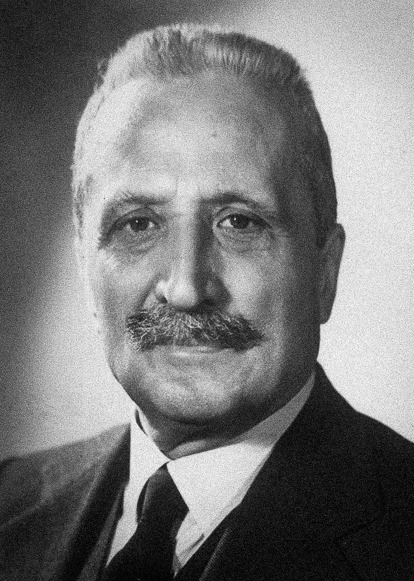
Enrico De Nicola, born on November 9, 1877, in Naples, Italy, is a prominent figure in the annals of Italian history, particularly known for being the first President of the Italian Republic. His journey from a successful lawyer to a political leader who played a pivotal role in shaping post-fascist Italy is a remarkable tale of dedication, intellect, and strategic acumen. This article delves into the life and legacy of Enrico De Nicola, exploring his age, rise to fame, and the key highlights that defined his illustrious career.
Early Life and Legal Career
Enrico De Nicola was born into a period of significant political and social transformation in Italy. From a young age, he exhibited a keen interest in law and politics, eventually earning a degree in law from the prestigious University of Naples. His legal career began with a focus on criminal law, where he quickly gained recognition for his forensic abilities and sharp intellect. De Nicola’s prowess in the courtroom made him a well-known figure in legal circles across Italy.
However, De Nicola’s ambitions extended beyond the legal profession. His early involvement in journalism, where he served as a redactor for the “Don Marzio” newspaper, provided him with a platform to engage with contemporary political issues. This dual engagement in law and journalism laid the foundation for his future political career.
Entry into Politics: The Early Years
Enrico De Nicola’s political career began in 1909 when he was elected as a Deputy in the Italian Parliament, representing the liberal-conservative faction. This period marked the beginning of a long and distinguished career in public service. De Nicola was a staunch supporter of Giovanni Giolitti, one of Italy’s most influential politicians during the early 20th century. His alignment with Giolitti’s policies positioned him within the liberal camp, which was instrumental in shaping Italy’s political landscape during that era.
De Nicola’s early political roles included serving as the Undersecretary of State for the Colonies in 1913, a position he held during a turbulent time in Italian politics. The prelude to World War I saw Italy grappling with internal strife and external pressures, and De Nicola found himself supporting the interventionist cause. His political acumen and ability to navigate these complex waters helped him gain respect and recognition within the Italian political establishment.
The Post-World War I Era: Rising to Prominence
The aftermath of World War I was a period of significant upheaval in Italy. The war had left the country economically drained and politically fragmented. Amidst this chaos, Enrico De Nicola continued to rise through the political ranks. In 1919, he was re-elected to Parliament and served as the Undersecretary of State for the Treasury under the Orlando government.
De Nicola’s most significant political achievement during this period was his election as President of the Chamber of Deputies in 1920, a position he held during one of the most tumultuous times in Italian history. The early 1920s saw the rise of Benito Mussolini and the Fascist movement, which would eventually lead to the establishment of a totalitarian regime. As President of the Chamber, De Nicola was in a crucial position to influence the direction of Italian politics, but the increasing power of the Fascists posed significant challenges.
The Fascist Era: A Time of Caution
Enrico De Nicola’s relationship with the Fascist regime was complex. Initially, like many in the liberal-conservative camp, he supported Mussolini’s government, viewing it as a necessary response to the political instability of the time. However, as Mussolini consolidated power and began to erode democratic institutions, De Nicola became increasingly disillusioned with the regime.
In 1924, after a brief tenure as President of the Chamber during Mussolini’s rise, De Nicola made the decision to step away from active politics. This decision marked the beginning of a period of relative political inactivity for De Nicola, during which he focused on his legal practice. Although he was appointed as a Senator of the Kingdom in 1929, he did not participate actively in parliamentary affairs, choosing instead to distance himself from the Fascist regime.
De Nicola’s retreat from politics during the Fascist era can be seen as a strategic move to preserve his integrity and reputation. By avoiding direct involvement with the regime, he positioned himself as a figure of the pre-fascist liberal order, a stance that would prove crucial in the years following Mussolini’s fall.
The Fall of Fascism and the Birth of the Republic
The fall of Mussolini in 1943 and the subsequent collapse of the Fascist regime brought Enrico De Nicola back into the political spotlight. As Italy transitioned from a monarchy to a republic, De Nicola played a vital role as a mediator between the Allies and the Italian monarchy. His efforts were instrumental in facilitating a smooth transfer of power and avoiding the abdication of King Victor Emmanuel III by establishing the role of the Lieutenant General of the Realm, a position assumed by the king’s son, Umberto II.
De Nicola’s reputation as a respected legal mind and his experience in navigating the turbulent political landscape made him an ideal candidate for leadership in the newly formed Italian Republic. In 1946, following the referendum that resulted in the establishment of the republic, De Nicola was elected as the Provisional Head of State by the Constituent Assembly. His election was the result of a compromise between the major political parties of the time, including the Christian Democrats, Socialists, and Communists, who saw in De Nicola a figure capable of uniting the nation during this critical juncture.
The First President of the Italian Republic
On July 1, 1946, Enrico De Nicola was inaugurated as the Provisional Head of State of the Italian Republic. This position was formalized on January 1, 1948, when De Nicola became the first President of the Republic under the new constitution. His presidency came at a time when Italy was grappling with the challenges of rebuilding a nation devastated by war and deeply divided by political ideologies.
De Nicola’s presidency is often remembered for its brevity; he served as President until May 1948, when he was succeeded by Luigi Einaudi. However, his impact during this short period was significant. De Nicola’s leadership helped stabilize the nascent republic and set the stage for the democratic governance that would follow. His decision to reside at Palazzo Giustiniani instead of the Quirinal Palace, the traditional residence of the Italian head of state, was symbolic of his commitment to the republican cause, despite his personal sympathies for the monarchy.
Later Years: Senate Presidency and the Constitutional Court
Following his presidency, Enrico De Nicola continued to play an influential role in Italian politics. In 1951, he was elected President of the Senate, becoming the only person in Italian history to have served as both Head of State and President of the Senate. His tenure in this role was marked by his dedication to upholding the principles of the Italian constitution and ensuring the smooth functioning of the legislative process.
De Nicola’s commitment to the rule of law and democratic principles was further exemplified when he was appointed as a judge of the newly established Constitutional Court in 1955. His vast legal experience and his deep understanding of constitutional law made him an invaluable asset to the court. In 1956, he was elected President of the Constitutional Court, a position he held until his resignation in 1957, which he tendered in protest against what he perceived as government interference in the judiciary.
Legacy and Death
Enrico De Nicola’s legacy is that of a statesman who played a pivotal role in one of the most critical periods in Italian history. His contributions to the establishment of the Italian Republic and his efforts to uphold democratic principles in the face of authoritarianism have earned him a place of honor in the pantheon of Italian political leaders.
De Nicola was a man of deep conviction and unwavering commitment to the rule of law. His actions during both the Fascist regime and the post-war period demonstrate a keen understanding of the delicate balance required to navigate the turbulent waters of Italian politics. His strategic withdrawal from politics during Mussolini’s rule and his return to public service after the fall of Fascism exemplify his dedication to the principles of democracy and justice.
In his later years, De Nicola was honored with the title of Senator for Life, and he continued to serve his country with distinction until his retirement. He received the Grand Cross Knight with Grand Cordon of the Order of Merit of the Italian Republic, one of the highest honors in Italy, reflecting the respect and admiration he commanded across the political spectrum.
Enrico De Nicola passed away on October 1, 1959, at the age of 81, in his home in Torre del Greco. His death marked the end of an era, but his legacy as a foundational figure in the creation of the Italian Republic endures. His life’s work remains a testament to the importance of integrity, legal expertise, and a deep commitment to the public good in the service of one’s country.
In conclusion, Enrico De Nicola’s life is a rich tapestry of legal brilliance, political strategy, and unwavering dedication to the principles of democracy and justice. His role in shaping the Italian Republic and his contributions to the establishment of democratic institutions in post-war Italy make him a figure of enduring significance in the history of Italy. As the first President of the Italian Republic, his legacy continues to inspire future generations of leaders and serves as a reminder of the vital importance of leadership grounded in principle and integrity.


