
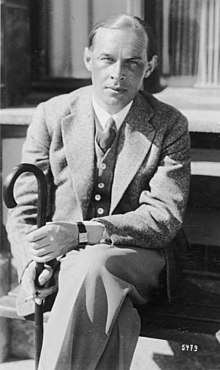
Erich Maria Remarque, born as Erich Paul Remark on June 22, 1898, in Osnabrück, Germany, is one of the most celebrated authors of the 20th century. Best known for his harrowing depiction of war in his seminal work All Quiet on the Western Front, Remarque’s life and literary contributions provide profound insights into the human condition, especially in the context of the devastating effects of war. His experiences and the broader historical context of his life are essential to understanding his enduring legacy.
Early Life and Background
Erich Maria Remarque was born into a working-class family in the Westphalia region of Germany. His father, a bookbinder, provided a stable but modest upbringing for his family. Despite the financial limitations, Remarque’s family valued education, and young Erich showed early signs of intellectual promise. He attended a Catholic seminary in Osnabrück, which was expected to set him on a religious path. However, Remarque’s life would take a drastically different turn due to the outbreak of World War I.
In 1916, at the age of 18, Remarque was conscripted into the German army, interrupting his studies. He was sent to the Western Front, a brutal and unforgiving theater of war, where he would experience firsthand the horrors of combat. Stationed near Verdun, one of the most fiercely contested areas during the war, Remarque witnessed and endured the relentless violence and despair that would later become the focal point of his most famous novel.
The Impact of War: Writing All Quiet on the Western Front
After the war, Remarque returned to a Germany that was vastly different from the one he had left. The country was in turmoil, dealing with the aftermath of a lost war, economic hardship, and political instability. Remarque, like many of his contemporaries, was deeply affected by his war experiences, which left him physically and psychologically scarred.
In the late 1920s, Remarque began to channel his experiences into writing. His most notable work, Im Westen nichts Neues (translated as All Quiet on the Western Front), was published in 1929. The novel, which follows a group of German soldiers through the trenches of World War I, provides a stark, unflinching portrayal of the futility and devastation of war. The story is told through the eyes of Paul Bäumer, a young soldier who, like Remarque himself, experiences the dehumanizing effects of war.
All Quiet on the Western Front was groundbreaking in its direct and unsentimental style. It eschewed the glorification of war, instead presenting it as a senseless slaughter that destroyed not just bodies, but souls. Remarque wrote in the preface to the novel, “This book is to be neither an accusation nor a confession, and least of all an adventure, for death is not an adventure to those who stand face to face with it.” This sentiment resonated deeply with readers across the world, particularly those who had experienced the war themselves.
The novel’s success was immediate and widespread, but it also sparked significant controversy, particularly in Germany. Nationalists and conservative critics accused Remarque of defeatism and betrayal, claiming that his work undermined the heroic narrative of the war. The Nazi regime, which rose to power in 1933, was particularly hostile to Remarque’s anti-war message. In 1933, the Nazis publicly burned All Quiet on the Western Front, labeling it as “un-German” and “degenerate.”
Exile and Continued Literary Success
As the Nazi regime intensified its persecution of dissidents and those deemed “undesirable,” Remarque found himself increasingly at risk. In 1938, his German citizenship was revoked, and he fled to Switzerland to escape the growing danger. Later, he moved to the United States, where he continued to write and became a naturalized American citizen in 1947.
Despite the challenges of exile, Remarque remained prolific, producing several notable works that continued to explore themes of war, displacement, and human resilience. Among these was Drei Kameraden (Three Comrades, 1938), which portrays the lives of three war veterans struggling to find meaning in a post-war world that seems indifferent to their sacrifices. The novel, much like All Quiet on the Western Front, reflects Remarque’s deep empathy for the lost generation of men who were irrevocably changed by the war.
Another significant work from his American period is Arc de Triomphe (Arch of Triumph, 1945), set in pre-World War II Paris. The novel tells the story of a German refugee and a disillusioned actress, exploring themes of exile, love, and the lingering trauma of war. It was a commercial success and was later adapted into a Hollywood film, further cementing Remarque’s reputation as a powerful storyteller.
Remarque’s ability to convey the psychological scars of war, the sense of alienation, and the search for meaning in a fractured world made him one of the most important literary voices of his time. His works have been translated into numerous languages, and they continue to be read and studied around the world.
Later Life and Legacy
In the post-war years, Remarque returned to Europe, spending much of his later life in Switzerland. He continued to write, though none of his subsequent works would achieve the same level of impact as All Quiet on the Western Front. His later novels, such as Zeit zu leben und Zeit zu sterben (A Time to Love and a Time to Die, 1954) and Die Nacht von Lissabon (The Night in Lisbon, 1963), however, still resonate with readers due to their exploration of themes such as loss, exile, and the enduring effects of war.
Remarque’s personal life was marked by both tragedy and glamour. He was married several times, including to the American actress Paulette Goddard, with whom he shared a long and happy relationship. Despite his success and the acclaim he received, Remarque never fully escaped the shadows of his wartime experiences, which haunted him until his death on September 25, 1970, in Locarno, Switzerland.
The Enduring Relevance of Erich Maria Remarque
Erich Maria Remarque’s works have left an indelible mark on world literature, particularly in the way wars are portrayed. His writing captures the sense of futility and disillusionment that defined a generation, and his stark, unembellished depictions of war continue to resonate with readers and critics alike.
All Quiet on the Western Front remains one of the most important novels of the 20th century. Its influence can be seen in countless other works of literature, film, and art that deal with the subject of war. The novel’s universal themes of loss, trauma, and the search for meaning in the face of overwhelming despair have ensured its place in the literary canon.
Moreover, Remarque’s broader body of work continues to be relevant in discussions about the impacts of war, particularly in an era where conflicts persist around the globe. His exploration of the psychological and emotional toll of warfare provides invaluable insights into the human condition, making his works not just historical artifacts, but living texts that speak to the experiences of people in the modern world.
In addition to his literary achievements, Remarque’s life story offers a powerful narrative of resilience and survival. From the battlefields of World War I to the intellectual circles of pre-war Europe, and eventually to Hollywood, Remarque’s journey reflects the tumultuous history of the 20th century. His ability to transform personal and collective suffering into art is a testament to his enduring legacy as one of the greatest writers of his time.
Conclusion: Erich Maria Remarque’s Legacy
Erich Maria Remarque’s life and works offer a profound exploration of the human cost of war and the enduring struggle to find meaning in its aftermath. His novels, particularly All Quiet on the Western Front, continue to be read and appreciated for their honest and unflinching portrayal of the horrors of combat and its aftermath.
In a world where the lessons of the past are often forgotten, Remarque’s works serve as a powerful reminder of the true nature of war and the importance of remembering the sacrifices of those who lived through it. His legacy is not just that of a war novelist, but of a humanist who sought to shed light on the darkest aspects of the human experience in the hope of fostering understanding and compassion.
Today, as conflicts continue to shape the world, Remarque’s voice remains as relevant as ever. His works encourage us to reflect on the costs of war and the value of peace, making him not just a literary figure, but a moral compass for our times.


