
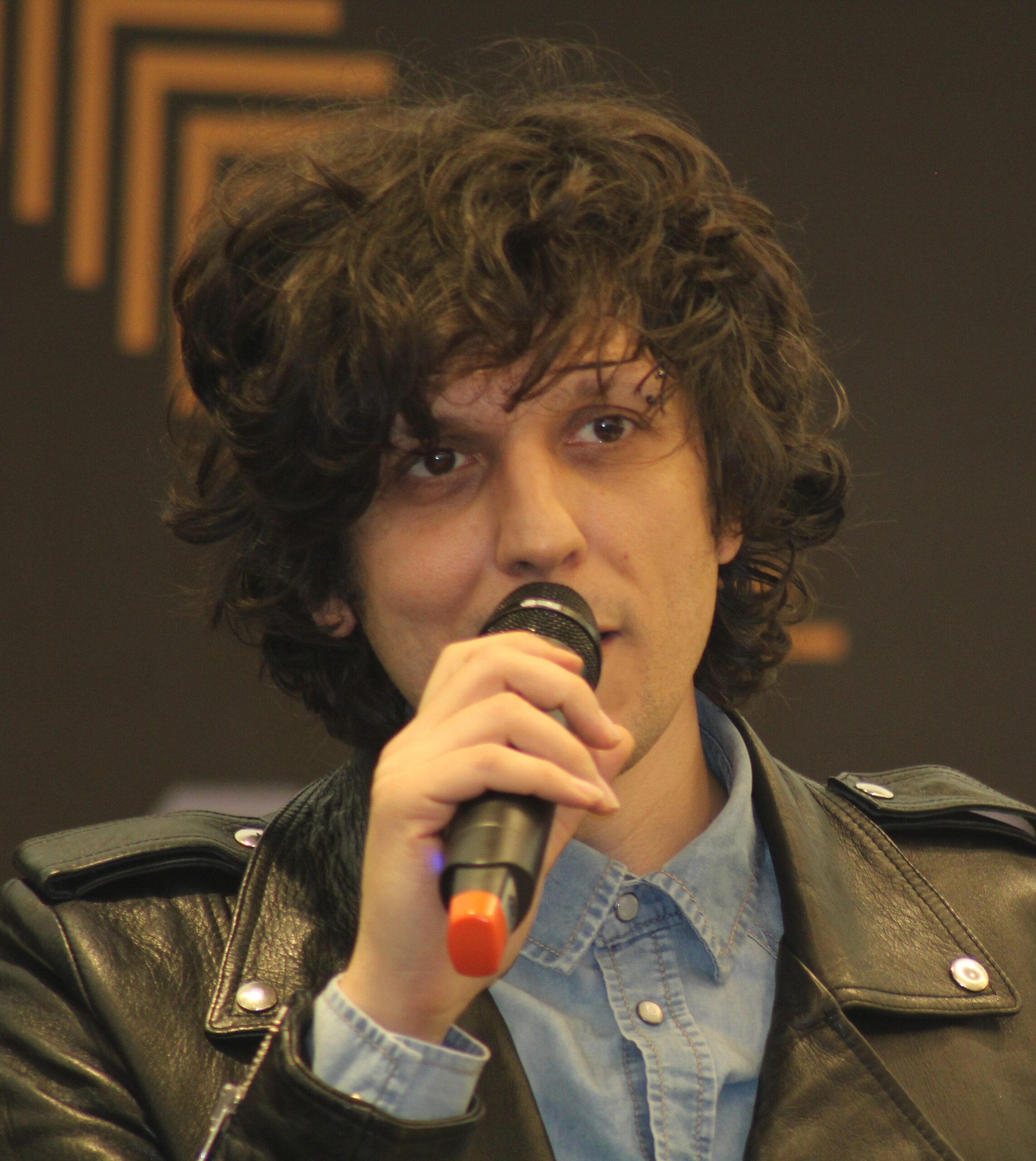
Ermal Meta, born on April 20, 1981, in Fier, Albania, is a prominent figure in the Italian music industry, known for his evocative songwriting, powerful voice, and compelling performances. His journey from a young boy in Albania to one of Italy’s most respected musicians is a story of passion, perseverance, and the universal language of music.
Early Life and Musical Roots
Ermal Meta’s connection to music began early, heavily influenced by his mother, who was a classical musician. This early exposure to music in his household laid the foundation for his future career. At the age of 13, Meta and his family moved to Italy, settling in Bari, a city that would play a significant role in shaping his musical identity.
As a teenager, Meta began performing live, initially with his first band, Shiva. His early experiences in the music scene were a mix of exploration and experimentation. He dabbled in different genres and configurations, including a stint in an electronic music duo. These early years were crucial in honing his skills as a musician and performer, setting the stage for his later success.
Rise to Fame: The Ameba 4 and La Fame di Camilla
Ermal Meta’s first taste of fame came with the band Ameba 4, where he played the guitar. The band initially started by performing cover songs but soon moved on to creating original music. Their big break came when they sent a demo to the United States, catching the attention of producer Corrado Rustici.
In 2006, Ameba 4 participated in the prestigious Festival di Sanremo, one of Italy’s most significant music competitions, with the song “Rido… forse mi sbaglio” in the “Giovani” (Youth) category. Although they were eliminated after the first night, the experience provided valuable exposure and was a pivotal moment in Meta’s career. The band released their album “Ameba 4” under the Sugar Music label, but despite the initial success, the group disbanded shortly thereafter.
Following the dissolution of Ameba 4, Meta formed a new band, La Fame di Camilla, in 2007. The band released their self-titled debut album in 2009, followed by “Buio e luce” in 2010. La Fame di Camilla participated in the Festival di Sanremo in 2010, this time in the “Giovani” category with the song “Buio e luce.” Their participation in the festival, along with performances at major events like the Heineken Jammin’ Festival, helped solidify their presence in the Italian music scene.
The band went on to release a third album, “L’attesa,” in 2012, before ultimately disbanding. This marked the end of an era for Meta but also the beginning of a new chapter as a solo artist and songwriter.
A New Direction: Songwriting and Solo Career
After the breakup of La Fame di Camilla, Ermal Meta turned his attention to songwriting, quickly establishing himself as one of Italy’s most sought-after composers. His songwriting talents were soon recognized by some of the biggest names in Italian music. He wrote songs for artists like Francesco Renga, Emma Marrone, Francesca Michielin, Patty Pravo, and Marco Mengoni, among others. His ability to craft emotionally resonant lyrics and memorable melodies made him a favorite collaborator among Italian pop stars.
Meta’s work as a songwriter was prolific. He penned hits like “Non so ballare” for Annalisa Scarrone, “Straordinario” for Chiara Galiazzo, and “Io ti aspetto” for Marco Mengoni. His contributions to these artists’ successes further enhanced his reputation in the industry, setting the stage for his own solo endeavors.
In 2014, Meta composed “Tutto si muove,” a song that became part of the soundtrack for the popular Italian TV series Braccialetti Rossi. This project was a significant milestone, as it allowed Meta to showcase his talent to a broader audience. He continued to work on various soundtracks and collaborated with other artists, further expanding his influence in the music industry.
Solo Breakthrough and Sanremo Success
Ermal Meta’s transition from behind-the-scenes songwriter to front-stage performer culminated in his solo debut. In 2015, he released the single “Odio le favole,” which earned him a spot in the “Sanremo Giovani” (Sanremo Youth) competition. This was a crucial moment for Meta, as it marked his re-entry into the Sanremo Festival, this time as a solo artist.
The following year, Meta released his first solo album, “Umano,” which featured a blend of introspective lyrics and contemporary pop-rock sounds. The album was well-received, and Meta’s unique voice and emotional depth resonated with listeners. His return to the Sanremo stage in 2016, this time among the “Nuove Proposte” (New Proposals), showcased his growth as an artist.
In 2017, Meta took part in the main competition at the Sanremo Festival with the song “Vietato morire.” The song, which dealt with themes of survival and resilience, struck a chord with audiences and critics alike. Meta’s performance was powerful, and the song’s message of overcoming adversity was deeply personal, drawing from his own experiences. “Vietato morire” earned him third place at the festival, behind Fiorella Mannoia and the winner Francesco Gabbani. The song also won the “Mia Martini” Critics’ Award, further solidifying Meta’s status as a rising star in Italian music.
Victory at Sanremo and Continued Success
Ermal Meta’s success at Sanremo didn’t end with “Vietato morire.” In 2018, he returned to the festival, this time in a collaboration with fellow artist Fabrizio Moro. Together, they performed the song “Non mi avete fatto niente,” a powerful anthem addressing the impact of terrorism and violence on innocent lives. The song, which was inspired by the 2017 Manchester Arena bombing, resonated deeply with both the audience and the jury, and it went on to win the competition.
The victory at Sanremo was a defining moment in Meta’s career. “Non mi avete fatto niente” represented a blend of Meta’s songwriting prowess and his ability to convey profound messages through music. The song’s success not only propelled him to greater fame but also highlighted his role as an artist unafraid to tackle complex and socially relevant themes.
Meta’s collaboration with Fabrizio Moro continued beyond Sanremo, as they represented Italy at the Eurovision Song Contest in 2018. Although they didn’t win, their performance was widely praised, and the song further solidified Meta’s reputation on the international stage.
Recent Works and Legacy
In the years following his Sanremo victory, Ermal Meta has continued to evolve as an artist. His music remains a blend of personal reflection, social commentary, and emotional storytelling. He has released several successful albums, including “Non abbiamo armi” (2018) and “Tribù urbana” (2021), both of which showcase his growth as a musician and his ability to innovate within the Italian pop and rock genres.
Meta returned to the Sanremo stage in 2021 with the song “Un milione di cose da dirti,” once again demonstrating his consistent ability to connect with audiences through his music. His performances are characterized by their emotional intensity and lyrical depth, qualities that have endeared him to fans and critics alike.
Beyond his musical achievements, Ermal Meta is also known for his advocacy and support of various social causes. His music often reflects his commitment to issues such as human rights, equality, and the fight against violence. This dedication to using his platform for good has made him not only a respected artist but also a beloved public figure.
Conclusion
Ermal Meta’s journey from Albania to Italy, from a young boy inspired by his mother’s music to a celebrated artist and songwriter, is a testament to the power of perseverance and passion. His ability to navigate the challenges of the music industry, combined with his unwavering commitment to his craft, has made him one of Italy’s most influential contemporary musicians.
As Meta continues to create and perform, his legacy grows. His music, marked by its emotional depth, social relevance, and artistic integrity, ensures that he will remain a significant figure in the Italian music scene for years to come. Ermal Meta’s story is one of triumph, not just in terms of awards and accolades, but in his ability to touch hearts and minds with his art.


