
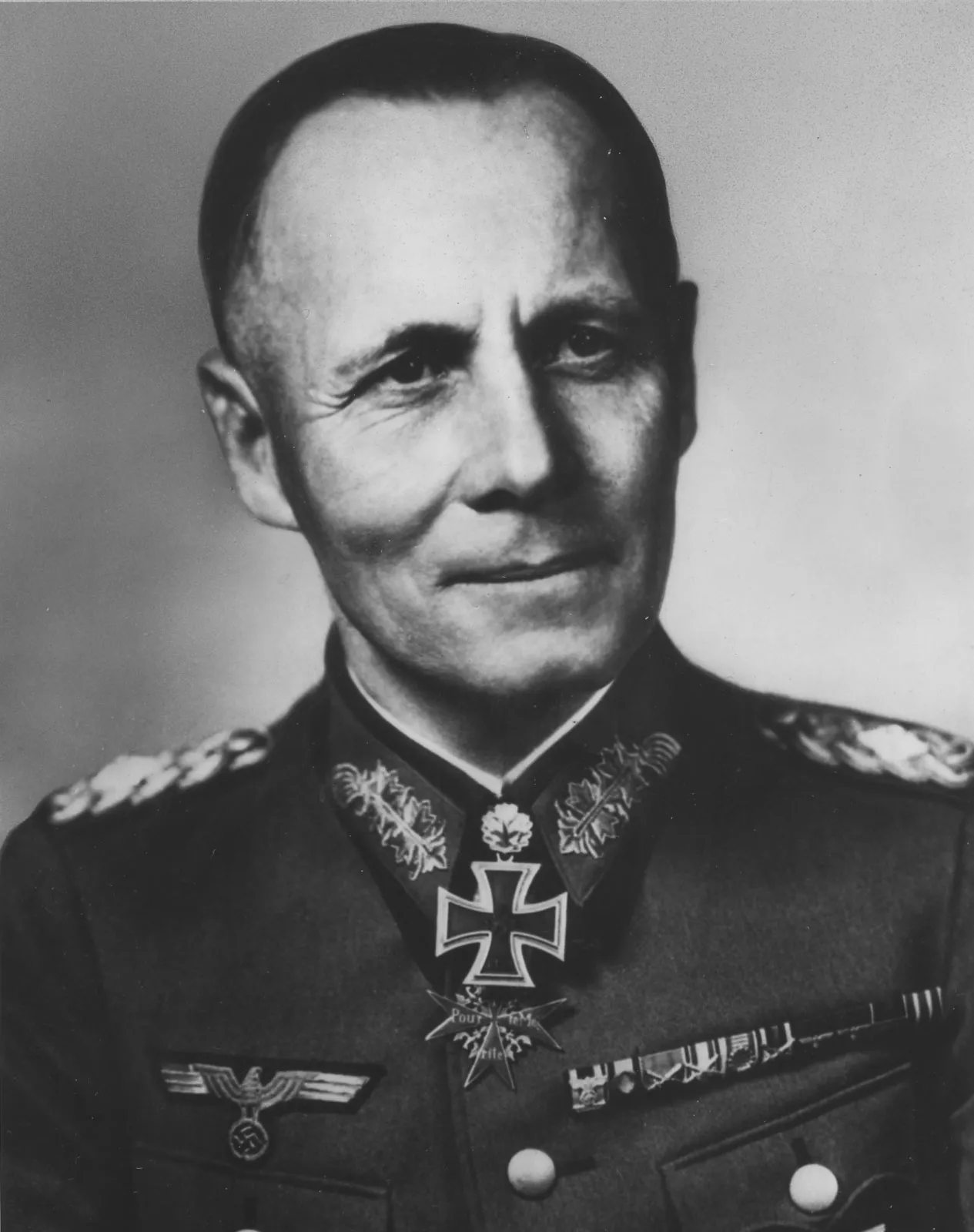
Erwin Johannes Eugen Rommel, born on November 15, 1891, in Heidenheim, Germany, is one of the most iconic military figures of the 20th century. Known as the “Desert Fox” for his tactical prowess during World War II, Rommel’s legacy is a complex mixture of admiration for his military genius and the controversial role he played in Nazi Germany. This article delves into the life, career, and legacy of Erwin Rommel, exploring the nuances of his fame, the historical context in which he lived, and the factors that contributed to his enduring reputation.
Early Life and Military Beginnings
Erwin Rommel was born into a middle-class family in the Kingdom of Württemberg, part of the German Empire. His father, also named Erwin Rommel, was a schoolmaster, and his mother, Helene von Luz, came from a family with a strong military tradition. Rommel’s upbringing was modest, with a focus on education and discipline. Despite showing little academic promise in his youth, Rommel developed a keen interest in mechanics and engineering, which later influenced his approach to warfare.
In 1910, at the age of 18, Rommel joined the German Army, enrolling in the 124th Württemberg Infantry Regiment. His early military career was marked by his attendance at the Danzig (now Gdańsk, Poland) military school, where he honed his skills in tactics and leadership. Rommel’s first taste of combat came during World War I, where he quickly distinguished himself as a courageous and resourceful officer.
World War I: The Making of a Soldier
During World War I, Rommel served on various fronts, including France, Romania, and Italy. It was during this period that he began to develop the strategies and tactics that would later define his military career. Rommel’s actions during the war earned him several decorations, including the prestigious Pour le Mérite, Germany’s highest military honor at the time.
One of Rommel’s most notable achievements in World War I was his leadership during the Battle of Caporetto in 1917. Leading a small unit, Rommel successfully captured a significant number of Italian soldiers and weaponry, showcasing his ability to outmaneuver and outthink his enemies. This victory not only solidified his reputation as a brilliant tactician but also set the stage for his future military successes.
Interwar Years: A Period of Reflection and Growth
The years between World War I and World War II were a time of significant change and development for Rommel. After the war, Germany was left in economic and political turmoil, and Rommel, like many other soldiers, found himself without a clear path forward. Despite considering leaving the military, Rommel chose to stay, influenced by his passion for military service and his belief in the potential for Germany’s recovery.
In the 1920s, Rommel began a series of teaching assignments at military academies, where he shared his experiences and insights with the next generation of German officers. His book, Infanterie greift an (Infantry Attacks), published in 1937, became a seminal work on military tactics and was widely read by both German and Allied officers. The book outlined Rommel’s experiences and theories on mobile warfare, which emphasized speed, surprise, and the effective use of terrain—principles that would later be central to his success in World War II.
Rommel’s rise through the ranks of the German military continued during this period, and by 1937, he had achieved the rank of colonel. His reputation as a skilled and innovative leader caught the attention of the Nazi regime, and he was appointed as the commandant of the Führerbegleitbataillon, the unit responsible for Adolf Hitler’s personal security.
World War II: The Desert Fox
With the outbreak of World War II in 1939, Rommel’s career entered its most famous phase. Initially serving in the invasion of Poland, Rommel’s real claim to fame came with his command of the 7th Panzer Division during the 1940 invasion of France. Nicknamed the “Ghost Division” due to its rapid and unpredictable movements, Rommel’s unit played a crucial role in the swift and decisive German victory. His success in France earned him a promotion to general and the admiration of both his peers and enemies.
However, it was in North Africa where Rommel truly earned his legendary status. In early 1941, Hitler appointed Rommel to lead the newly formed Afrika Korps, tasked with supporting the Italian forces against the British in Libya. Rommel’s North African campaign was characterized by a series of bold and innovative maneuvers that repeatedly outflanked and outwitted the British forces. His ability to maximize limited resources and his deep understanding of desert warfare earned him the nickname “Desert Fox.”
Rommel’s most significant victory in North Africa came in June 1942, when his forces captured the key port of Tobruk, dealing a severe blow to the British. For this achievement, Hitler promoted him to field marshal, making him the youngest German officer to reach this rank during the war.
Despite his successes, Rommel’s North African campaign ultimately ended in defeat. The turning point came at the Second Battle of El Alamein in October 1942, where the British Eighth Army, under the command of General Bernard Montgomery, decisively defeated the Afrika Korps. Rommel’s forces were outnumbered and outgunned, and despite his best efforts, he was forced to retreat. By May 1943, the remnants of the Afrika Korps had surrendered to the Allies.
The Normandy Campaign and Final Days
After the defeat in North Africa, Rommel was reassigned to oversee the defense of the Atlantic Wall, a series of fortifications along the western coast of Europe designed to repel an Allied invasion. Rommel was tasked with preparing for what would become the D-Day invasion in Normandy. He recognized the critical importance of stopping the Allies at the beaches and advocated for a strategy of immediate counterattack. However, his recommendations were often overruled by Hitler and the German High Command, who believed that the primary defense should occur further inland.
When the Allies launched Operation Overlord on June 6, 1944, Rommel’s fears were realized. Despite his efforts, the German defenses were quickly overwhelmed, and the Allies established a beachhead that would lead to the liberation of Western Europe. Rommel, who had been severely injured in an air attack shortly before the invasion, was unable to influence the battle as he had hoped.
In the aftermath of the failed July 20 plot to assassinate Hitler, Rommel was implicated by the Gestapo, although his exact involvement remains a matter of historical debate. Given his popularity and status as a national hero, Hitler offered Rommel a choice: face a public trial and likely execution, or commit suicide in exchange for assurances that his family would be spared. On October 14, 1944, Rommel chose the latter option, taking his own life with a cyanide pill.
Legacy: The Desert Fox Remembered
Erwin Rommel’s legacy is a subject of ongoing debate among historians, military scholars, and the general public. On one hand, he is widely regarded as one of the greatest military tacticians of all time, praised for his innovative strategies, his ability to inspire his troops, and his ethical conduct in warfare. Unlike many of his contemporaries, Rommel was known for treating prisoners of war with respect and for refusing to carry out orders that he deemed dishonorable, such as the execution of Jewish soldiers.
On the other hand, Rommel’s association with the Nazi regime and his role in Hitler’s military campaigns cannot be overlooked. While he was not directly involved in the atrocities of the Holocaust, his participation in the German war effort contributed to the suffering and destruction wrought by the Nazi regime. This duality has led to a complex and sometimes contradictory view of Rommel, who is both revered as a military genius and scrutinized for his complicity in a regime that perpetrated some of the worst crimes in human history.
In the years following his death, Rommel has been the subject of numerous books, films, and documentaries, all attempting to grapple with his complex legacy. In Germany, he has been both celebrated as a national hero and criticized as a symbol of the militarism that led to the country’s downfall. Internationally, Rommel is often studied in military academies as a case study in leadership, strategy, and the moral dilemmas faced by soldiers in times of war.
Historical Context and Relevance Today
To understand Rommel’s life and legacy, it is essential to consider the historical context in which he lived. Born in the late 19th century, Rommel came of age in a Germany that was defined by its military traditions and its role as a major European power. The devastation of World War I, followed by the economic and political chaos of the Weimar Republic, shaped Rommel’s worldview and his commitment to restoring Germany’s military strength.
Rommel’s actions during World War II must also be viewed within the broader context of the Nazi regime’s ambitions and the global conflict that it sparked. While Rommel was undoubtedly a brilliant commander, his successes were ultimately in service of a regime that sought to impose its will on the world through violence and terror. This raises important questions about the responsibilities of military leaders and the ethical implications of their actions.
Today, Rommel’s story serves as a reminder of the complexities of history and the importance of critically examining the lives of those who played significant roles in shaping it. As we continue to study Rommel’s life and legacy, we are reminded of the need to balance admiration for his military achievements with a sober recognition of the darker aspects of the history in which he was involved.
Conclusion: The Enduring Fascination with Erwin Rommel
Erwin Rommel remains one of the most fascinating figures of World War II, a man whose life and career encapsulate the complexities and contradictions of a tumultuous period in history. His reputation as the “Desert Fox” endures, both as a testament to his tactical brilliance and as a symbol of the moral ambiguities faced by soldiers in times of war.
As we reflect on Rommel’s life, it is important to remember that history is not just a collection of facts and dates, but a tapestry of human experiences, choices, and consequences. Rommel’s story, with all its triumphs and tragedies, offers valuable lessons for understanding the past and for navigating the challenges of the present and future.


