
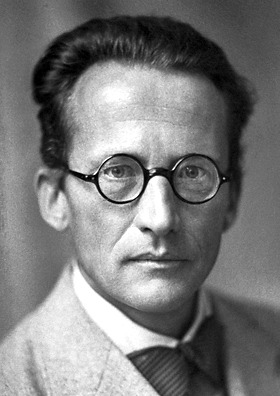
Erwin Schrödinger is one of the most influential physicists of the 20th century, renowned for his contributions to quantum mechanics and his development of the Schrödinger equation, a fundamental equation in the field. His work not only earned him a Nobel Prize but also cemented his legacy as a key figure in the history of science. This article explores the life of Erwin Schrödinger, focusing on his age, rise to fame, and the major highlights of his career, while also delving into the historical context that shaped his work and the lasting impact he had on the scientific community.
Early Life and Education
Erwin Schrödinger was born on August 12, 1887, in Vienna, Austria, into a well-to-do family. His father, Rudolf Schrödinger, was a successful businessman with a deep interest in botany, while his mother, Georgine Emilia Brenda, came from a prominent family with strong intellectual traditions. Growing up in an environment rich in intellectual and cultural stimulation, Schrödinger developed a wide range of interests from an early age, including science, literature, and philosophy.
Schrödinger’s early education took place at the Akademisches Gymnasium in Vienna, where he received a classical education that included studies in languages, literature, and philosophy. These subjects would continue to influence his thinking throughout his life. However, it was in the sciences that Schrödinger found his true calling. His passion for physics was ignited by his exposure to the works of leading scientists of the time, and by the time he graduated in 1906, he had already decided to pursue a career in physics.
Schrödinger enrolled at the University of Vienna to study physics, where he was mentored by some of the most prominent physicists of the era, including Franz Exner and Friedrich Hasenöhrl. He completed his doctorate in 1910, after which he remained at the university as an assistant to Exner. It was during this time that Schrödinger began to develop his ideas on theoretical physics, laying the groundwork for his future contributions to the field.
World War I and the Transition to Theoretical Physics
The outbreak of World War I in 1914 interrupted Schrödinger’s academic career. He served as an artillery officer in the Austro-Hungarian army, a role that took him to the front lines of the war in Italy. Despite the challenges of wartime service, Schrödinger continued to engage with scientific research whenever possible. In 1917, he was transferred back to Vienna, where he was assigned to the meteorological service and resumed his scientific work at the University of Vienna.
The post-war years were a time of great upheaval in Austria, both politically and economically. Despite these difficulties, Schrödinger managed to secure a position as a professor at the University of Jena in Germany in 1920. This was the beginning of a series of academic appointments that would take him across Europe and ultimately lead to some of his most important scientific achievements.
It was during his time in Jena that Schrödinger married Annemarie Bertel, a relationship that would be a constant in his life despite the many professional and personal challenges he faced. In the following years, Schrödinger held positions at the universities of Stuttgart and Breslau before finally settling in Zurich, Switzerland, in 1921. It was in Zurich that Schrödinger made the breakthrough that would define his career.
The Birth of Wave Mechanics and the Schrödinger Equation
The mid-1920s were a period of intense intellectual activity in the field of physics, particularly in the development of quantum mechanics. Schrödinger became deeply involved in these developments, drawing on the ideas of Louis de Broglie, who had proposed that particles such as electrons could exhibit wave-like behavior. Schrödinger’s genius lay in formulating this concept mathematically, leading to the creation of the Schrödinger equation in 1925.
The Schrödinger equation is a fundamental equation of quantum mechanics that describes how the quantum state of a physical system changes over time. It provided a powerful and intuitive framework for understanding the behavior of particles at the quantum level, and it quickly became one of the cornerstones of quantum mechanics. Schrödinger’s work on wave mechanics was revolutionary, offering a new way to approach problems in physics that had previously seemed intractable.
In 1926, Schrödinger published a series of papers on wave mechanics that were met with widespread acclaim in the scientific community. His formulation of quantum mechanics was particularly appealing because it provided a clear and visualizable model of atomic behavior, in contrast to the more abstract matrix mechanics developed by Werner Heisenberg. Schrödinger’s work earned him the Nobel Prize in Physics in 1933, which he shared with Paul Dirac for their contributions to the field of quantum mechanics.
Academic Career and the Rise of Nazism
Following the success of his work in quantum mechanics, Schrödinger was offered a prestigious position at the University of Berlin, where he succeeded Max Planck, one of the founders of quantum theory. However, his time in Berlin was short-lived due to the political changes sweeping Germany. The rise of the Nazi regime in 1933 created an increasingly hostile environment for academics, particularly those with connections to Jewish colleagues or those who were opposed to the regime’s ideology.
Although Schrödinger was not Jewish, he was deeply disturbed by the direction in which Germany was heading. He made the difficult decision to leave his position in Berlin and accept a professorship at the University of Oxford in England. Shortly after his arrival in Oxford, Schrödinger received the news that he had been awarded the Nobel Prize. The prize not only recognized his scientific achievements but also provided him with the financial stability and international recognition that were crucial during this tumultuous period.
However, Schrödinger’s time in England was also fraught with challenges. He struggled to adapt to the academic culture at Oxford and found it difficult to secure a permanent position. In 1936, he returned to Austria, accepting a position at the University of Graz. Unfortunately, the Anschluss, or annexation of Austria by Nazi Germany in 1938, once again placed Schrödinger in a precarious position. Despite his attempts to navigate the political landscape, he was dismissed from his post due to his perceived unreliability as a supporter of the Nazi regime.
Exile and Contributions to Biology
Forced to flee Austria, Schrödinger found refuge in Italy before eventually settling in Dublin, Ireland, where he was invited to help establish the Dublin Institute for Advanced Studies. Schrödinger remained in Dublin for 17 years, where he continued his work in physics and began to explore new areas of scientific inquiry, including the emerging field of molecular biology.
One of Schrödinger’s most significant contributions during his time in Dublin was his book What is Life? published in 1944. In this work, Schrödinger applied the principles of quantum mechanics to the study of biology, particularly genetics. He proposed that genetic information is stored in what he called an “aperiodic crystal,” a concept that would later influence the discovery of the structure of DNA by James Watson and Francis Crick. Schrödinger’s ideas in What is Life? laid the groundwork for the development of molecular biology, making him a pioneer in the field even though he was primarily a physicist.
Return to Vienna and Later Years
After World War II, Schrödinger was invited to return to Austria, where he was offered a professorship at the University of Vienna. He hesitated to return immediately, as Austria was still under occupation and lacked full sovereignty. However, after the signing of the Austrian State Treaty in 1955, which restored Austria’s independence, Schrödinger accepted the offer and returned to Vienna, where he continued to work until his retirement in 1958.
Schrödinger’s later years were marked by declining health, but he remained active in the scientific community. He continued to publish on a wide range of topics, including philosophy and the interpretation of quantum mechanics. Schrödinger was known for his interdisciplinary approach to science, often drawing connections between physics, biology, and philosophy in ways that were ahead of his time.
On January 4, 1961, Erwin Schrödinger passed away at the age of 73 in his apartment in Vienna. His death was mourned by the scientific community, which recognized him as one of the towering figures of 20th-century science.
Historical Context and Influence
Erwin Schrödinger’s work must be understood within the broader context of the scientific revolution that was taking place in the early 20th century. The development of quantum mechanics was one of the most significant intellectual achievements of the century, fundamentally changing our understanding of the natural world. Schrödinger’s contributions were critical to this revolution, providing the tools and concepts that allowed physicists to make sense of the strange and counterintuitive behavior of particles at the quantum level.
Schrödinger’s interdisciplinary approach to science also set him apart from many of his contemporaries. He was deeply interested in the philosophical implications of his work and often sought to bridge the gap between different fields of study. This was evident in his exploration of biology, where he applied the principles of physics to understand the nature of life itself. His ability to move between disciplines and draw connections between them has had a lasting impact on the way science is conducted today.
Erwin Schrödinger’s Lasting Legacy
Erwin Schrödinger’s legacy is multifaceted, encompassing not only his contributions to quantum mechanics but also his influence on fields as diverse as biology, philosophy, and the history of science. The Schrödinger equation remains one of the most important tools in quantum mechanics, used by physicists around the world to understand the behavior of particles at the quantum level. His work on wave mechanics laid the foundation for much of modern physics, and his ideas continue to inspire new generations of scientists.
In addition to his scientific achievements, Schrödinger is remembered for his intellectual curiosity and his willingness to explore new ideas, even when they took him far from his original field of study. His work in molecular biology, for example, was groundbreaking and has had a lasting impact on our understanding of genetics and the nature of life.
Schrödinger’s life was marked by periods of great upheaval and uncertainty, yet he remained dedicated to his pursuit of knowledge. His ability to adapt to changing circumstances and continue his work despite the many challenges he faced is a testament to his resilience and determination.
Today, Erwin Schrödinger is celebrated as one of the greatest physicists of the 20th century, a pioneer who helped to shape our understanding of the universe. His work continues to influence not only the field of physics but also the broader scientific community, and his legacy will undoubtedly endure for generations to come.


