
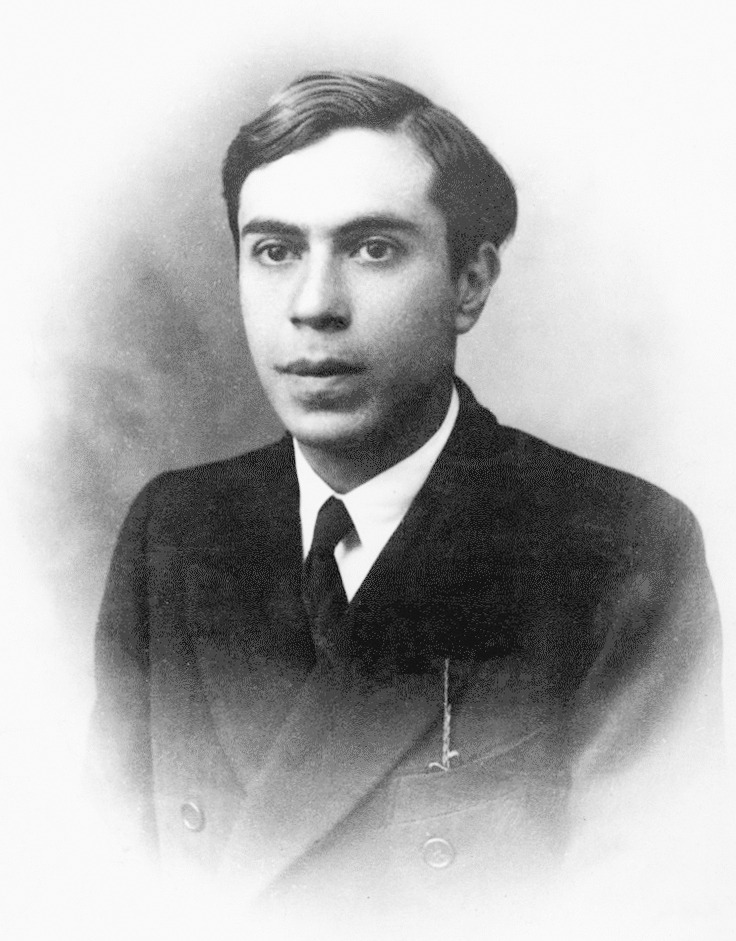
Ettore Majorana, born on August 5, 1906, in Catania, Sicily, was one of the most enigmatic and brilliant physicists of the 20th century. His contributions to theoretical physics, particularly in the field of quantum mechanics, have left an indelible mark on science, even as his mysterious disappearance in 1938 continues to perplex historians and scholars alike. This article delves into Majorana’s life, his academic journey, groundbreaking achievements, and the enduring mystery surrounding his disappearance.
Early Life and Academic Beginnings
Ettore Majorana hailed from an illustrious Sicilian family, known for their contributions to various fields such as law, engineering, and administration. He was the youngest of five siblings, each of whom achieved distinction in their respective fields. From an early age, Majorana displayed an exceptional aptitude for mathematics and physics, setting him apart even in a family of high achievers.
He began his university studies in engineering at the University of Rome, but his passion for theoretical physics soon led him to switch fields. Majorana completed his degree in physics in 1928 under the mentorship of Enrico Fermi, one of the most renowned physicists of the time. Fermi recognized Majorana’s extraordinary talent and invited him to join the “Via Panisperna boys,” a group of young physicists working on groundbreaking research in nuclear physics.
Majorana’s Contributions to Physics
Ettore Majorana’s contributions to physics are numerous and significant, despite his relatively short career. His work primarily focused on quantum mechanics, atomic spectroscopy, and nuclear physics. One of his most notable contributions was his theoretical prediction of the Majorana fermion, a particle that is its own antiparticle. This concept, first proposed in 1937, has profound implications for particle physics and quantum computing, and experimental evidence supporting the existence of Majorana fermions has only been found in recent years.
Another critical area of Majorana’s research involved the forces that hold atomic nuclei together. He proposed a theory of nuclear forces based on the exchange interaction between protons and neutrons, which provided a deeper understanding of nuclear stability. Although this theory was later developed independently by Werner Heisenberg, Majorana’s insights were crucial in shaping the early understanding of nuclear forces.
Majorana’s brilliance was widely recognized by his peers. Enrico Fermi, who had a deep respect for Majorana’s intellect, famously remarked that “there are many categories of scientists: those of second or third rank, who do their best but do not go very far. There are also the first-rank scientists, who make important discoveries, fundamental to scientific progress. But then there are the geniuses, like Galileo and Newton. Well, Ettore was one of these.”
The Mysterious Disappearance
On March 25, 1938, Majorana boarded a ship from Naples to Palermo. He sent a letter to a colleague indicating that he was planning to disappear, but then another letter followed, stating that he had changed his mind. Despite this, Majorana was never seen again. His disappearance has been the subject of intense speculation and investigation, but no conclusive evidence has ever surfaced regarding his fate.
Several theories have been proposed to explain Majorana’s disappearance. Some suggest that he may have committed suicide, possibly due to the immense pressure he felt as a leading physicist. Others believe that he may have chosen to withdraw from the world and live in seclusion, possibly joining a monastery or living as a hermit. There are even more far-fetched theories suggesting that Majorana was kidnapped by a foreign power or that he faked his death to avoid being involved in the development of nuclear weapons, which he foresaw as a potential outcome of his research.
The Italian government conducted several investigations into Majorana’s disappearance, but none were able to provide definitive answers. His disappearance remains one of the most enduring mysteries in the history of science.
Impact on Modern Physics
Despite his early disappearance, Majorana’s work continues to influence modern physics. The Majorana fermion, in particular, has become a topic of intense research in recent years, especially in the field of quantum computing. Majorana fermions have unique properties that could make them ideal for use in quantum computers, which have the potential to revolutionize computing by solving problems that are currently intractable with classical computers.
Majorana’s work on nuclear forces also laid the groundwork for future research in nuclear physics. His theories contributed to the understanding of the strong nuclear force, one of the four fundamental forces of nature, which binds protons and neutrons together in the nucleus of an atom. This understanding is critical for a wide range of applications, from nuclear energy to medical imaging.
Moreover, Majorana’s approach to physics, characterized by deep intuition and a reluctance to publish his findings until they were fully developed, has inspired generations of physicists. His work ethic, described by colleagues as meticulous and methodical, set a high standard for scientific research.
Majorana’s Personality and Legacy
Ettore Majorana was known for his reclusive and introspective nature. Colleagues and friends often described him as a solitary figure, deeply immersed in his thoughts and work. He was known to be shy, with a tendency to withdraw from social interactions. This personality trait, combined with his extraordinary intellectual capabilities, contributed to the mystique that surrounds him.
His reluctance to publish his work and his tendency to destroy his manuscripts when he was not satisfied with them have left a significant gap in the record of his contributions. It is widely believed that much of Majorana’s work was never published and that his disappearance deprived the world of potentially groundbreaking discoveries.
Despite his relatively small body of published work, Majorana’s legacy in the field of physics is immense. His ideas continue to resonate with physicists today, and the search for Majorana fermions has become a major focus of research in condensed matter physics and quantum computing.
Theories Surrounding His Disappearance
The mystery of Ettore Majorana’s disappearance has given rise to a wide range of theories, some more plausible than others. One of the most widely accepted theories is that Majorana chose to disappear voluntarily. This theory is supported by the letters he left behind, which suggest that he was contemplating a drastic decision.
Another theory posits that Majorana may have taken his own life. His letters, while not explicitly indicating suicidal intent, convey a deep sense of despair and fatigue. Majorana’s intense involvement in the early developments of nuclear physics might have led him to foresee the destructive potential of atomic weapons, which could have contributed to his decision to withdraw from the scientific community.
There are also theories that suggest Majorana might have been recruited by a foreign government. During the 1930s, many scientists were approached by different nations interested in developing nuclear weapons. Given Majorana’s expertise, it is conceivable that he was targeted for his knowledge and was either coerced or voluntarily agreed to work in secrecy for another country.
Finally, some believe that Majorana may have sought refuge in a religious institution. His letters hint at a desire for peace and seclusion, which could align with the idea of him joining a monastery or another religious community where he could live out his days in contemplation, away from the pressures of his scientific career.
Conclusion: Ettore Majorana’s Enduring Influence
Ettore Majorana remains one of the most fascinating figures in the history of science, not only because of his contributions to physics but also due to the enduring mystery of his disappearance. His life and work continue to captivate scientists, historians, and the general public.
Majorana’s legacy is one of brilliance, introspection, and enigma. His contributions to theoretical physics, particularly his prediction of the Majorana fermion, have had a lasting impact on the field. The mystery of his disappearance only adds to the intrigue surrounding his life, making him a subject of enduring fascination.
As researchers continue to explore the implications of Majorana’s work, particularly in the realms of particle physics and quantum computing, his influence on modern science only grows stronger. The search for answers to the questions he left behind, both scientific and personal, ensures that Ettore Majorana will be remembered not just as a brilliant physicist but as one of the most intriguing figures of the 20th century.


