
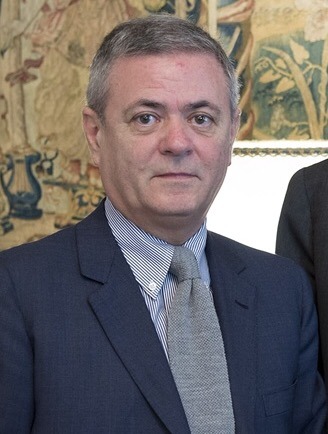
Early Life and Beginnings in Journalism
Ezio Mauro, born on October 24, 1948, in Dronero, Cuneo, Italy, is one of the most influential figures in Italian journalism. His career, spanning several decades, has been marked by his dedication to uncovering the truth and his commitment to the highest standards of journalistic integrity. Mauro’s journey into the world of journalism began in 1972 when he joined the editorial team of the Gazzetta del Popolo in Turin. This early stage of his career was formative, as he cut his teeth reporting on some of the most tumultuous events in modern Italian history.
During the 1970s, Italy was engulfed in the “Anni di Piombo” (Years of Lead), a period characterized by political violence, terrorism, and deep social unrest. Mauro’s reporting during this time focused on the activities of the Red Brigades, a left-wing terrorist organization responsible for numerous attacks, including the kidnapping and murder of former Italian Prime Minister Aldo Moro. Mauro’s fearless coverage of these events earned him both recognition and respect within the journalistic community, although it also exposed him to significant risks.
Rise to Prominence at La Stampa
Mauro’s talent and dedication quickly propelled him through the ranks of Italian journalism. In 1981, he joined La Stampa, one of Italy’s most prestigious newspapers, as a correspondent. His work took him to the United States, where he covered major political and social developments, providing Italian readers with insightful analysis and on-the-ground reporting.
In 1988, Mauro’s career took another significant turn when he was appointed as a correspondent for La Repubblica in Moscow. This period coincided with the final years of the Soviet Union, a time of immense change and uncertainty as the country navigated the perestroika reforms initiated by Mikhail Gorbachev. Mauro’s reports from Moscow provided a unique perspective on the dissolution of the Soviet Union, capturing the complexities and contradictions of a superpower in decline.
Mauro’s experience in Moscow enriched his understanding of global politics and solidified his reputation as a journalist of exceptional insight and ability. In 1990, he returned to Italy to rejoin La Stampa as an editor. Just two years later, in 1992, he was appointed editor-in-chief of the newspaper, a position he held until 1996. Under his leadership, La Stampa continued to be a leading voice in Italian media, known for its rigorous journalism and balanced reporting.
Leadership at La Repubblica
In 1996, Ezio Mauro reached the pinnacle of his journalistic career when he was appointed editor-in-chief of La Repubblica, succeeding the newspaper’s founder, Eugenio Scalfari. La Repubblica was, and continues to be, one of Italy’s most influential newspapers, known for its progressive editorial stance and its role in shaping public opinion.
As editor-in-chief, Mauro faced the challenge of leading La Repubblica through a period of significant political and social change in Italy. The country was grappling with the aftermath of the Tangentopoli corruption scandal, which had shaken the foundations of the Italian political system, leading to the collapse of the First Republic and the rise of new political forces.
During his tenure, Mauro navigated La Repubblica through these turbulent times, ensuring that the newspaper remained a vital source of information and analysis for its readers. He was known for his sharp editorials, in which he often took a critical stance against the rise of Silvio Berlusconi, whose political and media dominance during the 1990s and 2000s profoundly affected Italian society.
Mauro’s editorial leadership was instrumental in maintaining La Repubblica‘s reputation for fearless journalism. He cultivated a newsroom culture that valued thorough reporting and incisive commentary, which helped the newspaper retain its position as the second most-read newspaper in Italy, with a significant online presence that continues to grow.
Recognition and Contributions to Journalism
Throughout his career, Ezio Mauro has been recognized for his contributions to journalism. In 1994, he was awarded the prestigious “Premio Ischia Internazionale di Giornalismo,” an award given to journalists who demonstrate exceptional professionalism and adherence to ethical standards. This recognition was a testament to Mauro’s unwavering commitment to journalistic integrity and his dedication to delivering truthful and impactful reporting.
In 1997, Mauro received another significant accolade, the “Premio Internazionale Alfio Russo,” further cementing his status as one of Italy’s most respected journalists. These awards reflect not only his personal achievements but also his influence on Italian journalism as a whole.
Beyond his work in the newsroom, Mauro has also made significant contributions as a writer. In 2011, he co-authored the book “La felicità della democrazia. Un dialogo” with Gustavo Zagrebelsky, a prominent Italian jurist and former president of the Constitutional Court. The book is a dialogue between the two men, exploring the concept of democracy and comparing it to the pursuit of happiness. The work highlights Mauro’s deep intellectual engagement with the issues that define modern society, particularly the challenges facing democratic institutions.
Ideological Stance and Public Engagement
Ezio Mauro’s editorial voice has always been clear and assertive, particularly when it comes to his views on Italian politics. He is known for his strong opposition to what he perceives as the dangers of “Berlusconismo,” the term used to describe the political and cultural influence of Silvio Berlusconi. Mauro has consistently criticized Berlusconi’s approach to governance and his impact on Italian media, which he believes has undermined democratic norms and values in the country.
Mauro’s critiques are not limited to the printed word; he has also been a prominent figure in Italian television, where he has participated in debates and discussions on current affairs. His public appearances have further established him as a thought leader, someone who is not afraid to speak out on issues that he believes are crucial to the health of Italy’s democracy.
Historical Context and Impact on Italian Journalism
To fully appreciate Ezio Mauro’s impact on Italian journalism, it is essential to understand the broader historical context in which he has operated. The period of his career has been one of profound change in Italy, marked by political upheaval, economic challenges, and shifts in the media landscape.
Mauro began his career during the “Anni di Piombo,” a time of intense political violence that tested the resilience of Italy’s democratic institutions. His early reporting on these events helped shape public understanding of the threats posed by terrorism and extremism, and his work during this period laid the foundation for his later success.
As the editor of La Stampa and La Repubblica, Mauro has been at the forefront of reporting on some of the most significant events in recent Italian history, including the end of the Cold War, the rise of Berlusconi, and the challenges of the European Union. His leadership has been characterized by a commitment to truth and a belief in the power of journalism to hold those in power accountable.
Mauro’s influence extends beyond the pages of the newspapers he has edited. He has helped shape the careers of countless journalists, fostering a new generation of reporters who share his dedication to journalistic excellence. His legacy is evident in the continued success of La Repubblica, which remains a vital part of Italy’s media landscape.
Personal Life and Continuing Influence
Despite his many achievements, Ezio Mauro remains a private individual who has kept much of his personal life out of the public eye. What is clear, however, is his enduring passion for journalism and his belief in its importance as a pillar of democracy. Even after stepping down as editor-in-chief of La Repubblica in 2016, Mauro has continued to write and speak on issues that matter to him, ensuring that his voice remains a significant one in Italian public life.
Mauro’s ongoing contributions to journalism and public discourse reflect his deep commitment to the principles that have guided his career. Whether through his writing, his public appearances, or his mentoring of young journalists, he continues to play a crucial role in shaping the future of Italian journalism.
Conclusion
Ezio Mauro’s career is a testament to the power of journalism in shaping public opinion and holding power to account. From his early days covering the “Anni di Piombo” to his leadership at two of Italy’s most important newspapers, Mauro has consistently demonstrated a commitment to truth, integrity, and the highest standards of his profession.
As Italy continues to navigate the complexities of the 21st century, the legacy of journalists like Ezio Mauro will remain vital. His influence on Italian journalism is undeniable, and his work will continue to inspire future generations of journalists to pursue the truth with the same passion and dedication that has defined his remarkable career.


