
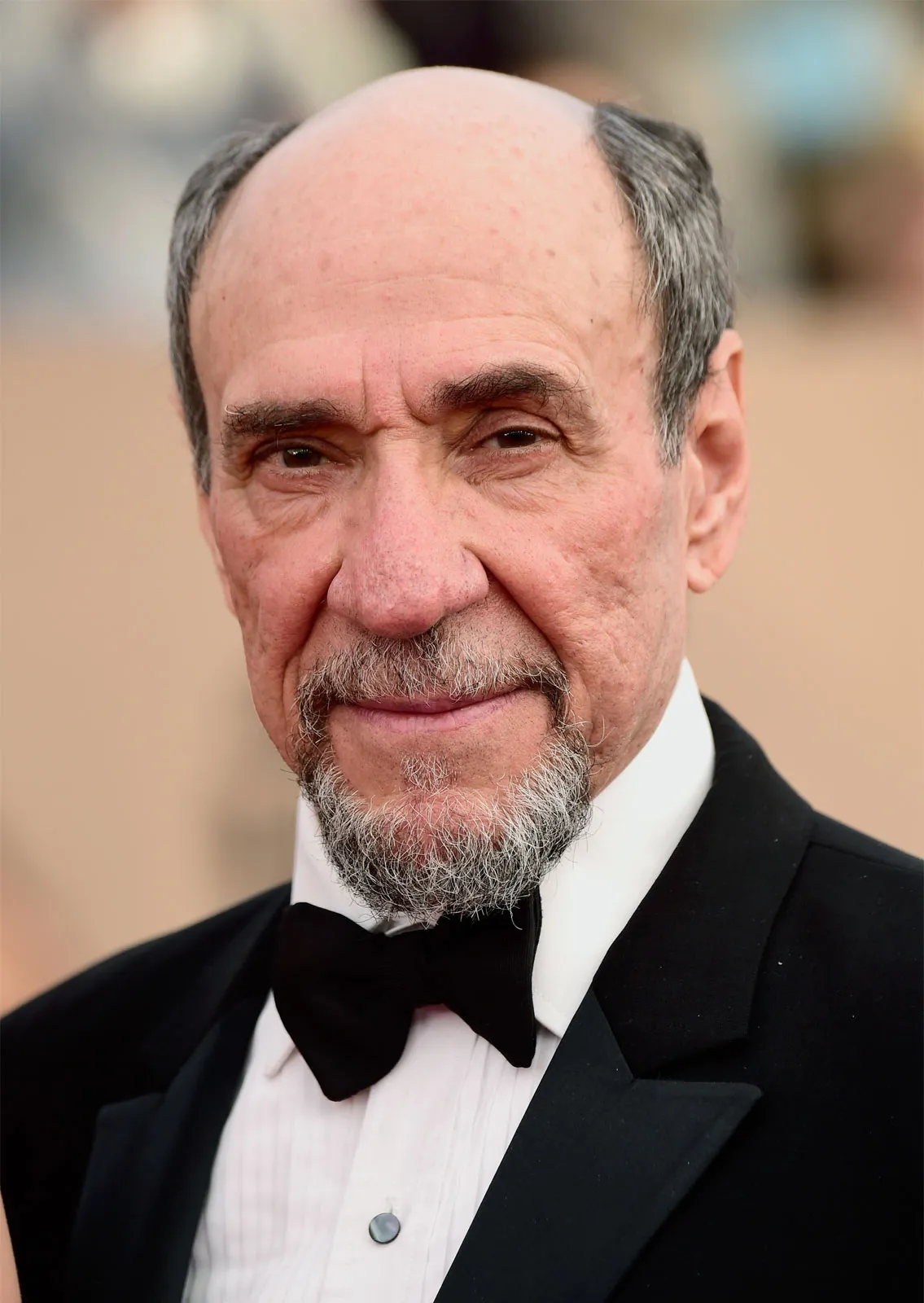
F. Murray Abraham, born Frank Murray Abraham on October 24, 1939, in Pittsburgh, Pennsylvania, is a distinguished American actor known for his versatile performances across film, television, and stage. His career, spanning over six decades, has been marked by a remarkable range of roles, with a particular emphasis on characters that often straddle the line between complexity and malevolence. This article delves into the life, achievements, and cultural impact of F. Murray Abraham, exploring his journey from a modest beginning to becoming one of Hollywood’s most respected character actors.
Early Life and Background
F. Murray Abraham was born into a family of modest means, with his father, Frederick Abraham, being a Syrian immigrant who worked as an auto mechanic, and his mother, Josephine Stello Abraham, who was of Italian descent. Growing up in El Paso, Texas, Abraham’s multicultural background played a significant role in shaping his world view and, ultimately, his approach to acting. He was introduced to the arts at a young age, participating in school plays, which ignited his passion for performance.
Despite the challenges of growing up in a working-class family, Abraham pursued his education and attended the University of Texas at El Paso before moving to Los Angeles to chase his dream of becoming an actor. His early years in Hollywood were marked by struggle and persistence, with Abraham taking on various odd jobs while honing his craft. He eventually enrolled at the HB Studio in New York City, where he studied under the guidance of prominent acting coaches, further refining his skills.
The Road to Hollywood: Early Career Struggles
Like many actors, F. Murray Abraham’s journey to stardom was fraught with challenges. In the late 1960s and early 1970s, he appeared in a series of minor roles in television shows and films, including guest appearances on popular series like “Kojak” and “The Streets of San Francisco.” Despite these small parts, Abraham’s talent was evident, and he gradually began to build a reputation as a dependable character actor.
However, it wasn’t until the early 1980s that Abraham’s career truly began to gain momentum. During this period, he appeared in several notable films, including “All the President’s Men” (1976) and “The Big Fix” (1978). These roles, though still secondary, allowed Abraham to showcase his ability to embody a wide range of characters, from government officials to detectives, each with a distinct personality.
One of Abraham’s early breakthroughs came with his role as Omar Suarez, a drug dealer in the 1983 classic “Scarface.” Directed by Brian De Palma and starring Al Pacino, “Scarface” became a cultural phenomenon, and Abraham’s portrayal of the ruthless Suarez left a lasting impression on audiences. This role solidified Abraham’s presence in Hollywood and hinted at the greater success that was yet to come.
The Role of a Lifetime: Antonio Salieri in “Amadeus”
F. Murray Abraham’s career-defining moment arrived in 1984 when he was cast as Antonio Salieri in the film “Amadeus,” directed by Miloš Forman. The role of Salieri, the envious and tormented court composer who plots against the prodigious Wolfgang Amadeus Mozart, required a delicate balance of villainy and vulnerability. Abraham delivered a masterful performance that captured the complexities of Salieri’s character—his deep admiration for Mozart’s genius, coupled with his crippling jealousy and internal conflict.
“Amadeus” was both a critical and commercial success, earning eight Academy Awards, including Best Picture. Abraham’s portrayal of Salieri was widely praised, and he was awarded the Academy Award for Best Actor in 1985. This win catapulted him into the upper echelons of Hollywood, establishing him as a leading actor capable of carrying a film on his shoulders.
Abraham’s success with “Amadeus” was not just a personal triumph but also a significant milestone in film history. The movie’s exploration of the darker aspects of genius and the human condition resonated with audiences worldwide, and Abraham’s performance became iconic. His Salieri is remembered as one of the most compelling portrayals of a historical figure in cinema, blending pathos and villainy in a way that few actors have managed to replicate.
Despite the acclaim and recognition that came with his Oscar win, F. Murray Abraham found himself grappling with the challenges of typecasting. The success of “Amadeus” had firmly established him as a go-to actor for roles that required a certain gravitas, often leaning towards the sinister or morally complex. While this led to a steady stream of work, it also meant that Abraham was frequently cast in similar roles, limiting his opportunities to showcase the full range of his talents.
Abraham himself has spoken candidly about the difficulties that followed his Oscar win, noting that while the award opened doors, it also pigeonholed him into a specific type of character. In interviews, he has reflected on how this typecasting affected his career, acknowledging that while he was grateful for the opportunities, he also yearned for more diverse roles that would allow him to explore different aspects of his craft.
One of the more notable roles during this period was his portrayal of Bernardo Gui, the fanatical inquisitor in Jean-Jacques Annaud’s adaptation of Umberto Eco’s “The Name of the Rose” (1986). Abraham’s performance as Gui was chilling, further cementing his reputation as an actor capable of bringing a formidable intensity to his roles. The film was a success, and Abraham’s portrayal of Gui became another iconic entry in his gallery of memorable characters.
Embracing the Villain: Memorable Roles in the 1990s
Throughout the 1990s, F. Murray Abraham continued to embrace roles that played to his strengths as an actor capable of conveying both menace and complexity. One such role was in “The Bonfire of the Vanities” (1990), where he played the part of a district attorney with a dark, manipulative streak. Although the film was met with mixed reviews, Abraham’s performance stood out, once again showcasing his ability to dominate the screen.
Another significant role came in the form of a supporting part in “Star Trek: Insurrection” (1998), where Abraham played the film’s primary antagonist, Ru’afo. His portrayal of the deeply scarred and vengeful character added a layer of depth to what could have been a one-dimensional villain. The role introduced Abraham to a new generation of fans, particularly within the science fiction community, and demonstrated his versatility across different genres.
During this time, Abraham also explored roles outside of his typical villainous archetype. He appeared in Woody Allen’s romantic comedy “Mighty Aphrodite” (1995) and played a memorable role in “Finding Forrester” (2000) alongside Sean Connery, where he portrayed the rigorous and demanding Professor Robert Crawford. These roles allowed Abraham to showcase his comedic timing and his ability to play more nuanced characters.
A Resurgence in Television: The 2000s and Beyond
As the film industry evolved, F. Murray Abraham began to make a significant impact on the small screen. In the 2000s and 2010s, he took on several roles in television series that further solidified his reputation as a versatile actor. One of the most notable of these was his role as Dar Adal, a high-ranking CIA operative, in the critically acclaimed series “Homeland.” Abraham’s portrayal of Adal was a masterclass in subtlety, as he brought a measured intensity and quiet menace to the character. His performance earned him widespread acclaim and a Primetime Emmy Award for Outstanding Guest Actor in a Drama Series in 2015.
In addition to “Homeland,” Abraham appeared in various other television shows, including guest spots on “Louie,” “The Good Wife,” and “Mythic Quest: Raven’s Banquet.” These roles demonstrated his ability to seamlessly transition between different genres and formats, from drama to comedy to fantasy.
Abraham’s continued success on television has been a testament to his enduring talent and adaptability as an actor. Even as the landscape of entertainment has shifted, he has remained a relevant and respected figure, continuing to take on challenging and diverse roles that showcase his range.
Legacy and Cultural Impact
F. Murray Abraham’s legacy in the entertainment industry is defined by his remarkable ability to portray complex and often conflicted characters. His body of work spans a wide array of genres, from historical dramas to science fiction to comedy, each performance marked by his distinctive intensity and dedication to his craft. Abraham’s influence extends beyond his individual performances; he has become a symbol of the power of character acting, demonstrating that supporting roles can be just as impactful, if not more so, than leading ones.
Abraham’s journey from a struggling actor to an Academy Award winner and acclaimed television star is a story of perseverance, talent, and the willingness to embrace both the opportunities and challenges that come with success. His contributions to film, television, and theater have left an indelible mark on the industry, inspiring countless actors and filmmakers.
Beyond his professional achievements, Abraham’s life and career also serve as a reminder of the importance of cultural representation in the arts. As a first-generation American of Syrian and Italian descent, Abraham has brought a unique perspective to his roles, enriching the narratives he helps to tell and broadening the scope of characters represented on screen.
Conclusion
F. Murray Abraham’s career is a testament to the power of dedication, talent, and the willingness to take risks. From his early struggles in Hollywood to his Oscar-winning performance in “Amadeus” and his continued success in television, Abraham has proven himself to be one of the most versatile and enduring actors of his generation. His legacy is one of excellence, marked by a series of unforgettable performances that have left a lasting impact on the world of entertainment.
As Abraham continues to take on new roles and explore different facets of his craft, there is no doubt that his influence will continue to resonate in the industry for years to come. Whether as the calculating Salieri, the ruthless Ru’afo, or the enigmatic Dar Adal, F. Murray Abraham remains a true master of his art, a testament to the enduring power of character acting in shaping the stories that define our culture.


