
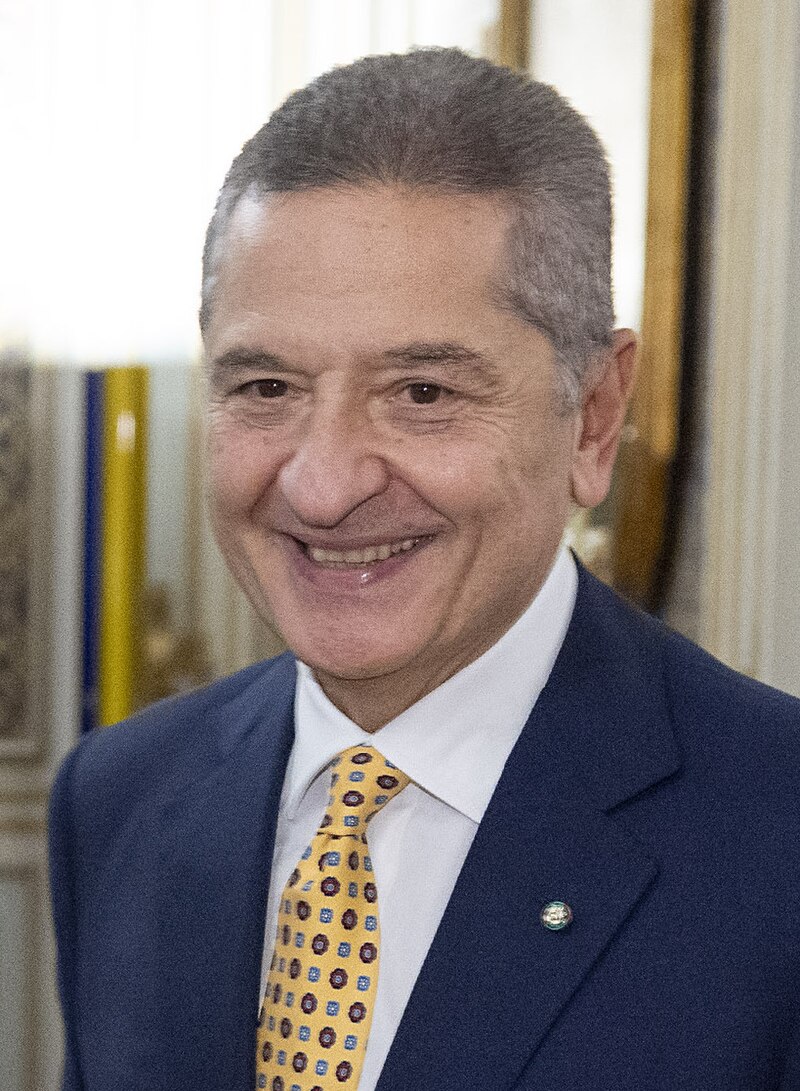
Fabio Panetta is a distinguished Italian economist and banker, known for his significant contributions to the financial and economic policies in Italy and across Europe. Born on August 1, 1959, in Rome, Panetta has had a long and illustrious career, rising through the ranks of Italy’s central bank, the Banca d’Italia, and later becoming a prominent figure at the European Central Bank (ECB). This article delves into the life, career, and achievements of Fabio Panetta, providing detailed insights into his professional journey and the impact he has had on the financial world.
Early Life and Education
Fabio Panetta was born in Rome, a city known for its rich history and as the political and economic heart of Italy. Growing up in Rome, Panetta was exposed to the complexities of the economic environment from an early age, an exposure that would shape his future career.
Panetta’s academic journey began at the prestigious LUISS Guido Carli University in Rome, where he earned a degree in Economics and Commerce in 1982. LUISS, known for producing some of Italy’s top economists and business leaders, provided Panetta with a solid foundation in economic theory and practice.
After completing his undergraduate studies, Panetta pursued further education in the United Kingdom. In 1984, he obtained a Master of Science degree in Monetary Economics from the London School of Economics (LSE), one of the world’s leading institutions for economics and finance. His time at LSE allowed him to deepen his understanding of monetary policy and economic dynamics, areas that would become central to his career.
Panetta didn’t stop there. He continued his academic pursuits and in 1996, earned a PhD in Economics and Finance from the London Business School. His doctoral studies provided him with advanced knowledge and analytical skills, particularly in the areas of finance and monetary policy. During this period, Panetta also spent time in Chicago, working closely with some of the world’s most respected economists, further enhancing his expertise.
Early Career at Banca d’Italia
Fabio Panetta’s professional career began in 1985 when he joined the Banca d’Italia, Italy’s central bank, at the age of 26. His entry into the central bank marked the beginning of a career that would see him take on increasingly important roles within the institution.
During his early years at Banca d’Italia, Panetta worked in various departments, gaining experience in different aspects of banking and finance. His work primarily focused on banking supervision and financial regulation, areas that are critical to maintaining the stability and integrity of the financial system. Panetta’s ability to navigate complex regulatory environments and his keen understanding of financial markets quickly set him apart as a rising star within the bank.
Climbing the Ranks at Banca d’Italia
As Panetta’s career progressed, he took on more senior roles within Banca d’Italia. His responsibilities expanded to include overseeing the bank’s operations related to monetary policy implementation and financial stability. Panetta’s deep knowledge of the financial system and his analytical acumen made him an invaluable asset to the bank.
One of the key aspects of Panetta’s work at Banca d’Italia was his involvement in the supervision of Italy’s banking sector. This was a critical period for Italian banks, which were dealing with various challenges, including non-performing loans and the broader impact of economic downturns. Panetta played a vital role in monitoring and regulating financial institutions, ensuring that they adhered to the necessary standards and that the Italian banking system remained robust.
Panetta’s expertise was not limited to domestic financial issues. He also contributed to discussions on international financial stability and monetary policy, representing Banca d’Italia in various international forums. His work during this period laid the groundwork for his later roles at the European Central Bank, where he would influence monetary policy on a much larger scale.
Transition to the European Central Bank
In 2019, Fabio Panetta’s career took a significant turn when he was appointed as a member of the Executive Board of the European Central Bank (ECB). The ECB is one of the most important financial institutions in the world, responsible for managing the euro and setting monetary policy for the 19 countries that make up the Eurozone. Panetta’s appointment to the ECB’s Executive Board was a recognition of his extensive experience and his deep understanding of monetary economics.
As a member of the Executive Board, Panetta was involved in some of the most critical decisions affecting the Eurozone’s economy. His responsibilities included the formulation and implementation of monetary policy, which has a direct impact on inflation rates, economic growth, and financial stability across Europe.
Role and Influence at the ECB
In 2020, Fabio Panetta was appointed Vice President of the ECB, further solidifying his influence within the institution. As Vice President, Panetta played a central role in shaping the ECB’s monetary policy response to the challenges facing the Eurozone, including the economic impact of the COVID-19 pandemic.
Panetta’s work at the ECB was marked by a focus on ensuring the stability of the financial system and promoting economic recovery. He advocated for policies that would support growth while maintaining price stability, a delicate balance that is crucial for the health of the Eurozone economy. His approach was informed by his extensive experience in banking supervision and his deep understanding of the interconnectedness of global financial markets.
One of Panetta’s key contributions at the ECB was his work on digital currencies. As the world’s financial systems increasingly move towards digitalization, Panetta was at the forefront of discussions on the potential development of a digital euro. This initiative aimed to modernize Europe’s financial infrastructure and ensure that the Eurozone remains competitive in the global economy.
Return to Banca d’Italia
In 2023, Fabio Panetta’s career came full circle when he was appointed as the Governor of Banca d’Italia, succeeding Ignazio Visco. This role placed Panetta at the helm of Italy’s central bank, where he was responsible for overseeing the country’s monetary policy, financial stability, and banking supervision.
As Governor, Panetta brought with him a wealth of experience from his time at the ECB, as well as his deep knowledge of Italy’s financial system. His leadership at Banca d’Italia is expected to focus on addressing the ongoing challenges facing Italy’s economy, including the need for structural reforms and the management of public debt.
Panetta’s return to Banca d’Italia also highlighted his commitment to public service and his dedication to ensuring the stability and prosperity of Italy’s economy. His experience on the international stage, combined with his understanding of the domestic financial system, positions him as a key figure in shaping Italy’s economic future.
Academic Contributions and Thought Leadership
Throughout his career, Fabio Panetta has been an active contributor to academic discussions on economics and finance. He has authored numerous publications and articles on topics ranging from monetary policy to banking regulation. His work is widely respected in academic circles, and he is often sought after for his insights on complex economic issues.
Panetta’s academic contributions have not only enriched the field of economics but have also influenced policy decisions at both the national and international levels. His ability to bridge the gap between theory and practice has made him a valuable voice in discussions on the future of monetary policy and financial regulation.
Personal Life and Legacy
While Fabio Panetta is best known for his professional achievements, he also maintains a private life that is largely out of the public eye. Known for his humility and dedication to his work, Panetta is respected by colleagues and peers for his professionalism and integrity.
Panetta’s legacy is one of service to his country and to the broader European community. His work at Banca d’Italia and the ECB has had a lasting impact on the stability and development of the financial systems in both Italy and the Eurozone. As he continues to lead Banca d’Italia, his influence on the direction of Italy’s economy and his contributions to international monetary policy will likely be felt for many years to come.
Conclusion
Fabio Panetta’s career is a testament to his expertise, dedication, and influence in the fields of economics and finance. From his early days at Banca d’Italia to his leadership roles at the European Central Bank, Panetta has consistently demonstrated a commitment to public service and to the stability of the financial system.
As the Governor of Banca d’Italia, Panetta continues to play a crucial role in shaping Italy’s economic policies and ensuring the health of its financial institutions. His work has not only impacted Italy but has also contributed to the broader stability of the Eurozone, making him a key figure in European and global finance.


