
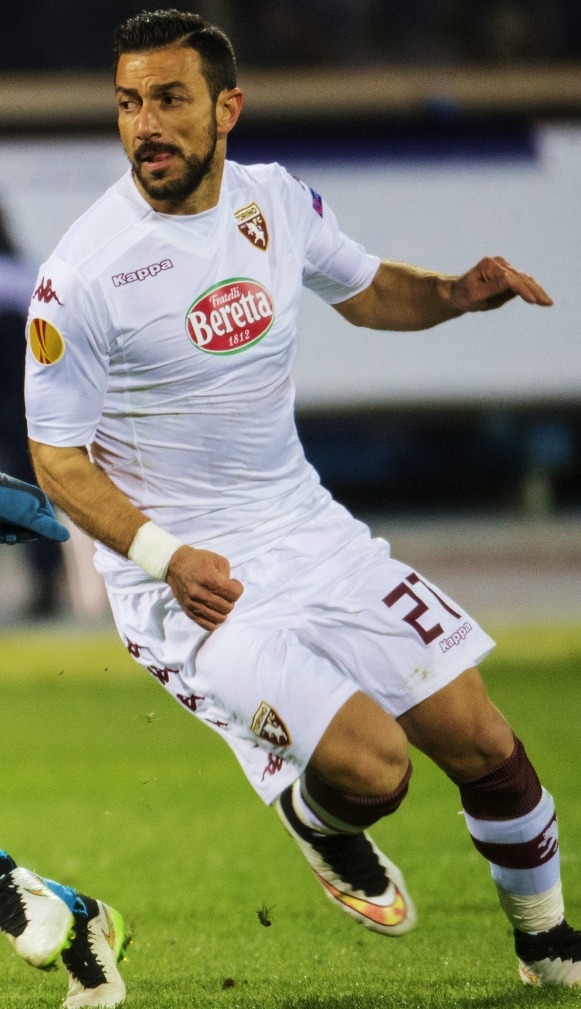
Fabio Quagliarella, born on January 31, 1983, in Castellammare di Stabia, Campania, Italy, is a professional footballer who has made a significant impact in the world of soccer, especially within Italian Serie A. Known for his incredible goal-scoring abilities and longevity in the sport, Quagliarella’s career has spanned over two decades, making him one of the most respected figures in Italian football. His journey from a young talent at Torino to becoming a celebrated striker and a symbol of resilience and excellence is a story worth telling.
Early Life and Career Beginnings
Fabio Quagliarella’s passion for football was evident from a young age. Growing up in Castellammare di Stabia, a town with a rich footballing history, Quagliarella was drawn to the sport, and it wasn’t long before his talent was recognized. He joined the youth academy of Torino, one of Italy’s historic football clubs, where he developed his skills and understanding of the game.
At just 17 years old, Quagliarella made his Serie A debut on May 14, 2000, in a match where Torino triumphed over Piacenza with a 2-1 victory. This early exposure to top-flight football was a significant milestone in his career, showcasing his potential to become a star in Italian football. However, his early years were not without challenges. Despite his debut, Quagliarella found limited opportunities at Torino, leading to a series of loans that would shape his career.
The Struggles and Rise: Early Career Movements
In 2002, Quagliarella was loaned to Florentia Viola (the reborn Fiorentina following their bankruptcy), where he played in Serie C2. Despite being part of a team with a storied history, Quagliarella struggled to make a significant impact, scoring only one goal in 12 appearances. This period was a test of his resilience, but it also provided valuable experience.
His next move was to Chieti in Serie C1 in January 2003, where he began to find his footing. Over the course of the 2003-04 season, Quagliarella scored an impressive 17 goals in 32 matches. This prolific form caught the attention of Torino, who brought him back for the 2004-05 season in Serie B. Quagliarella played a crucial role in Torino’s promotion campaign, contributing seven goals in 34 appearances.
However, Torino’s financial struggles led to the club’s bankruptcy, and Quagliarella found himself a free agent. This unexpected turn of events could have derailed his career, but instead, it opened the door to new opportunities.
The Ascoli and Sampdoria Years: Establishing His Name
In the summer of 2005, Quagliarella signed with Ascoli, a club competing in Serie A. It was here that he truly began to establish himself in the top tier of Italian football. On December 21, 2005, Quagliarella scored his first Serie A goal in a 2-1 victory against Treviso. This goal was more than just a milestone; it marked the beginning of his reputation as a reliable goal-scorer.
Following a successful season with Ascoli, Quagliarella moved to Sampdoria in 2006. Under the management of Walter Novellino, he initially struggled to break into the starting lineup. However, circumstances soon changed. With Francesco Flachi suspended due to a betting scandal and Fabio Bazzani dealing with injuries, Quagliarella seized his opportunity.
One of the defining moments of his career came when he scored a stunning overhead kick against Reggina, a goal that would become synonymous with his name. Quagliarella ended the 2006-07 season with 13 goals, firmly establishing himself as one of Italy’s most exciting forwards.
International Breakthrough and Udinese Success
Quagliarella’s domestic success soon translated into international recognition. On March 29, 2007, he made his debut for the Italian national team in a 2-0 victory against Scotland. This was a dream come true for the young forward, who had worked tirelessly to reach this level.
In the 2007-08 season, Quagliarella transferred to Udinese, where he formed a potent strike partnership with Antonio Di Natale. Together, they terrorized defenses in Serie A, with Quagliarella scoring 12 goals in his debut season. His performances in the UEFA Cup (now Europa League) were particularly noteworthy, where he scored eight goals, helping Udinese reach the quarter-finals.
Quagliarella’s success at Udinese solidified his reputation as one of Italy’s top strikers, and he became a regular fixture in the national team. His ability to score from long distances, combined with his flair for the spectacular, made him a fan favorite.
The Napoli Dream and the Juventus Chapter
In June 2009, Quagliarella signed with Napoli, his childhood club, in a deal worth €16 million plus half of the rights to Maurizio Domizzi. Playing for Napoli was a dream come true for Quagliarella, who grew up supporting the club. His debut for Napoli came in a Coppa Italia match against Salernitana, and he scored his first Serie A goal for the club in a 3-1 victory over Livorno.
During his time at Napoli, Quagliarella continued to impress with his goal-scoring prowess. In January 2010, he won the prestigious “Oscar del Calcio” award from the Italian Footballers’ Association for scoring the best goal of the previous season—an extraordinary long-range volley against Udinese on January 31, 2009.
However, despite his success, Quagliarella’s time at Napoli was short-lived. In the summer of 2010, he made a surprise move to Juventus, initially on loan. At Juventus, Quagliarella quickly made his mark, scoring in his second match, a 3-3 draw against Sampdoria. He became known for his acrobatic finishes, including a memorable backheel goal against Udinese.
Unfortunately, his first season with Juventus was cut short due to a severe anterior cruciate ligament injury in January 2011. This setback kept him sidelined for six months, but Juventus still showed faith in him by signing him permanently for €10.5 million. Quagliarella returned to action and played a role in Juventus’ consecutive Serie A title wins, although he often found himself in a supporting role rather than a regular starter.
Return to Torino and the Sampdoria Renaissance
In July 2014, Quagliarella returned to Torino, the club where his professional journey began. His return was seen as a homecoming, and he quickly became a key player for the club. Over the next two seasons, he continued to score important goals, further solidifying his legacy in Italian football.
In 2016, Quagliarella made another significant move, this time returning to Sampdoria. It was here that he would experience a remarkable career renaissance. Despite being in the twilight of his career, Quagliarella defied expectations by delivering some of his best performances. In the 2018-19 Serie A season, he scored 26 goals, earning the prestigious Capocannoniere award as the league’s top scorer. At 36 years old, he became the oldest player to win this title in Serie A history.
Quagliarella’s performances also earned him a recall to the Italian national team, where he became the oldest goal-scorer in the team’s history. His longevity, professionalism, and consistent performances at the highest level made him a role model for younger players.
Legacy and Impact on Italian Football
Fabio Quagliarella’s career is a testament to perseverance, adaptability, and passion for the game. Over the years, he has played for some of Italy’s most iconic clubs, leaving a lasting impact at each stop. His journey from a young talent at Torino to a seasoned veteran leading Sampdoria has been marked by unforgettable goals, crucial victories, and a dedication to his craft that few can match.
Quagliarella’s ability to reinvent himself, especially during the latter stages of his career, has been remarkable. His story is not just about goals and accolades but about overcoming adversity, staying true to one’s roots, and continuing to push the boundaries of what is possible, even as others might doubt.
In 2023, at the age of 40, Quagliarella announced his retirement from professional football, concluding a career that spanned more than 20 years. His farewell to the game was met with widespread admiration from fans, fellow players, and football pundits alike. As he steps away from the pitch, Quagliarella leaves behind a legacy as one of Italy’s most beloved and respected footballers.
Conclusion: A Career Defined by Passion and Resilience
Fabio Quagliarella’s football journey is a story of passion, resilience, and excellence. From his early days at Torino to his prolific seasons at Sampdoria, Quagliarella has shown that age is just a number and that true talent can shine through in any circumstance. His career, marked by spectacular goals and a deep love for the sport, serves as an inspiration to aspiring footballers and sports enthusiasts around the world.
Quagliarella’s legacy will continue to inspire future generations, reminding them that with hard work, determination, and a love for what you do, anything is possible—even scoring goals that will be remembered for decades.


