
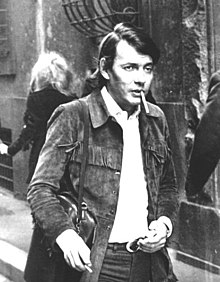
Fabrizio De André, born on February 18, 1940, in the coastal city of Genoa, Italy, is one of the most iconic and influential singer-songwriters in Italian music history. Known for his poetic lyrics, De André’s work is celebrated for its deep social commentary, exploration of marginalized communities, and a unique blend of folk and world music influences. This article delves into the life of Fabrizio De André, highlighting his journey from a rebellious young man in post-war Italy to a revered figure in global music culture.
Early Life and Family Background
Fabrizio De André was born into a well-off family in Pegli, a neighborhood in Genoa. His father, Giuseppe De André, was a professor and a fervent antifascist, which heavily influenced Fabrizio’s early life. The De André family relocated to the countryside near Asti during World War II to escape the bombings in Genoa. It was in this rural setting that young Fabrizio developed an affinity for the pastoral life and the common people—an interest that would later permeate his music.
Nicknamed “Bicio” by his family, De André spent much of his early childhood in close contact with the land and its people. This environment nurtured his early appreciation for the simplicity and authenticity of rural life, a theme that would resonate throughout his musical career. At a young age, De André displayed a natural inclination toward music. One of the earliest anecdotes recalls his mother finding him conducting an imaginary orchestra to a symphonic piece playing on the radio, demonstrating an early passion that would only grow stronger over time.
Education and Early Musical Influences
De André’s formal education began at a private Catholic school run by the Marcelline nuns. However, his rebellious and nonconformist nature led to conflicts with the strict discipline of the school, prompting his parents to transfer him to a public school. His early defiance against authority and established norms was a precursor to the themes of social justice and anti-establishment rhetoric that would characterize much of his later work.
Music was a significant part of De André’s life from an early age. Encouraged by his parents, who were classical music enthusiasts, he began studying the violin under Maestro Gatti. Later, he took up the guitar, an instrument that would become his lifelong companion. His teenage years were marked by a growing interest in jazz and American folk music, genres that he explored through performances in local clubs and private parties.
A turning point in De André’s musical journey came when his father returned from a trip to France with records by Georges Brassens, the famed French singer-songwriter. Brassens’s influence on De André was profound; he began translating Brassens’s songs into Italian and incorporating the French troubadour’s style into his own music. This blend of French chanson, American folk, and Italian poetic traditions became the hallmark of De André’s unique sound.
The Birth of a Songwriter: Early Career
Fabrizio De André’s official entry into the Italian music scene came in 1958 with the release of his first single, “Nuvole Barocche” (Baroque Clouds), a record that is now largely forgotten. Although his early singles failed to gain widespread recognition, they laid the groundwork for his future success. It wasn’t until Mina, one of Italy’s most popular singers, recorded his song “La Canzone di Marinella” in 1964 that De André gained national attention.
“La Canzone di Marinella” was a turning point in De André’s career. The song, inspired by the tragic story of a young woman who was murdered, is emblematic of De André’s lyrical focus on the lives of society’s outcasts and marginalized individuals. Its success marked the beginning of a prolific period in De André’s career, during which he released a series of albums that would establish him as one of Italy’s most important songwriters.
During the 1960s, De André became part of a close-knit group of artists and intellectuals in Genoa, including Luigi Tenco, Gino Paoli, and Paolo Villaggio. This circle of friends and collaborators was instrumental in shaping the cultural landscape of the time, and their influence can be seen in De André’s work. His music from this period is characterized by a blend of introspective lyrics and socially conscious themes, with songs like “La Guerra di Piero” and “Bocca di Rosa” becoming anthems of the Italian protest movement.
Artistic Evolution and Major Works
The 1970s were a period of significant artistic growth for De André. His albums from this decade, such as La Buona Novella (1970) and Non al denaro né all’amore né al cielo (1971), demonstrate a deepening of his lyrical themes and a broadening of his musical influences. La Buona Novella is a reinterpretation of the apocryphal gospels, exploring the human side of biblical figures, while Non al denaro né all’amore né al cielo is an adaptation of Edgar Lee Masters’s Spoon River Anthology, which De André transformed into a meditation on the human condition.
Another significant work from this period is Storia di un impiegato (1973), an album that delves into the psyche of an ordinary man who becomes radicalized and joins a revolutionary movement. The album is a critique of the bourgeois society and explores themes of conformity, rebellion, and the struggle for personal and collective freedom. Although it received mixed reviews at the time, Storia di un impiegato is now considered one of De André’s most important works, reflecting the political and social turmoil of Italy in the 1970s.
Despite his growing fame, De André remained a private and somewhat reclusive figure, reluctant to perform live. It wasn’t until 1975 that he agreed to embark on his first tour, a decision that marked a new phase in his career. His live performances, characterized by their intimacy and emotional intensity, brought his music to a wider audience and solidified his reputation as a master storyteller.
Personal Life and the Sardinian Kidnapping
Fabrizio De André’s personal life was as complex and compelling as his music. In 1962, he married Enrica “Puny” Rignon, with whom he had a son, Cristiano, who would later follow in his father’s musical footsteps. However, De André’s marriage to Puny eventually ended, and he later formed a partnership with Dori Ghezzi, a singer and his muse, with whom he had a daughter, Luvi.
One of the most dramatic events in De André’s life occurred in 1979 when he and Dori Ghezzi were kidnapped by a Sardinian bandit group. The couple was held captive for four months in the rugged mountains of Sardinia before being released after a ransom was paid. The experience had a profound impact on De André, both personally and artistically. His 1981 album, L’Indiano (The Indian), reflects this experience, drawing parallels between the plight of the Sardinian shepherds and the Native American Indians.
De André’s connection to Sardinia grew stronger after the kidnapping, and he spent much of his later life on the island, immersing himself in its culture and traditions. This influence is most evident in his 1984 album, Creuza de mä, which is sung entirely in the Genoese dialect and incorporates Mediterranean and Middle Eastern musical elements. Creuza de mä is widely regarded as a masterpiece and a pioneering work in the genre of world music. The album was praised for its authenticity and innovative sound, earning accolades as the best album of the year and even of the decade.
Later Career and Legacy
In the late 1980s and 1990s, Fabrizio De André continued to release critically acclaimed music, collaborating with other prominent Italian artists such as Ivano Fossati. His 1990 album, Le Nuvole, was a commercial success and was followed by a triumphant tour. De André’s final studio album, Anime Salve (1996), co-written with Fossati, is considered one of his most mature and profound works, exploring themes of solitude, freedom, and the human condition.
De André’s influence on Italian music and culture is immeasurable. He is often compared to Bob Dylan for his poetic lyrics and social consciousness, but De André’s music is uniquely his own, deeply rooted in the Italian and Mediterranean cultural tradition. His songs have been covered by numerous artists, and his albums continue to be studied and celebrated for their literary and musical significance.
Fabrizio De André passed away on January 11, 1999, in Milan, after a battle with cancer. His death was a significant loss to the world of music, but his legacy lives on through his extensive body of work. His funeral, held in Genoa, was attended by thousands of people, a testament to the profound impact he had on Italian culture and society.
Conclusion
Fabrizio De André’s life and work reflect the power of music to address social issues, tell compelling stories, and connect with the deepest aspects of the human experience. From his early days in Genoa to his rise as a national icon, De André remained true to his artistic vision, using his music to explore the lives of the marginalized and to challenge societal norms. His songs continue to resonate with audiences today, ensuring that his voice will be heard for generations to come.


