
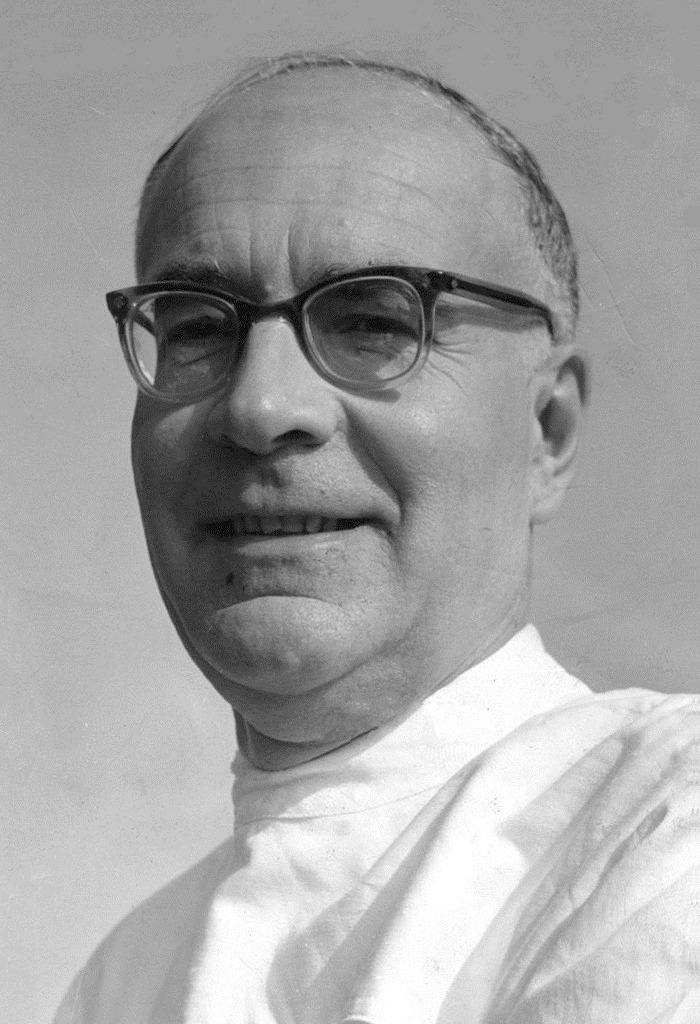
Felix Wankel, born on August 13, 1902, in Schillerstrasse, in the heart of the Black Forest in Germany, was a revolutionary inventor best known for creating the Wankel engine, a type of internal combustion engine that uses a rotary design instead of the more common reciprocating pistons. Wankel’s innovative ideas and contributions to automotive engineering have left an indelible mark on the industry, making him a pivotal figure in the development of modern engines.
Early Life and Education
Felix Wankel was born into a middle-class family in Swabia, Germany. His father, Rudolf Wankel, was a high-ranking forestry official, while his mother, Martha Gertrud Heidlauff, managed the household. Unfortunately, Wankel’s early life was marked by hardship; his father died in 1914 during World War I, leaving the family in difficult financial circumstances. The death of his father deeply impacted Wankel, shaping his determination to succeed and contribute to society.
Wankel’s interest in engineering and mechanics began at a young age. Despite facing financial difficulties, he pursued his passion for invention and technology. In 1921, Wankel took a job at a university bookstore in Heidelberg, where he was exposed to scientific literature that further fueled his interest in mechanical engineering. However, the economic depression of the 1920s led to Wankel losing his job. Undeterred, he opened his own bookstore in 1924, which also served as a platform for him to delve into his mechanical interests.
The Birth of the Wankel Engine
The idea of a rotary engine was not entirely new when Wankel began working on it. Concepts for rotary engines had been proposed as far back as the 16th century, with inventors like Agostino Ramelli exploring the possibilities. However, none of these early designs had successfully been implemented in a practical engine. Wankel was determined to change that.
In 1927, Felix Wankel filed his first patent for a rotary engine design. His early concepts were focused on overcoming the limitations of the existing reciprocating piston engines, which he viewed as inefficient and overly complex. Wankel envisioned an engine that was simpler, smoother, and capable of delivering power more efficiently. His breakthrough came with the development of the DKM engine (Drehkolbenmotor), which utilized a triangular rotor inside an epitrochoidal housing, a design that would become the foundation of the Wankel engine.
Challenges and Political Involvement
Wankel’s early career was not without controversy. Like many Germans of his era, Wankel was initially attracted to the political ideologies of the National Socialist movement. He joined the Hitler Youth and later the National Socialist German Workers’ Party (NSDAP). However, as the Nazi regime became increasingly oppressive, Wankel grew disillusioned with the direction of the party. He resigned from the NSDAP in 1932, just as the party was consolidating its power. This decision led to his arrest and imprisonment for several months.
During his imprisonment, Wankel’s work was halted, and many of his early designs were confiscated or destroyed. However, following his release, Wankel returned to his engineering pursuits, focusing on rotary valve designs and sealing technologies. His work during this period laid the groundwork for the later development of the Wankel engine.
World War II and Post-War Innovations
During World War II, Wankel worked for various German companies, including BMW and Daimler-Benz, where he focused on rotary valve engines and other mechanical innovations. However, the end of the war brought further challenges. When the French army occupied Germany in 1945, Wankel’s work was again disrupted, and many of his prototypes and research materials were destroyed. He was imprisoned by the French authorities but was released in 1946.
Despite these setbacks, Wankel remained committed to his work. In the post-war years, he began collaborating with NSU Motorenwerke AG, a German company known for its motorcycles and small cars. It was during this partnership that Wankel made his most significant advancements. With the support of NSU, Wankel refined his rotary engine design, leading to the creation of the first functional Wankel engine in 1957.
The prototype, known as the DKM 54, was tested and proved to be a viable alternative to traditional piston engines. The engine’s compact size, fewer moving parts, and smooth operation made it an attractive option for automotive applications. NSU, recognizing the potential of Wankel’s design, began working on commercializing the engine.
Commercialization and Global Impact
The first car to feature a Wankel engine was the NSU Spider, introduced in 1964. This small sports car showcased the advantages of the rotary engine, including its high power-to-weight ratio and smooth operation. The success of the NSU Spider led to the development of the NSU Ro 80, a more luxurious sedan powered by a Wankel engine. The Ro 80, launched in 1967, was a critical success and won the European Car of the Year award in 1968. However, despite its innovative design, the Ro 80 faced challenges related to engine reliability, which ultimately limited its commercial success.
The Wankel engine’s potential was not lost on other automotive manufacturers. Mazda, a Japanese automaker, became particularly interested in the technology. In the late 1960s, Mazda entered into a joint venture with NSU to further develop and refine the Wankel engine. This collaboration resulted in the Mazda Cosmo Sport 110S, the first Japanese car to be powered by a rotary engine, introduced in 1967. The success of the Cosmo Sport laid the foundation for Mazda’s long-term commitment to rotary engine technology, leading to iconic models like the RX-7 and RX-8.
In addition to Mazda, other automakers experimented with rotary engines. Citroën, the French automaker, produced the GS Birotor in the early 1970s, while Mercedes-Benz developed a series of rotary engine prototypes, including the C111 concept cars. General Motors and American Motors Corporation also explored the possibilities of rotary engines, though these projects never reached full-scale production.
Later Life and Legacy
Felix Wankel’s contributions to engineering were widely recognized during his lifetime. In 1969, he was awarded an honorary doctorate by the Technical University of Munich, and he received numerous other honors, including the Franklin Medal in 1971 and the Bavarian Service Medal in 1973. Despite his success, Wankel remained a private individual, preferring to focus on his work rather than the public spotlight.
In 1971, Wankel sold the rights to his engine patents to the German conglomerate Lonrho, receiving a significant financial windfall. He used these funds to establish the Wankel Institute in Lindau, Germany, in 1976, where he continued his research into rotary engines and other mechanical innovations.
Wankel’s legacy is most closely associated with the rotary engine, a technology that, despite its challenges, remains a symbol of innovation and ingenuity in automotive engineering. The Wankel engine’s unique design continues to attract interest from engineers and enthusiasts, and Mazda, in particular, has kept the technology alive with its commitment to rotary-powered vehicles.
Felix Wankel passed away on October 9, 1988, in Lindau, after a long illness. His contributions to engineering and his pioneering spirit live on, inspiring future generations of engineers and inventors.
Conclusion
Felix Wankel was a visionary inventor whose work on the rotary engine revolutionized automotive engineering. His journey from a young engineer in post-war Germany to a world-renowned inventor is a testament to his determination, creativity, and resilience. The Wankel engine, with its compact design and unique rotary motion, remains one of the most innovative developments in the history of internal combustion engines.
Wankel’s legacy is not only found in the cars and vehicles that utilized his engine but also in the ongoing exploration of alternative engine designs that challenge conventional thinking. His life and work continue to inspire engineers to push the boundaries of what is possible, making Felix Wankel a true icon of innovation.


