
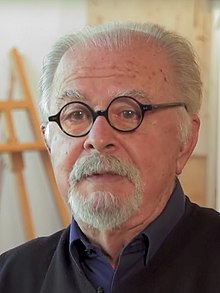
Fernando Botero, born on April 19, 1932, in Medellin, Colombia, is a celebrated artist known for his distinctive style characterized by exaggerated volumes and proportions. His work spans painting, sculpture, and drawing, and he has left an indelible mark on contemporary art. This article explores the life, fame, and significant highlights of Fernando Botero’s journey.
Early Life and Education
Fernando Botero grew up in Medellin, where he attended elementary school and later a Jesuit secondary school. At twelve, his uncle enrolled him in a bullfighting school, where he stayed for two years. This experience influenced his early artistic endeavors, with his first known work being a watercolor of a matador.
By the age of sixteen, Botero was already publishing illustrations for “El Colombiano,” a newspaper in Medellin. His early exposure to the local avant-garde scene, particularly through the café “Automatica,” introduced him to prominent figures like writer Jorge Zalamea, a close friend of Federico García Lorca. These interactions sparked his interest in abstract art.
Formative Years and Travels
Botero’s quest for artistic knowledge took him to Bogota, where he mingled with cultural circles, and then to Paris to study the works of the old masters. Between 1953 and 1954, he traveled through Spain and Italy, meticulously copying works by Renaissance artists such as Giotto and Andrea del Castagno. These studies profoundly impacted his style, which always retained a figurative foundation.
In the mid-1950s, Botero moved between New York and Bogota before settling in New York (Long Island) in 1966. His work during this period was heavily influenced by Peter Paul Rubens, particularly in his use of plastic forms and voluminous figures.
Breakthrough and Style Development
The 1960s were pivotal for Botero as he began to develop his unique style. His figures became increasingly voluminous, characterized by exaggerated proportions that evoked a sense of grandeur and monumentality. This distinctive approach quickly set his work apart from other contemporary artists.
Personal Life and Tragedy
In 1955, Botero married Gloria Zea, with whom he had three children. The couple later separated. In 1963, he married Cecilia Zambiano. Tragedy struck in 1974 when Botero’s son Pedro, aged four, died in a car accident that also left Botero injured. This profound loss deeply influenced his work, and Pedro became the subject of many of his drawings, paintings, and sculptures.
Sculptural Pursuits and International Recognition
In the early 1970s, Botero began experimenting with sculpture, creating pieces that mirrored the voluminous forms of his paintings. His sculptures ranged from large torsos to playful subjects like cats and serpents, even including a giant coffee pot.
In 1977, the Pedro Botero Room was inaugurated at the Zea Museum in Medellin, showcasing sixteen of Botero’s works in memory of his late son. This period marked the beginning of Botero’s international acclaim, with exhibitions in Germany and the United States earning him widespread recognition. The “Time” magazine published a positive review of his work, solidifying his reputation.
Artistic Evolution and Global Exhibitions
Throughout the 1980s and 1990s, Botero’s style continued to evolve, characterized by his exploration of diverse subjects and settings. His work was celebrated in numerous exhibitions across Europe, the United States, Latin America, and the Middle East.
Return to Colombia and Public Art
Despite his international success, Botero maintained a strong connection to his Colombian roots. He frequently returned to Colombia and made significant contributions to its cultural landscape. His sculptures have been installed in public spaces across the world, from the Champs-Élysées in Paris to Park Avenue in New York City.
Later Years and Continued Influence
In his later years, Botero remained active in the art world, producing new works and participating in exhibitions. His ability to capture the human condition with a unique blend of humor, satire, and empathy ensured that his art remained relevant and resonant.
Legacy and Impact
Fernando Botero passed away on September 15, 2023, at the age of 91 in the Principality of Monaco. His legacy endures through his extensive body of work, which continues to captivate audiences with its distinctive style and profound commentary on contemporary society.
Conclusion
Fernando Botero’s life and career are a testament to his enduring impact on the art world. From his early beginnings in Medellin to his international acclaim, Botero’s journey was marked by his unwavering commitment to his unique artistic vision. His exaggerated forms and voluminous figures have become iconic, reflecting the complexities and opulence of modern society.
Botero’s work transcends mere aesthetic appeal, offering a rich commentary on the human experience. His ability to blend classical influences with contemporary themes has cemented his place as one of the most influential artists of the 20th and 21st centuries. His legacy lives on through his art, which continues to inspire and provoke thought in viewers around the world.


