
Introduction
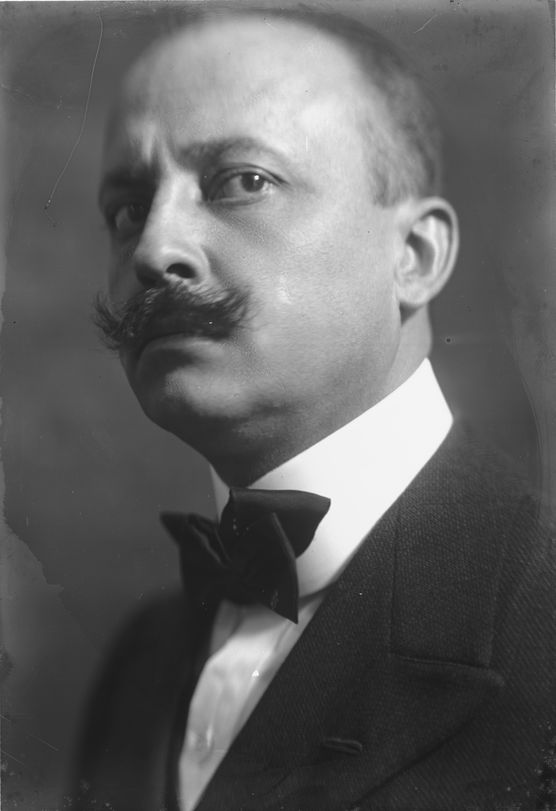
Filippo Tommaso Marinetti, born on December 22, 1876, in Alexandria, Egypt, was not just a poet but a revolutionary figure in the world of art and literature. He is best known as the founder of the Futurist movement, a radical and influential artistic and social movement that sought to break away from the past and celebrate the dynamism and technology of the modern age. Marinetti’s life, marked by his fervent nationalism, literary innovations, and complex political affiliations, offers a fascinating glimpse into the early 20th-century avant-garde. This article explores Marinetti’s life, from his early years to his lasting impact on art and politics, while also delving into the historical context and nuances of his work.
Early Life and Education
Born into a well-to-do family, Marinetti’s upbringing in Alexandria exposed him to a multicultural environment that would later influence his artistic vision. His father, Enrico Marinetti, was a successful lawyer, and his mother, Amalia Grolli, nurtured a love for literature in her son. The family eventually moved to Milan, where Marinetti and his siblings were immersed in Italian culture and education.
In 1894, Marinetti completed his baccalaureate in Paris, a city that was then the epicenter of literary and artistic innovation. He subsequently enrolled in the Faculty of Law at the University of Pavia, following in the footsteps of his older brother Leone. However, tragedy struck the Marinetti family when Leone passed away in 1897 due to heart complications, a loss that deeply affected Filippo.
Despite his legal studies, Marinetti’s passion for literature continued to grow. He transferred to the University of Genoa, where he completed his degree in 1899. During this period, he began contributing to literary magazines, such as the Anthologie Revue de France et d’Italie, and won acclaim for his poetic works, including La Vieux Marin, which earned him recognition in Paris.
The Birth of Futurism
Marinetti’s early works already hinted at the innovative spirit that would later define Futurism. In 1902, he published his first book of poetry, La Conquête des Étoiles (The Conquest of the Stars), which featured free verse and imagery that foreshadowed the themes of the Futurist movement. However, it was in 1909 that Marinetti truly made his mark on the world of art and literature.
On February 20, 1909, Marinetti published the Manifesto of Futurism on the front page of the French newspaper Le Figaro. The manifesto, composed of eleven bold points, called for a radical break with the past and a celebration of the modern world, including its technology, speed, and violence. Marinetti declared, “We want to demolish museums and libraries, fight morality, feminism, and all opportunist and utilitarian cowardice.” The manifesto’s provocative language and ideas shocked the artistic establishment and positioned Marinetti as a leading figure in the avant-garde.
Futurism was not just an artistic movement; it was a comprehensive philosophy that sought to revolutionize all aspects of life, including politics, fashion, and social norms. Marinetti’s vision was inherently anti-traditional, anti-diplomatic, and anti-neutral. He envisioned a society that embraced chaos, dynamism, and the transformative power of technology.
Political Engagement and Controversies
Marinetti’s involvement in politics was as radical as his artistic endeavors. Although initially associated with socialist circles, Marinetti’s nationalist sentiments prevented him from fully aligning with the socialist movement. His political satire Re Baldoria, published in the socialist newspaper Avanti!, reflected his complex relationship with socialism and his growing nationalism.
In 1911, Marinetti traveled to Libya as a war correspondent for the French newspaper L’Intransigeant. The experience of witnessing war firsthand deeply influenced Marinetti and solidified his belief in the Futurist doctrine of “words in freedom,” a literary technique that sought to break the constraints of traditional grammar and syntax to capture the energy and chaos of modern life.
By the time World War I broke out, Marinetti and the Futurists had become fervent supporters of Italian intervention in the conflict. Marinetti saw war as a means of cleansing society and accelerating the Futurist revolution. His participation in the war earned him two military medals, further cementing his reputation as a “warrior poet.”
Futurism and Fascism
The end of World War I marked a turning point in Marinetti’s life. In 1919, he published a Futurist political program that laid the groundwork for the formation of the Fascist movement in Italy. Marinetti’s ideas fascinated Benito Mussolini, who incorporated many of the Futurist principles into the early ideology of Fascism. The collaboration between Marinetti and Mussolini during the founding of the Fascist movement demonstrated the extent to which Marinetti’s Futurism had transcended art and entered the realm of politics.
However, Marinetti’s relationship with Fascism was complex and ultimately conflicted. By 1920, Marinetti had become disillusioned with Fascism, accusing it of being reactionary and overly traditional. Despite his criticisms, Marinetti remained a respected figure in Fascist Italy, and Mussolini continued to hold him in high regard. During the early years of the Fascist regime, Marinetti embarked on international tours to promote Futurism and developed new ideas for a chaotic, multi-faceted form of theater.
Literary and Artistic Contributions
Marinetti’s contributions to literature and art extended beyond his political engagement. In 1922, he published Gl’Indomabili (The Indomitable), a novel that he described as “indefinable” in its genre. This work was followed by a series of novels and essays that explored the themes of Futurism, modernity, and technology.
Throughout the 1920s and 1930s, Marinetti continued to produce poetry, “aeropoems” (poems inspired by aviation), and manifestos that pushed the boundaries of traditional literary forms. His experiments with “words in freedom” sought to liberate language from the constraints of linear narrative and conventional grammar, allowing for a more dynamic and expressive form of communication.
In 1935, Marinetti volunteered for military service in East Africa, reflecting his continued belief in the Futurist ideal of war as a means of societal renewal. Upon his return in 1936, he dedicated himself to further studies and experiments in “words in freedom,” continuing to push the boundaries of literary innovation.
Later Years and Legacy
As World War II unfolded, Marinetti’s health began to deteriorate. Despite his declining condition, he volunteered to serve on the Eastern Front in 1942, driven by his unyielding commitment to Futurism and its principles. However, the harsh conditions of the Russian campaign took a toll on his health, and he was eventually repatriated to Italy.
In 1943, following the fall of Mussolini, Marinetti retreated to Venice with his wife, Benedetta Cappa, and their three daughters. His final days were spent in Bellagio, on the shores of Lake Como. On December 2, 1944, Marinetti passed away due to a heart attack, just hours after composing his last verses.
Marinetti’s legacy is a complex one. He is remembered as a pioneering figure in the avant-garde movement, whose ideas and innovations influenced a wide range of artists and writers, including Ezra Pound, James Joyce, and T.S. Eliot. Despite the controversies surrounding his political affiliations, Marinetti’s impact on the world of art and literature is undeniable.
Conclusion
Filippo Tommaso Marinetti’s life was a testament to the power of art as a force for change. Through Futurism, he challenged the conventions of his time, advocating for a new world that embraced modernity, speed, and technological progress. His work, though often polarizing, left an indelible mark on the history of art and literature, making him a central figure in the narrative of the 20th-century avant-garde.
As we reflect on Marinetti’s life and legacy, it is important to consider the historical context in which he operated. His ideas, while revolutionary, were also a product of a time marked by rapid technological change, political upheaval, and social transformation. Understanding Marinetti’s contributions requires an appreciation of the complex interplay between art, politics, and society in the early 20th century.


