
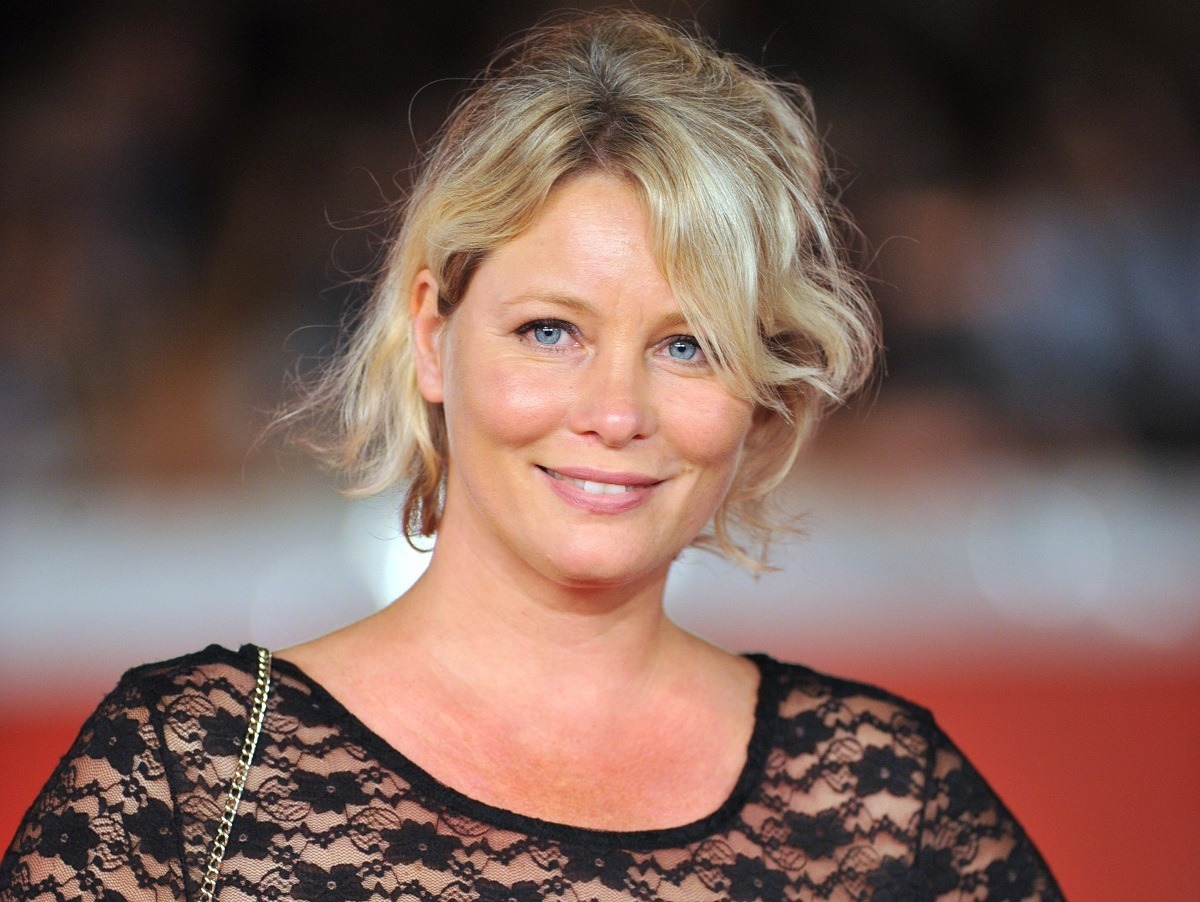
Flavia Vento, born on May 17, 1977, in Rome, Italy, is a well-known Italian television personality, actress, and model. With a career marked by numerous appearances in popular TV shows, commercials, and reality TV, she has become a familiar face in Italian media. Flavia’s journey is characterized by her boldness, controversial decisions, and a distinctive mix of charm and unpredictability. This article explores her age, rise to fame, and key life highlights, providing an in-depth look at the life of one of Italy’s most talked-about celebrities.
Early Life and Cultural Background
Flavia Vento was born to a multicultural family, with her mother being Dutch and her father Italian. Growing up in Rome, she was exposed to a diverse cultural environment that influenced her early life choices. Flavia pursued linguistic studies, earning a high school diploma in languages. However, her passion for the arts and entertainment led her to a different path at a young age.
Her striking looks and photogenic features quickly opened doors in the modeling industry. Flavia began her career as a model, walking the runways in fashion capitals like Milan and Paris. Her early success in modeling laid the foundation for her future endeavors in television and acting.
Rise to Fame: From Commercials to Television Stardom
Flavia Vento’s initial breakthrough came in the mid-1990s when she starred in several high-profile television commercials. Among these, her appearances in the 1995 Neutro Roberts commercial and the 1998 Ferrero Rocher advertisement stand out as pivotal moments in her early career. These commercials not only showcased her beauty but also introduced her to a wider audience, setting the stage for her television career.
In 1999, Flavia gained significant media attention when she was cast as the “Dea Bendata” (Goddess of Luck) on the popular Italian television show Il Lotto alle Otto, hosted by Massimo Giletti. Her role in this program significantly boosted her popularity, making her a household name in Italy. This exposure was further amplified by her appearance in a series of Lavazza coffee commercials set in Paradise, where she starred alongside iconic Italian actors Riccardo Garrone and Tullio Solenghi.
Flavia’s growing popularity caught the attention of Playboy Italia, which featured her on the cover of its May 1999 issue. This cover, along with an in-depth photo spread, solidified her status as one of Italy’s most recognized and talked-about television personalities.
The Peak of Her Career: Iconic TV Roles and Public Image
The early 2000s marked the peak of Flavia Vento’s career. In 2001, she took on one of her most memorable roles as a co-host on the television show Libero, a program known for its humorous and often provocative content. Flavia’s role on the show involved her sitting beneath a transparent table, where she would emerge only to tell jokes or participate in comedic sketches. This unusual and controversial setup garnered significant attention and divided public opinion.
Some critics saw her role as a symbol of the objectification of women in media, while others argued that it was a satirical commentary on the roles typically assigned to women on television. Despite the mixed reactions, Flavia’s performance on Libero became one of the defining moments of her career, cementing her image as a bold and unorthodox figure in Italian entertainment.
In the summer of 2000, Flavia expanded her repertoire by hosting Stracult, a weekly show on Italian cinema broadcast in the late hours on Rai 2. The show, which featured the song “Tequila (Il Mambo del Giubileo)” by Piotta as its theme, further showcased Flavia’s versatility as a television personality. She also appeared in the music video for the song, adding another layer to her public persona.
During this period, Flavia’s fame extended beyond television. She became the face of several major advertising campaigns, including one for the privatization of Enel, Italy’s largest energy provider. Her image, alongside other well-known figures like Stefania Rocca and Alessia Merz, was featured prominently in these campaigns, further increasing her visibility and influence.
In addition to her television and advertising work, Flavia briefly ventured into the music industry, releasing a single titled “Moreno.” Although her music career was short-lived, it was yet another example of her willingness to explore different facets of the entertainment industry.
Reality TV and Political Ambitions
Flavia Vento’s career took a new direction in the early 2000s when she became involved in reality television. In 2004, she was cast as one of the contestants on the first edition of La Fattoria (The Farm), a reality show aired on Italia 1. The show tested celebrities by placing them in a rural setting, where they had to live and work as farmers. Flavia’s participation in La Fattoria was marked by her early exit from the show, citing conflicts with other contestants. This decision reflected her often unpredictable nature, which had become a hallmark of her public image.
In addition to her television work, Flavia also expressed an interest in politics. Initially, she showed support for La Margherita, a centrist political party led by Francesco Rutelli. However, her political journey took a different turn in 2005 when she ran as a candidate for the Lazio regional elections with the Partito Liberale Italiano (Italian Liberal Party), supporting the candidacy of Francesco Storace. Flavia’s political ambitions were primarily focused on animal rights, a cause she passionately advocated for, particularly in her efforts to address the overcrowding of animal shelters.
Despite her brief foray into politics, Flavia returned to her television roots, continuing to make appearances on various shows. In 2005, she co-hosted Striscia la Notizia for two evenings, and later appeared as a guest on several talk shows. She also joined the cast of the film Parentesi Tonde, a comedy featuring other well-known figures from Italian trash television.
Flavia’s public image was further complicated by her involvement in the Vallettopoli scandal, a high-profile case involving allegations of attempted extortion against Italian football star Francesco Totti. Although Flavia vehemently denied the accusations, the scandal brought additional scrutiny to her already controversial career.
Return to Reality TV and Continued Public Presence
In 2008, Flavia Vento made headlines once again by participating in L’Isola dei Famosi (The Island of the Famous), an Italian reality TV show similar to Survivor. The show, hosted by Simona Ventura, placed celebrities on a remote island where they had to survive with minimal resources. True to form, Flavia’s time on the show was cut short when she chose to leave, citing the harsh conditions and conflicts with fellow contestants. Her early departure mirrored her previous experience on La Fattoria and reinforced her reputation for being unable to cope with the demands of reality television.
Despite her earlier exit, Flavia returned to L’Isola dei Famosi in 2012, this time under the new hosts Nicola Savino and Vladimir Luxuria. However, history repeated itself as she once again left the show prematurely due to ongoing tensions with the other participants.
In her personal life, Flavia’s political views also continued to evolve. She expressed support for the Movimento 5 Stelle (Five Star Movement), a populist and anti-establishment political party founded by comedian Beppe Grillo. Her alignment with the movement reflected her growing interest in issues such as direct democracy and environmentalism.
In September 2020, Flavia Vento joined the cast of Grande Fratello VIP 5 (Big Brother VIP 5), the celebrity edition of the popular reality TV show Grande Fratello (Big Brother). Once again, her stint on the show was brief. Overwhelmed by anxiety and missing her seven dogs, Flavia decided to leave the house after just one night, citing her inability to cope with the separation from her pets.
Personal Life and Relationships
Flavia Vento’s personal life has often been the subject of media attention, particularly her relationships with various high-profile individuals. Among her most notable relationships were those with actor Fabrizio Bentivoglio and director Mimmo Calopresti. However, her most controversial relationship was with Marco Prato, who was later involved in a murder case and tragically took his own life in prison in 2017.
Flavia has also been linked to international celebrities, including Bruce Willis and Enrique Iglesias, although these rumored flings have never been confirmed. Her personal life, much like her career, has been characterized by its unpredictability and the media’s fascination with her every move.
Conclusion
Flavia Vento’s life and career are a testament to the complexities of fame in the modern age. From her early days as a model and commercial star to her controversial roles on television and her brief forays into politics, Flavia has managed to remain in the public eye despite the ups and downs of her career. Her willingness to embrace different aspects of the entertainment industry, coupled with her bold and often controversial choices, has made her a unique figure in Italian pop culture.
As she continues to navigate the world of reality TV and public appearances, Flavia Vento remains a figure of intrigue and fascination, a testament to her enduring presence in the ever-changing landscape of Italian media.


