
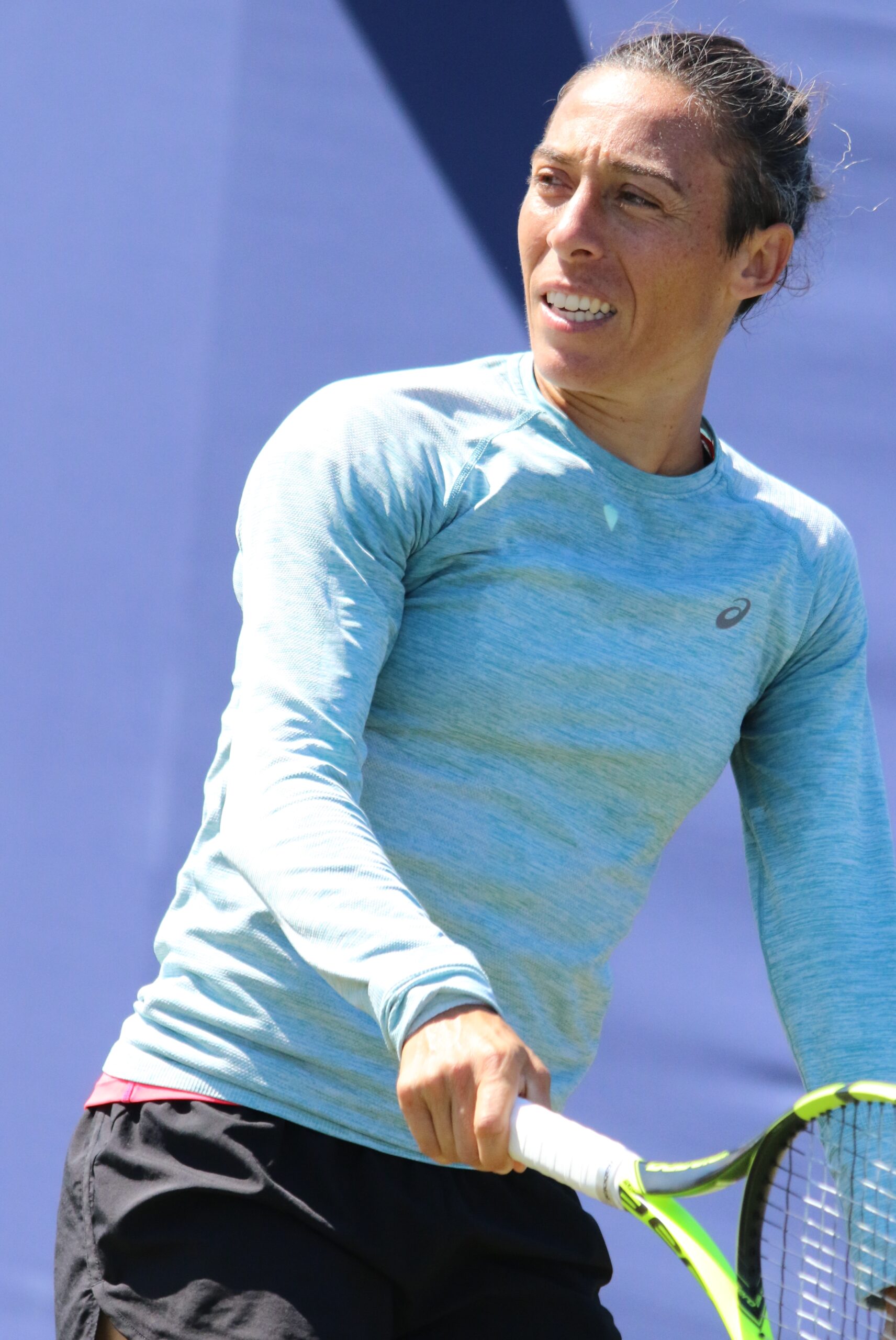
Francesca Schiavone, born on June 23, 1980, in Milan, Italy, is a former professional tennis player who has left an indelible mark on the world of sports. Known for her tenacity, skill on clay courts, and an unwavering competitive spirit, Schiavone’s career is a testament to perseverance and passion. She became a trailblazer for Italian tennis, achieving milestones that no Italian woman before her had accomplished. This article delves into the life, fame, and key highlights of Francesca Schiavone, exploring her rise to prominence, her historic victories, and her enduring legacy in tennis.
Early Life and Entry into Tennis
Francesca Schiavone was born into a sports-loving family in Milan. From a young age, she displayed a natural affinity for tennis, a sport she would soon dominate. Her early years were characterized by rigorous training and a deep-seated determination to excel. By the time she was a teenager, Schiavone had already made a name for herself in the junior circuit, showing promise as a future star in Italian tennis.
Schiavone turned professional in 1998, marking the beginning of a career that would see her rise from a promising young talent to one of the most celebrated athletes in Italy. Her early years on the professional circuit were marked by steady progress as she honed her skills and gained valuable experience. She secured her first International Tennis Federation (ITF) titles between 1998 and 2000, signaling her potential to become a force in the Women’s Tennis Association (WTA) rankings.
Breakthrough and Climbing the Ranks
Francesca Schiavone’s breakthrough year came in 2003 when she became the top-ranked Italian female tennis player, surpassing the long-standing reign of Silvia Farina Elia. At just 23 years old, Schiavone broke into the top 20 in the WTA rankings, a significant achievement that positioned her as a rising star in the tennis world. Her ascent continued, and by January 2006, she had reached a career-high ranking of world No. 11.
Schiavone’s game was characterized by her aggressive baseline play, powerful groundstrokes, and exceptional net skills. However, it was her prowess on clay courts that truly set her apart. The slow surface suited her style of play, allowing her to maximize her strengths and become one of the most formidable clay-court players of her generation.
Her first major successes on the WTA tour came in the early 2000s, with consistent performances in various tournaments. She reached the quarterfinals at the French Open in 2001 and the semifinals in Auckland the same year. These results propelled her into the top 50, establishing her as a regular contender in major tournaments.
Representing Italy: Fed Cup and National Pride
Francesca Schiavone’s contributions to Italian tennis were not limited to her individual achievements. She was a key member of Italy’s Fed Cup team, making her debut in 2002 during the finals in the Canary Islands. Schiavone’s role in the Fed Cup was pivotal as she helped lead Italy to several victories, including their first Fed Cup title in 2006. Her performances in the Fed Cup solidified her status as a national hero and a symbol of pride for Italian sports.
Schiavone’s Fed Cup success continued throughout her career, with Italy winning additional titles in 2009 and 2010. These victories underscored her importance to the team and highlighted her ability to perform under pressure, particularly in the team-based competition where national pride was at stake.
Career Milestones and Grand Slam Glory
The pinnacle of Francesca Schiavone’s career came in 2010 when she achieved what no Italian woman had done before—winning a Grand Slam singles title. Her triumph at the French Open that year was historic, making her the first Italian woman to win a Grand Slam singles title. Schiavone’s run to the title was marked by resilience, tactical brilliance, and an indomitable will to win.
In the final, Schiavone faced Samantha Stosur of Australia. In a stunning display of tennis, she defeated Stosur in straight sets, 6-4, 7-6(2), to claim the coveted Roland Garros trophy. This victory catapulted Schiavone to world No. 6 in the rankings, making her the highest-ranked Italian woman in history at that time.
Schiavone’s French Open victory was not just a personal achievement but a significant moment for Italian tennis, inspiring a new generation of players and elevating the sport’s profile in Italy. Her success on the red clay of Roland Garros was a testament to her mastery of the surface, and it remains one of the most memorable moments in the history of Italian sports.
In 2011, Schiavone continued her impressive form, reaching the final of the French Open once again. Although she was unable to defend her title, losing to China’s Li Na, her back-to-back appearances in the final further cemented her status as one of the top players of her era. That year, she also reached the quarterfinals of the Australian Open, where she played one of the longest matches in the history of women’s tennis, defeating Svetlana Kuznetsova in a marathon match that lasted 4 hours and 44 minutes.
Later Career and Continued Success
As Schiavone entered her 30s, she continued to defy the odds and compete at a high level, a testament to her fitness and mental toughness. In 2017, at the age of 36, she won her eighth and final WTA title at the Bogotá Open in Colombia, defeating Lara Arruabarrena in the final. This victory made Schiavone the oldest woman to win a WTA title in over three decades, further adding to her legacy as a relentless competitor.
Schiavone’s career longevity was remarkable, and she remained a fierce competitor on the tour until her retirement in 2018. Over the course of her career, she accumulated eight WTA singles titles and seven doubles titles, along with numerous accolades and the respect of her peers.
Retirement and Life Beyond Tennis
In 2018, Francesca Schiavone announced her retirement from professional tennis, bringing an end to a career that had spanned two decades. Her decision to retire was met with widespread admiration and respect, as she left behind a legacy that few could match. Schiavone expressed her desire to stay connected to the sport by pursuing a career in coaching, where she hoped to share her knowledge and experience with the next generation of players.
However, life after tennis presented new challenges for Schiavone. In 2019, she revealed that she had been diagnosed with Hodgkin’s lymphoma, a type of cancer that affects the lymphatic system. True to her fighting spirit, Schiavone approached this battle with the same determination that had defined her tennis career. After undergoing treatment, she announced in December 2019 that she was cancer-free, a triumph that she described as the hardest victory of her life.
Schiavone’s battle with cancer and subsequent recovery inspired many, and in 2020, she published her autobiography, “La mia rinascita: Come ho affrontato la partita più dura della mia vita” (My Rebirth: How I Faced the Toughest Match of My Life). The book offers an intimate look at her life, career, and the challenges she faced both on and off the court, providing readers with a deeper understanding of the strength and resilience that have defined her journey.
Legacy and Impact on Tennis
Francesca Schiavone’s impact on tennis, particularly in Italy, is profound. She is not only celebrated for her achievements on the court but also for her role in transforming Italian tennis. Before Schiavone, Italy had never produced a female Grand Slam champion, and her success paved the way for other Italian players, such as Flavia Pennetta and Roberta Vinci, who would go on to achieve their own Grand Slam victories.
Schiavone’s style of play, characterized by her one-handed backhand, tactical intelligence, and clay-court mastery, made her a favorite among tennis purists. She brought a unique flair to the game, combining athleticism with artistry, and her matches were often a display of strategic brilliance.
Beyond her technical skills, Schiavone is remembered for her tenacity, sportsmanship, and the passion she brought to every match. Her career is a testament to the power of perseverance, and she remains an inspiration to aspiring tennis players around the world.
Historical Context and Reception
Francesca Schiavone’s career unfolded during a period of significant change in women’s tennis. The early 2000s saw the rise of power players like Serena Williams and Maria Sharapova, who dominated the sport with their aggressive baseline games. In this context, Schiavone’s success on clay courts, a surface that rewards patience and tactical play, was a refreshing reminder of the diversity of playing styles that can succeed at the highest level.
Schiavone’s achievements were particularly significant in Italy, where tennis had traditionally been overshadowed by other sports like soccer. Her success helped to elevate the profile of tennis in Italy, inspiring a new generation of players and increasing the sport’s popularity among fans. Schiavone’s victories, particularly her historic win at the French Open, were celebrated across the country, and she became a beloved figure in Italian sports.
Schiavone’s Relevance Today
Even after her retirement, Francesca Schiavone’s influence on tennis continues to be felt. As a coach and mentor, she is dedicated to helping young players develop their skills and reach their full potential. Her story, from winning a Grand Slam to battling cancer, serves as a powerful example of resilience and determination.
Schiavone’s legacy is not only in her titles and records but also in the way she played the game—with passion, integrity, and an unyielding will to win. In a sport where physical and mental toughness are paramount, Schiavone’s career stands as a shining example of what can be achieved through hard work and perseverance.
Conclusion
Francesca Schiavone’s journey from a young tennis hopeful in Milan to a Grand Slam champion and inspirational figure is a story of triumph against the odds. Her career, marked by historic victories, national pride, and personal resilience, has left an enduring legacy in the world of tennis. Schiavone’s contributions to the sport, both on and off the court, continue to inspire and influence the next generation of players. Her life and career are a testament to the power of passion, dedication, and the relentless pursuit of excellence.


