
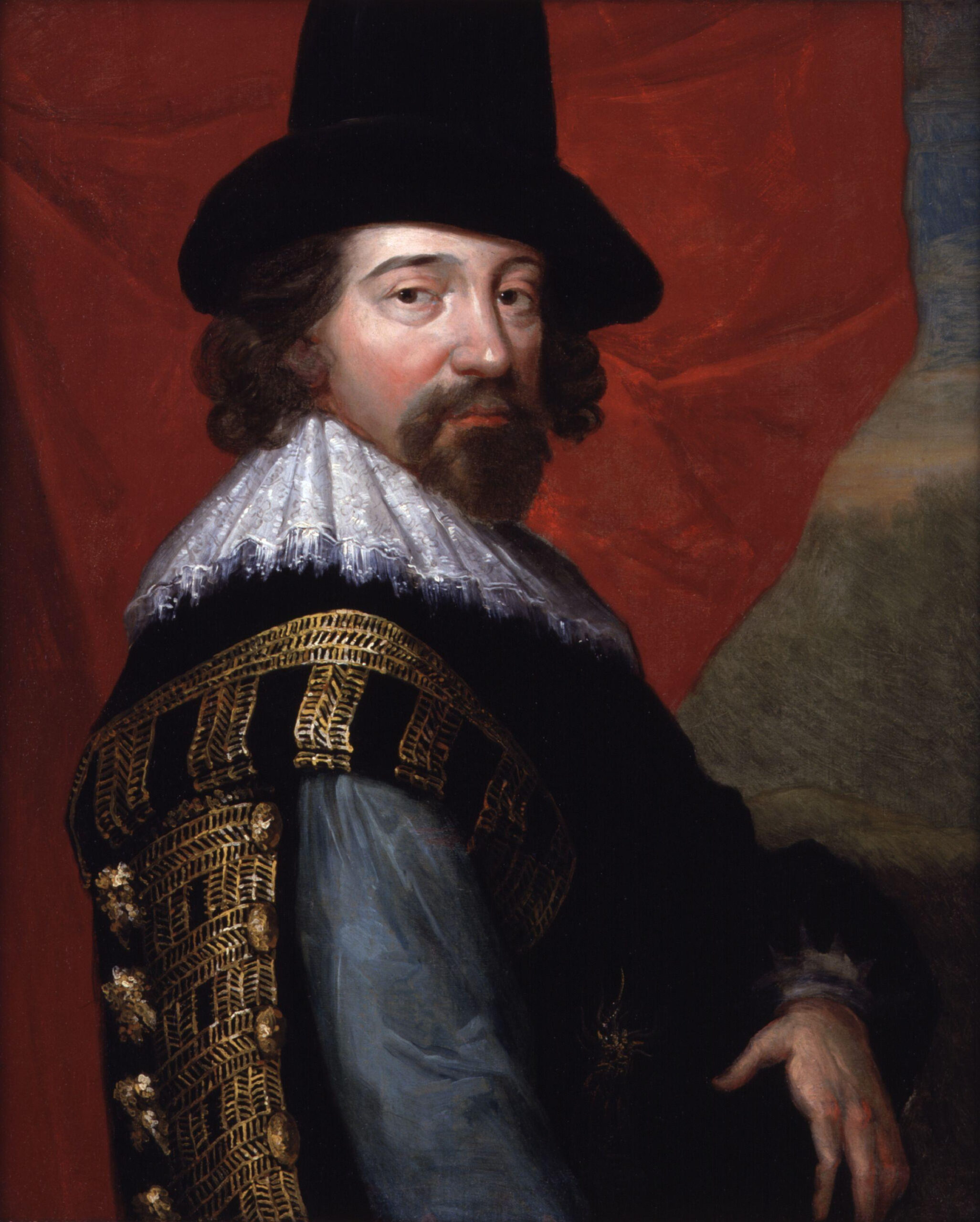
Francesco Bacone, known in the English-speaking world as Francis Bacon, was a pivotal figure in the world of philosophy, science, and statesmanship. Born on January 22, 1561, in London, England, Bacon’s contributions to the development of the scientific method and his philosophical works have left an indelible mark on history. His life’s journey from a young scholar to an influential figure in the court of Elizabeth I and James I, and eventually to his legacy as a philosopher and scientist, is a compelling story that intertwines with the broader context of the Renaissance and early modern period.
Early Life and Education
Birth and Family Background
Francis Bacon was born into a prominent family, with his father, Sir Nicholas Bacon, serving as Lord Keeper of the Great Seal, and his mother, Anne Cooke Bacon, known for her intellectual prowess and fluency in multiple languages. This privileged background afforded Bacon an exceptional education and a network of influential connections that would later play a significant role in his career.
Education
Bacon began his education at Trinity College, Cambridge, at the tender age of 12. His early exposure to the works of Aristotle and the scholastic tradition left a profound impact on him. However, Bacon would later criticize the scholastic method for its rigid adherence to tradition and lack of empirical inquiry. His education continued at Gray’s Inn, where he studied law and began his career in public service.
Early Career and Rise to Fame
Entry into Public Service
Bacon’s career in public service began in earnest when he entered the service of Sir Amias Paulet, the English ambassador in Paris. This experience broadened his horizons and exposed him to European political and intellectual currents. Upon his return to England, Bacon pursued a career in law and politics, quickly gaining recognition for his eloquence and intellect.
Political Career
Bacon’s political career saw a steady rise, marked by his election as a Member of Parliament in 1584. His eloquence and persuasive skills made him a prominent figure in the Elizabethan court. Despite facing setbacks, including a period of disfavor under Queen Elizabeth I, Bacon’s fortunes improved with the ascension of James I. Under James, Bacon’s career flourished, culminating in his appointment as Lord Chancellor in 1618.
Contributions to Philosophy and Science
Development of the Scientific Method
Francis Bacon’s most enduring legacy lies in his contributions to the development of the scientific method. He advocated for a new approach to scientific inquiry, emphasizing observation, experimentation, and inductive reasoning. His works, particularly “Novum Organum,” outlined this new method, challenging the dominance of Aristotelian logic and laying the groundwork for modern empirical science.
Major Works
- “Novum Organum” (1620): In this seminal work, Bacon introduced his method of inductive reasoning, arguing that knowledge should be derived from careful observation and experimentation rather than abstract reasoning. This work is often regarded as the foundation of the scientific method.
- “The Advancement of Learning” (1605): Bacon’s ambitious treatise on the state of knowledge in his time, advocating for the advancement of learning through empirical research and the reform of traditional education.
- “The New Atlantis” (1627): A utopian work that envisions a society organized around scientific inquiry and discovery. This work reflects Bacon’s belief in the transformative power of knowledge and his vision for a society guided by reason and empirical evidence.
Bacon’s Philosophical Influence
Bacon’s philosophy extended beyond the realm of science. His ideas on empiricism and the importance of inductive reasoning influenced a wide range of disciplines, including law, politics, and ethics. Bacon’s emphasis on practical knowledge and the application of scientific principles to improve human life resonated with later thinkers and played a crucial role in the development of the Enlightenment.
Later Life and Legacy
Fall from Power
Despite his remarkable achievements, Bacon’s career was not without controversy. In 1621, he was charged with corruption, accused of accepting bribes in his capacity as Lord Chancellor. Bacon admitted to the charges and was fined and imprisoned, although his sentence was later commuted. This scandal marked the end of his political career, but it did not diminish his intellectual contributions.
Legacy
Francis Bacon’s legacy is multifaceted. As a philosopher, he is remembered as the father of empiricism and a key figure in the development of the scientific method. His writings laid the foundation for modern science and influenced generations of thinkers. As a statesman, Bacon’s reforms in law and government, despite his fall from grace, left a lasting impact on English governance.
Bacon’s Influence on Later Thinkers
Bacon’s ideas continued to resonate long after his death. His emphasis on empirical research and inductive reasoning influenced notable figures such as John Locke, Isaac Newton, and the founders of the Royal Society. Bacon’s vision of a society guided by scientific inquiry and rational thought helped shape the intellectual landscape of the Enlightenment and beyond.
Historical Context and Impact
To fully appreciate Francis Bacon’s contributions, it is essential to understand the historical context in which he lived. The late 16th and early 17th centuries were a period of profound change, marked by the Renaissance’s revival of classical learning and the early stirrings of the scientific revolution. Bacon’s work reflected and contributed to these broader intellectual currents, challenging established authorities and promoting a new vision of knowledge and inquiry.
The Renaissance and the Birth of Modern Science
The Renaissance was a time of renewed interest in classical antiquity and a flourishing of arts, literature, and science. Bacon’s call for a new method of inquiry resonated with the spirit of the Renaissance, which emphasized human potential and the pursuit of knowledge. His insistence on empirical evidence and inductive reasoning laid the groundwork for the scientific revolution, a period of dramatic advancements in understanding the natural world.
Bacon’s Enduring Relevance
Francis Bacon’s ideas continue to be relevant today. His advocacy for empirical research and the scientific method remains a cornerstone of modern science. In an age where information is abundant, Bacon’s emphasis on careful observation, critical thinking, and the systematic pursuit of knowledge serves as a reminder of the importance of rigorous inquiry and evidence-based reasoning.
Conclusion
Francis Bacon’s life and work exemplify the spirit of inquiry and the quest for knowledge that defined the Renaissance and laid the foundations for the modern world. His contributions to philosophy, science, and public life have left an enduring legacy that continues to influence contemporary thought. Bacon’s vision of a society guided by reason and empirical evidence remains a powerful and inspiring ideal, underscoring the timeless relevance of his ideas.
In summary, Francis Bacon was a towering figure whose contributions transcended the boundaries of his time. His development of the scientific method, his philosophical writings, and his influence on later generations of thinkers all attest to his enduring impact on the world. As we continue to grapple with the challenges of the modern age, Bacon’s legacy serves as a reminder of the power of reason, inquiry, and the relentless pursuit of knowledge.


