
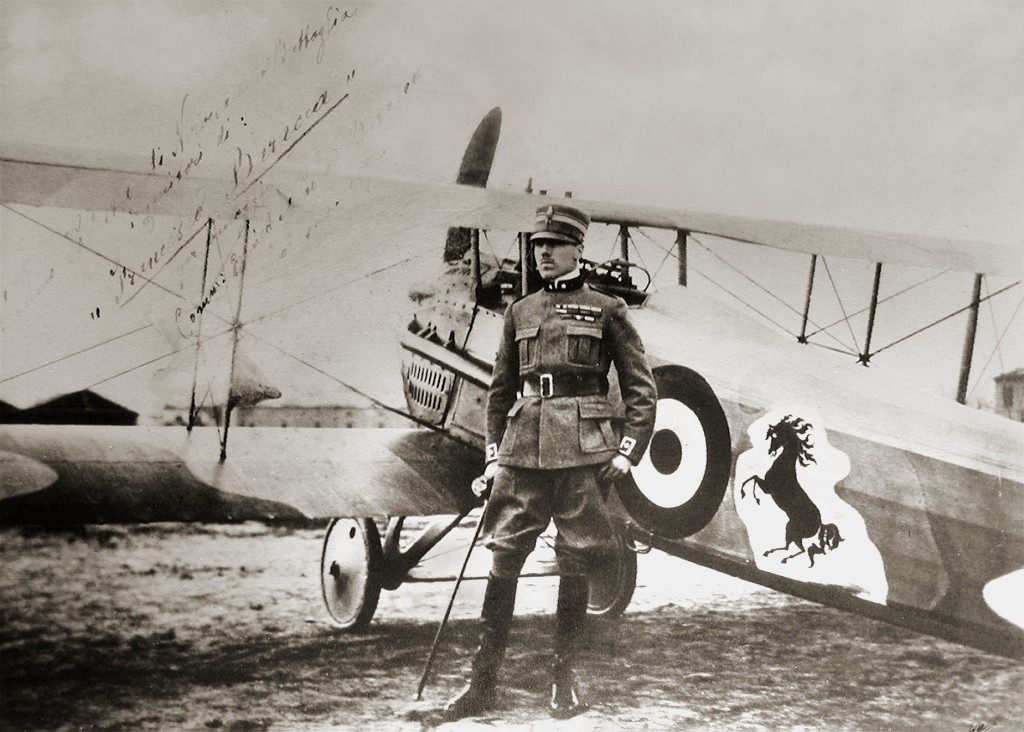
Francesco Baracca stands as one of Italy’s most celebrated military figures and aviation heroes. Known for his valor and extraordinary skill during World War I, Baracca’s legacy is intertwined with Italy’s military history and cultural heritage. This article delves into his life, exploring the milestones that marked his journey from a young cadet to a national hero.
Early Life and Background
Francesco Baracca was born on May 9, 1888, in Lugo, a town in the province of Ravenna, Italy. He was the son of Enrico Baracca, a wealthy landowner, and Countess Paolina de Biancoli. From a young age, Baracca exhibited a keen interest in military life, a passion that would shape his future. He pursued his education at the prestigious Military Academy of Modena, graduating with distinction and joining the cavalry.
Transition to Aviation
Baracca’s military career took a decisive turn when he transitioned from the cavalry to aviation, a burgeoning field at the time. At the age of 22, he entered the world of military aviation, quickly demonstrating his prowess as a pilot. His formal entry into aviation came at a critical juncture in history, as World War I loomed on the horizon.
The Birth of an Ace
Baracca’s first major mission occurred in 1915, amidst the conflict between Italy and Austria. His first confirmed aerial victory came in April 1916 when he downed an enemy aircraft, capturing its crew. This victory marked the beginning of a remarkable career. Within two months, Baracca was promoted to the rank of captain, gaining widespread recognition for his achievements. His exploits were celebrated, and he was soon regarded as an “ace,” a term reserved for pilots who had shot down at least five enemy planes.
The Emblem of the Prancing Horse
One of the most enduring symbols associated with Francesco Baracca is the “prancing horse” emblem. This emblem, originally silver on a red background, was inspired by the coat of arms of the Piemonte Reale Cavalry Regiment, where Baracca served before his aviation career. After his death, Baracca’s mother gifted the emblem to Enzo Ferrari, the founder of the iconic Ferrari car brand. Today, the prancing horse is synonymous with Ferrari, a lasting tribute to Baracca’s legacy.
The 91st Squadron
In 1917, the Italian military established the 91st Squadron, known as the “Squadron of Aces.” Baracca was appointed to lead this elite unit, personally selecting pilots who would serve under his command. The squadron included notable aviators such as Fulco Ruffo di Calabria, Ferruccio Ranza, and Franco Lucchini, among others. Together, they conducted numerous successful missions, becoming a formidable force in the skies.
The Battle of the Piave River
One of the defining moments in Baracca’s career was the Battle of the Piave River, also known as the Battle of the Solstice, fought in June 1918. This battle was crucial in halting the Austro-Hungarian advance. The 91st Squadron played a pivotal role, achieving air superiority and inflicting significant damage on enemy positions. Baracca’s leadership and strategic acumen were instrumental in the success of these operations.
Tragic End and Legacy
Tragically, Francesco Baracca’s life was cut short on June 19, 1918. During a mission over Montello, his aircraft was shot down, and he perished at the age of 30. Despite his brief career, Baracca’s impact was profound. He participated in 63 aerial combats, achieving 34 victories. His bravery earned him numerous accolades, including a Gold Medal of Military Valor, three Silver Medals, and a Bronze Medal, among other honors.
Chivalry and Humanitarianism
Beyond his military accomplishments, Baracca was known for his chivalrous conduct. He never sought to humiliate a defeated opponent and was critical of the increasing destructiveness of modern warfare. His respectful treatment of enemies and his ethical stance on combat left a lasting impression on those who knew him.
Posthumous Recognition and Influence
Baracca’s legacy continued to grow after his death. He was admired by prominent figures such as the poet Gabriele D’Annunzio, who praised Baracca’s heroism and noble qualities. D’Annunzio’s writings helped immortalize Baracca’s deeds and character, ensuring that his story would be remembered by future generations.
Memorials and Cultural Impact
A small chapel surrounded by cypress trees on Montello stands as a permanent memorial to Francesco Baracca. This site, dedicated to his memory, serves as a place of reflection and homage to a man who embodied the ideals of courage and honor.
Baracca’s influence extends beyond his military achievements. The prancing horse emblem he once adorned on his aircraft now graces Ferrari vehicles, symbolizing excellence and performance. This emblematic connection between Baracca and Ferrari highlights the enduring impact of his legacy in both the aviation and automotive worlds.
Conclusion: A Hero Remembered
Francesco Baracca’s life, though tragically short, was marked by extraordinary achievements and an unwavering commitment to his country. His transition from a cavalry officer to a pioneering aviator exemplifies his adaptability and determination. As a national hero, Baracca’s story continues to inspire, reminding us of the values of bravery, honor, and sacrifice.
In summary, Francesco Baracca’s legacy is a testament to the power of individual courage and the enduring influence of a single emblem. His story is not only a significant chapter in Italy’s military history but also a source of inspiration for future generations. As we remember his contributions and the iconic prancing horse, we celebrate a hero whose spirit continues to soar through the annals of history.


