
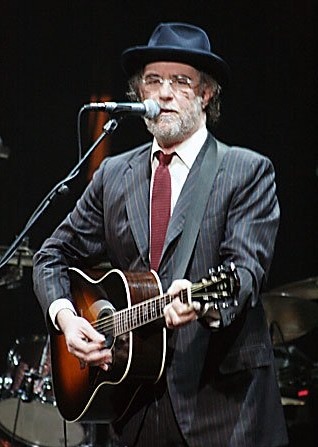
Francesco De Gregori is a towering figure in the Italian music scene, known for his poetic lyrics, captivating melodies, and profound influence on the singer-songwriter tradition in Italy. Born on April 4, 1951, in Rome, De Gregori has been a seminal figure in the Italian music industry since the 1970s. His career has spanned over five decades, during which he has consistently pushed the boundaries of Italian popular music, blending folk, rock, and literary influences into a unique and powerful body of work.
Early Life and Musical Beginnings
Francesco De Gregori was born into a culturally rich environment in Rome, but he spent much of his childhood in Pescara before returning to Rome in the late 1950s. Music was a significant part of his life from a young age, and he was deeply influenced by the sounds of the 1960s, particularly the folk and rock music coming out of the United States.
De Gregori’s early musical experiences were shaped by his time at the Folkstudio, a legendary venue in Rome that served as a breeding ground for a new generation of Italian singer-songwriters. It was here that De Gregori began to hone his craft, initially accompanying folk singer Caterina Bueno on guitar before stepping into the spotlight himself. Alongside contemporaries like Antonello Venditti, Giorgio Lo Cascio, and Mimmo Locasciulli, De Gregori began to perform his own material, which was heavily influenced by the likes of Bob Dylan and Leonard Cohen. These early performances were marked by sparse arrangements and enigmatic lyrics, signaling the emergence of a distinctive voice in Italian music.
Breakthrough with “Rimmel”
Francesco De Gregori’s breakthrough came in 1975 with the release of the album Rimmel. The album was a commercial and critical success, establishing De Gregori as one of Italy’s most important songwriters. Rimmel contained several tracks that would become enduring classics, including the title track “Rimmel,” “Pablo,” and “Buonanotte Fiorellino.” The album’s success was due in part to its ability to connect with a wide audience, with its poetic lyrics and memorable melodies resonating with listeners across the country.
Rimmel marked the beginning of De Gregori’s rise to fame and solidified his reputation as a master storyteller. His lyrics, often described as cryptic and allusive, drew comparisons to the work of Bob Dylan, earning him the nickname “Il Principe dei Cantautori” (The Prince of Songwriters) in Italy.
The 1970s and 1980s: A Period of Artistic Growth
Following the success of Rimmel, De Gregori continued to explore new musical territories. His 1976 album Bufalo Bill further cemented his status as a leading figure in Italian music, with its mix of folk, rock, and literary influences. The album’s title track, “Bufalo Bill,” is a haunting meditation on the myth of the American West, showcasing De Gregori’s ability to blend narrative storytelling with social commentary.
In 1982, De Gregori released Titanic, an album that took its inspiration from the infamous shipwreck and used it as a metaphor for the human condition. The album was another critical success, demonstrating De Gregori’s growing ambition as a songwriter. That same year, he released the Q-disc La Donna Cannone, which included the hit song “La Donna Cannone,” a ballad that has since become one of his most beloved songs.
The late 1980s saw De Gregori experimenting with a more rock-oriented sound, as evidenced by the 1989 album Mira Mare 19.4.89. This period of his career was marked by a willingness to push the boundaries of his music, incorporating electric guitars and more aggressive arrangements into his work. The rock influence would continue to be a defining feature of his music in the years to come.
1990s: Evolution and Exploration
The 1990s were a period of continued evolution for De Gregori. In 1996, he released Prendere e lasciare, an album that featured more complex arrangements and a greater emphasis on collaboration. The album was co-produced by Corrado Rustici, who brought a fresh perspective to De Gregori’s music. Songs like “Il cuoco di Salò” and “La valigia dell’attore” showcased De Gregori’s ability to blend personal and political themes in his lyrics, further cementing his reputation as a sophisticated and thoughtful songwriter.
During this decade, De Gregori also began to focus more on live performances, releasing several live albums that captured the energy and intimacy of his concerts. Albums like Il bandito e il campione and La valigia dell’attore offered fans a chance to hear De Gregori’s songs in a live setting, where his storytelling abilities could truly shine. These live recordings also included previously unreleased tracks, giving listeners insight into De Gregori’s creative process.
The 2000s: A Return to Roots
The early 2000s marked a return to De Gregori’s musical roots. In 2001, he released Amore nel pomeriggio, an album that saw him revisiting the acoustic sounds and introspective lyrics that had characterized his early work. The album was well-received by both critics and fans, who appreciated the simplicity and emotional depth of the songs. The subsequent tour was one of the longest of De Gregori’s career, with performances in prestigious theaters as well as smaller, more intimate venues.
In 2002, De Gregori collaborated with folk singer Giovanna Marini on the album Il fischio del vapore, a collection of traditional Italian folk songs. The album was a commercial success, selling more than expected and introducing a new generation of listeners to the rich tradition of Italian folk music.
De Gregori’s output during the 2000s also included several live albums, such as In tour (2002), recorded with fellow singer-songwriter Lucio Dalla. This album captured the dynamic interplay between the two artists, who had collaborated on and off since the 1970s. Their musical partnership was a testament to De Gregori’s ability to work with a wide range of artists while maintaining his own distinct voice.
The 2010s: Continued Creativity and Exploration
The 2010s were a period of sustained creativity for Francesco De Gregori. In 2012, he released Sulla strada, an album that took its title from Jack Kerouac’s famous novel. The album was another critical success, with its mix of folk, rock, and literary influences drawing praise from both fans and critics.
In 2014, De Gregori released Vivavoce, a double album that featured re-recordings of some of his most famous songs. The album was a celebration of De Gregori’s long and storied career, offering fans a chance to hear his classic songs in a new light. The re-recordings were faithful to the original versions while also incorporating subtle changes that reflected De Gregori’s growth as an artist.
One of the most notable projects of this decade was De Gregori’s 2015 album De Gregori canta Bob Dylan – Amore e furto, a tribute to the American singer-songwriter who had been such a major influence on his career. The album featured Italian-language versions of some of Dylan’s most famous songs, including “Not Dark Yet” and “A Hard Rain’s a-Gonna Fall.” The project was a labor of love for De Gregori, who approached the task of translating Dylan’s lyrics with great care and respect. The album was both a critical and commercial success, further solidifying De Gregori’s reputation as one of Italy’s most important and enduring musical figures.
Legacy and Influence
Francesco De Gregori’s influence on Italian music cannot be overstated. Over the course of his career, he has released more than 20 studio albums, each of which has contributed to the rich tapestry of Italian popular music. His ability to blend folk, rock, and literary influences has made him a unique and influential figure, and his songs have become a part of the cultural fabric of Italy.
De Gregori’s lyrics are often characterized by their poetic quality, with themes that range from personal introspection to social and political commentary. His music has been described as both timeless and contemporary, with a universal appeal that transcends generations. Songs like “Rimmel,” “La Donna Cannone,” and “Generale” have become anthems for Italian listeners, capturing the complexities and contradictions of modern life.
In addition to his own work, De Gregori has been a mentor and inspiration to a new generation of Italian singer-songwriters. His influence can be heard in the music of artists like Ligabue, Vinicio Capossela, and Niccolò Fabi, who have all cited De Gregori as a major influence on their own work.
Conclusion: A Life of Music and Poetry
Francesco De Gregori’s career is a testament to the power of music as a form of artistic expression. From his early days at the Folkstudio to his status as one of Italy’s most beloved singer-songwriters, De Gregori has consistently pushed the boundaries of what Italian popular music can be. His songs are not just entertainment; they are works of art that explore the human condition with depth, sensitivity, and insight.
As De Gregori continues to create and perform, his legacy as a pioneer of Italian music remains secure. His ability to connect with listeners through his poetic lyrics and evocative melodies has made him a beloved figure in Italy and beyond. For those who appreciate music that challenges, inspires, and moves, Francesco De Gregori’s work will continue to be a source of inspiration for many years to come.


