
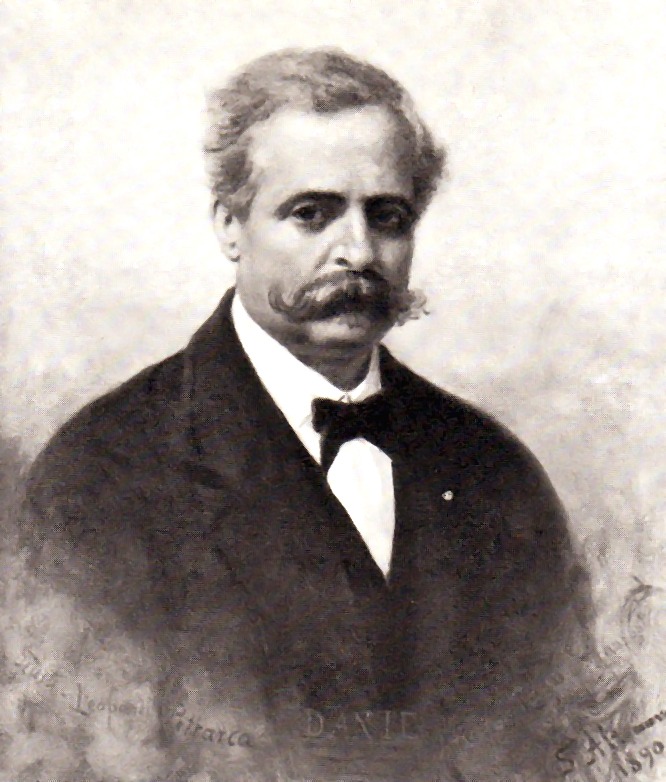
Francesco de Sanctis, a towering figure in the history of Italian literature and criticism, is celebrated for his profound impact on the cultural and intellectual life of Italy in the 19th century. Born on March 28, 1817, in Morra Irpina, a small town in the Avellino province, de Sanctis emerged as a pivotal figure in shaping the literary consciousness of Italy during a period of significant political and social upheaval. His life and work reflect a deep engagement with the intellectual currents of his time, from the purism of his early education to the idealism of Hegelian philosophy, which profoundly influenced his critical outlook.
Early Life and Educational Foundations
Francesco Saverio de Sanctis was born into a modest family, but from a young age, he exhibited a remarkable interest in literature and learning. His early education was under the guidance of Basilio Puoti, a prominent figure in the Italian purist movement. Puoti, often regarded as “the last of the purists,” instilled in de Sanctis a deep respect for the Italian language’s classical forms, particularly those of the 14th century. However, this early exposure to purism also sowed the seeds of de Sanctis’ eventual disillusionment with a movement he would later find stifling.
By 1839, de Sanctis had begun teaching at the Military School of San Giovanni a Carbonara in Naples, a position he left in 1841 to teach at the prestigious Nunziatella Military College, where he remained until 1848. During this period, he also established a private school in Naples, where he taught many students, continuing the tradition of rigorous classical education. However, his intellectual journey was far from static. It was during these years that de Sanctis encountered the works of European Enlightenment writers, whose ideas deeply influenced him and led him to question the rigid constraints of purism.
The Hegelian Influence and the Break from Purism
The intellectual turning point for de Sanctis came with his encounter with the works of Friedrich Hegel, particularly Hegel’s “Aesthetics.” Hegelian philosophy, with its emphasis on the dialectical process and the evolution of ideas through history, provided de Sanctis with a new framework for understanding literature. He began to distance himself from the purist ideals of his early education, embracing instead the dynamic and historical approach of Hegelian idealism. This shift marked the beginning of de Sanctis’ development as a literary critic who sought to understand literature not as a static body of works but as a living expression of the human spirit evolving through time.
Political Engagement and Imprisonment
The year 1848 was a watershed moment in European history, marked by widespread revolutionary movements. In Naples, de Sanctis became actively involved in the political turmoil that swept through the city, participating in the revolutionary uprisings against the Bourbon monarchy. His involvement in these uprisings led to a period of hiding and, eventually, to his arrest by the Bourbon authorities in 1850. De Sanctis spent approximately three years in prison, a period that, while physically and mentally challenging, proved to be intellectually productive. During his imprisonment, he wrote “Torquato Tasso” and “La prigione,” works that reflect his deepening engagement with both literature and the political realities of his time.
In 1853, after his release from prison, de Sanctis was forced into exile. He was initially sent on a ship bound for America, but he managed to escape when the ship docked in Malta. From there, he made his way to Turin, where he resumed his teaching career. In 1856, his reputation as a scholar and intellectual earned him a position at the Polytechnic University of Zurich, where he taught for several years. His time in Zurich was crucial for his intellectual development, as it provided him with the opportunity to refine his ideas and solidify his reputation as one of Italy’s foremost literary critics.
Return to Italy and the Role in National Unification
The unification of Italy in the 1860s marked a new chapter in de Sanctis’ life. Returning to Naples after the country’s unification, he was elected to the Italian Parliament and was appointed Minister of Public Instruction by Camillo Benso, Count of Cavour, one of the key architects of Italian unification. In this role, de Sanctis worked to reform the education system, advocating for the spread of public education as a means of combating the widespread illiteracy that plagued the newly unified nation. However, his tenure as minister was not without controversy. He soon found himself at odds with the government over its policies, leading him to join the opposition and co-found the newspaper “L’Italia” with Luigi Settembrini, a fellow patriot and intellectual.
Literary Contributions and the “Storia della letteratura italiana”
Francesco de Sanctis is perhaps best known for his monumental work “Storia della letteratura italiana” (History of Italian Literature), published between 1870 and 1871. This work remains a cornerstone of Italian literary criticism and historiography. In it, de Sanctis traces the development of Italian literature from its origins in the Middle Ages to the modern era, providing not just a historical overview but also a critical analysis of the major works and authors that shaped Italian literary culture. His approach was groundbreaking in that he treated literature as an expression of the social and political conditions of its time, rather than merely a collection of aesthetic achievements.
The “Storia della letteratura italiana” was not de Sanctis’ only significant contribution to literary criticism. In 1866, he published “Saggi critici” (Critical Essays), a collection of essays that further established his reputation as a leading literary critic. These essays, along with his later work “Nuovi saggi critici” (New Critical Essays), published in 1872, continued to explore the relationship between literature and society, emphasizing the importance of understanding literary works within their historical context.
Academic Career and Later Life
In 1871, de Sanctis was appointed to a professorship at the University of Naples, where he continued to teach and write until his health began to decline in the late 1870s. Despite his health issues, he remained active in both his academic and political careers, serving once again as Minister of Public Instruction under the government of Benedetto Cairoli from 1878 to 1881. During this period, de Sanctis focused on educational reforms aimed at reducing illiteracy and expanding access to public education throughout Italy. His efforts in this area were part of a broader movement to modernize Italy’s educational system, which was seen as essential for the nation’s development following unification.
In the final years of his life, de Sanctis continued to write, producing works that reflected his deepening understanding of both literature and the human condition. His autobiographical fragment “Giovinezza” (Youth), published posthumously in 1889, offers a poignant reflection on his early life and intellectual development. Another significant posthumous work is “La letteratura italiana del secolo XIX” (Italian Literature of the 19th Century), published in 1897, which provides a detailed analysis of the literary trends and figures that shaped the century.
Legacy and Impact
Francesco de Sanctis passed away on December 29, 1883, in Naples, at the age of 66. His death marked the end of an era in Italian literary criticism, but his influence continued to be felt long after his passing. De Sanctis is remembered as one of the founding figures of modern Italian literary criticism, and his works remain essential reading for anyone interested in the history of Italian literature.
His legacy is also evident in the recognition he received from his fellow Italians. In 1937, the town of Morra Irpina, his birthplace, was renamed Morra De Sanctis in his honor, a testament to the enduring respect and admiration he commanded. De Sanctis’ approach to literary criticism, which emphasized the importance of historical context and the dynamic nature of literary expression, has had a lasting impact on the field. His insistence on the interplay between literature and society continues to influence scholars and critics today.
Conclusion: Francesco de Sanctis’ Enduring Relevance
Francesco de Sanctis was more than just a literary critic; he was a cultural and intellectual force who played a key role in shaping the identity of modern Italy. His life and work exemplify the power of literature to influence and reflect the broader social and political currents of the time. Through his writings, de Sanctis sought to demonstrate that literature was not merely a collection of beautiful words and phrases but a vital expression of the human experience, shaped by the historical and cultural contexts in which it was produced.
Today, de Sanctis is remembered not only for his scholarly contributions but also for his commitment to education and his belief in the transformative power of knowledge. His efforts to expand public education in Italy and his work as a minister of public instruction were driven by his conviction that an educated populace was essential for the health and progress of the nation. This belief, combined with his literary achievements, cements Francesco de Sanctis’ place as one of the most important figures in Italian intellectual history.
In revisiting the life and works of Francesco de Sanctis, we are reminded of the enduring importance of literature as a means of understanding the world and our place in it. His critical insights continue to resonate, offering valuable perspectives on the relationship between literature, history, and society. As we reflect on his legacy, it is clear that Francesco de Sanctis remains a figure of profound significance, whose contributions to literature and education continue to inspire and inform.


