
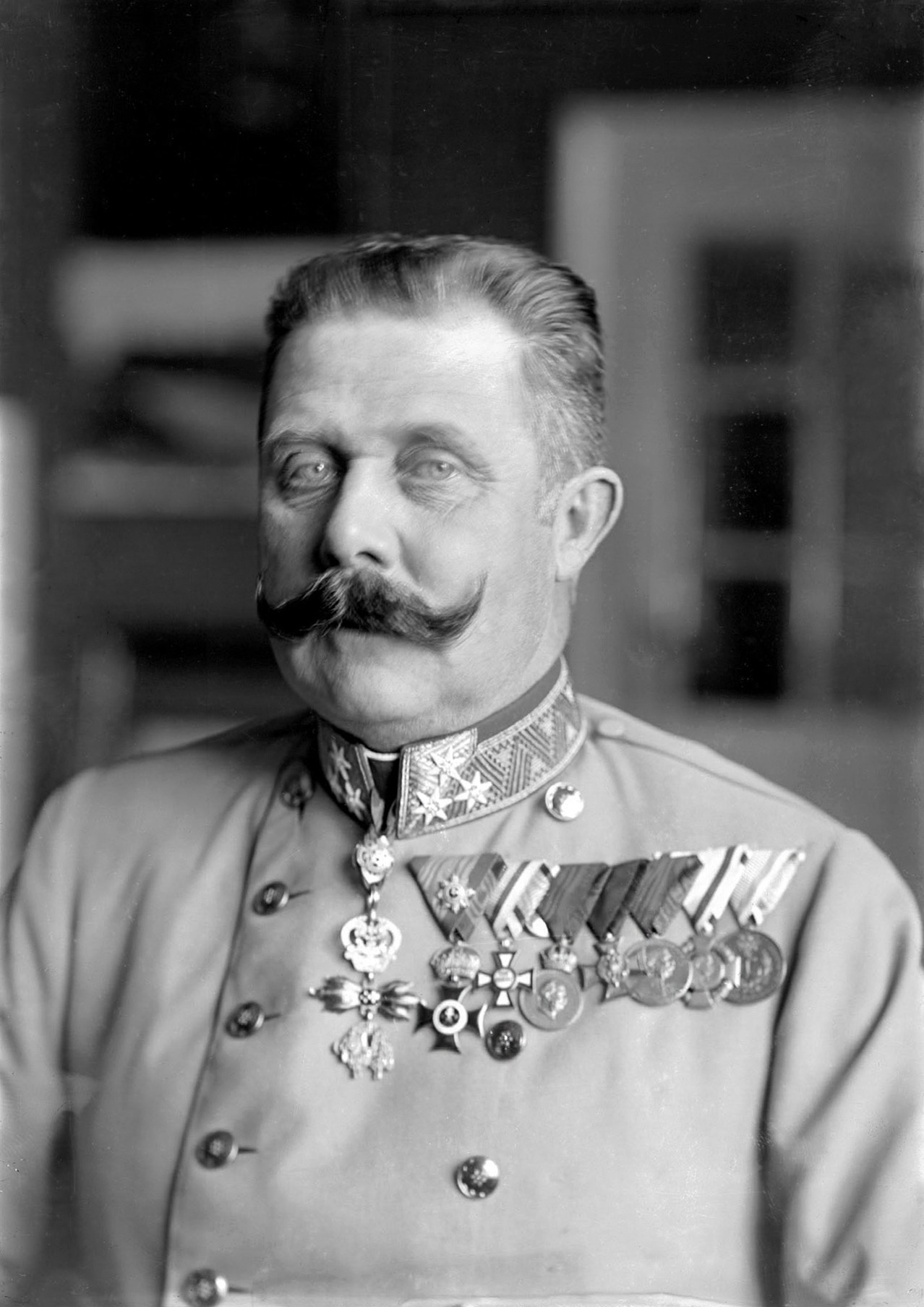
Francesco Ferdinando d’Asburgo-Este, also known as Archduke Franz Ferdinand of Austria-Este, is a pivotal figure in European history, whose life and death had profound consequences on the geopolitical landscape of the early 20th century. Born on December 18, 1863, in Graz, Austria, he was the eldest son of Archduke Karl Ludwig of Austria, the brother of Emperor Franz Joseph I, and Princess Maria Annunziata of Bourbon-Two Sicilies. His lineage placed him in the heart of the Habsburg dynasty, one of the most powerful royal families in Europe.
Early Life and Heritage
Francesco Ferdinando was born into a complex web of European nobility, a position that would later place him at the center of political intrigue and international conflict. At the age of twelve, he inherited the vast estate and title of Duke of Modena from his distant cousin, Francesco V d’Este, the last male descendant of the House of Este. This inheritance required Francesco Ferdinando to adopt the Este name, further solidifying his noble status and wealth.
His early education was heavily influenced by his aristocratic upbringing. Francesco Ferdinando was known to be a devout Catholic, a trait instilled in him by his tutor, Bishop Josef Marschall. This religious upbringing would later influence his political views and his vision for the future of the Austro-Hungarian Empire.
Rise to Heir Presumptive
The trajectory of Francesco Ferdinando’s life took a significant turn following a series of tragic events within the Habsburg family. In 1889, Crown Prince Rudolf, the only son of Emperor Franz Joseph I, died in a murder-suicide at Mayerling, leaving a void in the line of succession. As a result, Francesco Ferdinando’s father, Archduke Karl Ludwig, became the heir presumptive to the throne. However, when Karl Ludwig renounced his rights to the throne and later died in 1896, Francesco Ferdinando became the heir presumptive to the Austro-Hungarian Empire.
This new position came with immense responsibility and scrutiny. Francesco Ferdinando was now the next in line to rule one of the most ethnically diverse and politically complex empires in Europe. His role as heir presumptive placed him at the center of court politics and made him a key figure in the empire’s future.
Marriage and Controversy
Francesco Ferdinando’s personal life was marked by a romantic yet politically contentious marriage. In the late 1890s, he met Countess Sophie Chotek von Chotkowa, a woman of noble birth but not of royal blood. Despite the immense love between the two, their relationship was fraught with difficulties due to the rigid expectations of royal marriages at the time.
The Habsburg court, led by Emperor Franz Joseph I, vehemently opposed the union, as Sophie did not meet the strict requirements of equal birth necessary for a marriage within the imperial family. The controversy surrounding their relationship reached such heights that it drew the attention of other European monarchs, including Kaiser Wilhelm II of Germany, Tsar Nicholas II of Russia, and even Pope Leo XIII, who feared that the dispute might destabilize the already fragile political situation in Europe.
Ultimately, Francesco Ferdinando was allowed to marry Sophie, but only under the condition that the marriage be morganatic. This meant that Sophie would not receive the title of Empress, and their children would be excluded from the line of succession. Despite these stipulations, the couple married on July 1, 1900, in a ceremony that was notably absent of many members of the imperial family, including the Emperor himself.
Vision for the Austro-Hungarian Empire: The “United States of Austria”
Francesco Ferdinando’s political vision for the Austro-Hungarian Empire was both innovative and controversial. He recognized the growing tensions within the empire, which was home to a multitude of ethnic groups, each with its own distinct cultural and national identity. To address these challenges, he proposed a radical restructuring of the empire into a federalized state, which he referred to as the “United States of Austria.”
This plan, known as the trialist proposal, aimed to transform the Austro-Hungarian Empire into a triune monarchy, consisting of Austria, Hungary, and a new Slavic state that would include the regions of Croatia, Bosnia, Slovenia, and Dalmatia. Francesco Ferdinando believed that this new federal structure would grant greater autonomy to the various ethnic groups within the empire, thereby reducing tensions and preserving the Habsburg monarchy’s hold over its diverse territories.
The trialist proposal was not without its opponents. The Hungarian nobility, in particular, saw it as a direct threat to their power and influence within the empire. Francesco Ferdinando’s distrust of the Hungarian elite, whom he believed to be overly ambitious and self-serving, further fueled his determination to push forward with his plan. However, his vision for a restructured empire would never come to fruition.
Assassination and the Outbreak of World War I
On June 28, 1914, Francesco Ferdinando and his wife Sophie were assassinated in Sarajevo by Gavrilo Princip, a Bosnian Serb nationalist. The assassination was carried out by the Black Hand, a secret society committed to the unification of all South Slavic peoples under Serbian rule. Princip’s act of violence was fueled by the belief that the death of the heir to the Austro-Hungarian throne would weaken the empire and pave the way for greater Slavic independence.
The assassination of Francesco Ferdinando is widely regarded as the catalyst for the outbreak of World War I. The Austro-Hungarian Empire, with the backing of Germany, issued an ultimatum to Serbia, which, when not fully accepted, led to the declaration of war on July 28, 1914. The conflict quickly escalated as alliances were activated, drawing in major powers from across Europe and beyond, ultimately leading to a global conflict that would last for four years and result in unprecedented destruction and loss of life.
Legacy and Historical Impact
The assassination of Francesco Ferdinando and the subsequent outbreak of World War I marked the beginning of the end for the Austro-Hungarian Empire. The war exacerbated the empire’s internal divisions and economic hardships, leading to its eventual dissolution in 1918. The map of Europe was redrawn, with new nation-states emerging from the former territories of the Habsburg monarchy, fulfilling, in a way, Francesco Ferdinando’s vision of greater autonomy for the empire’s ethnic groups, albeit not in the manner he had envisioned.
Francesco Ferdinando’s legacy is complex. On one hand, he is remembered as a forward-thinking leader who sought to address the deep-seated issues within the Austro-Hungarian Empire. His trialist proposal, though never realized, was a bold attempt to preserve the empire’s unity in an era of rising nationalism. On the other hand, his death is inextricably linked to the start of World War I, a conflict that reshaped the world and set the stage for the geopolitical struggles of the 20th century.
In modern historical discourse, Francesco Ferdinando is often portrayed as a tragic figure, whose life was cut short just as he was poised to implement significant reforms that might have altered the course of European history. His assassination serves as a poignant reminder of the fragility of peace and the far-reaching consequences of political violence.
The Trialist Vision: A Missed Opportunity?
Francesco Ferdinando’s trialist vision for the Austro-Hungarian Empire remains one of the most intriguing “what if” scenarios in history. Had he lived to ascend the throne, it is possible that his proposed federal structure could have mitigated some of the ethnic tensions that plagued the empire. By granting greater autonomy to the Slavic populations within the empire, Francesco Ferdinando might have been able to forge a more stable and cohesive state, capable of withstanding the pressures of nationalism and external threats.
However, the success of such a plan would have depended on several factors, including the willingness of the Hungarian nobility to cede some of their power and the ability of the various ethnic groups to cooperate within a new political framework. Additionally, the broader European context, with its complex web of alliances and rivalries, would have influenced the outcome of any reforms within the Austro-Hungarian Empire.
The failure to realize the trialist vision underscores the challenges of governance in a multi-ethnic empire. The Habsburg monarchy, like other European empires of the time, struggled to reconcile the demands of nationalism with the need for centralized control. Francesco Ferdinando’s assassination and the ensuing war highlighted the inherent instability of such empires in the face of rising nationalist movements.
Conclusion: The End of an Era
The life and death of Francesco Ferdinando d’Asburgo-Este represent a turning point in European history. His assassination in Sarajevo set off a chain of events that led to the outbreak of World War I, a conflict that would bring an end to the Austro-Hungarian Empire and reshape the political landscape of Europe. Francesco Ferdinando’s legacy is one of both potential and tragedy; he was a leader who envisioned a more inclusive and federalized empire, yet his life was cut short before he could bring his plans to fruition.
The impact of Francesco Ferdinando’s death continues to be felt in the historical memory of Europe. His story is a reminder of the dangers of political violence and the fragile nature of peace in a world of competing national interests. As historians continue to explore the causes and consequences of World War I, Francesco Ferdinando’s life and legacy remain a key area of study, offering insights into the challenges of leadership in a rapidly changing world.


