
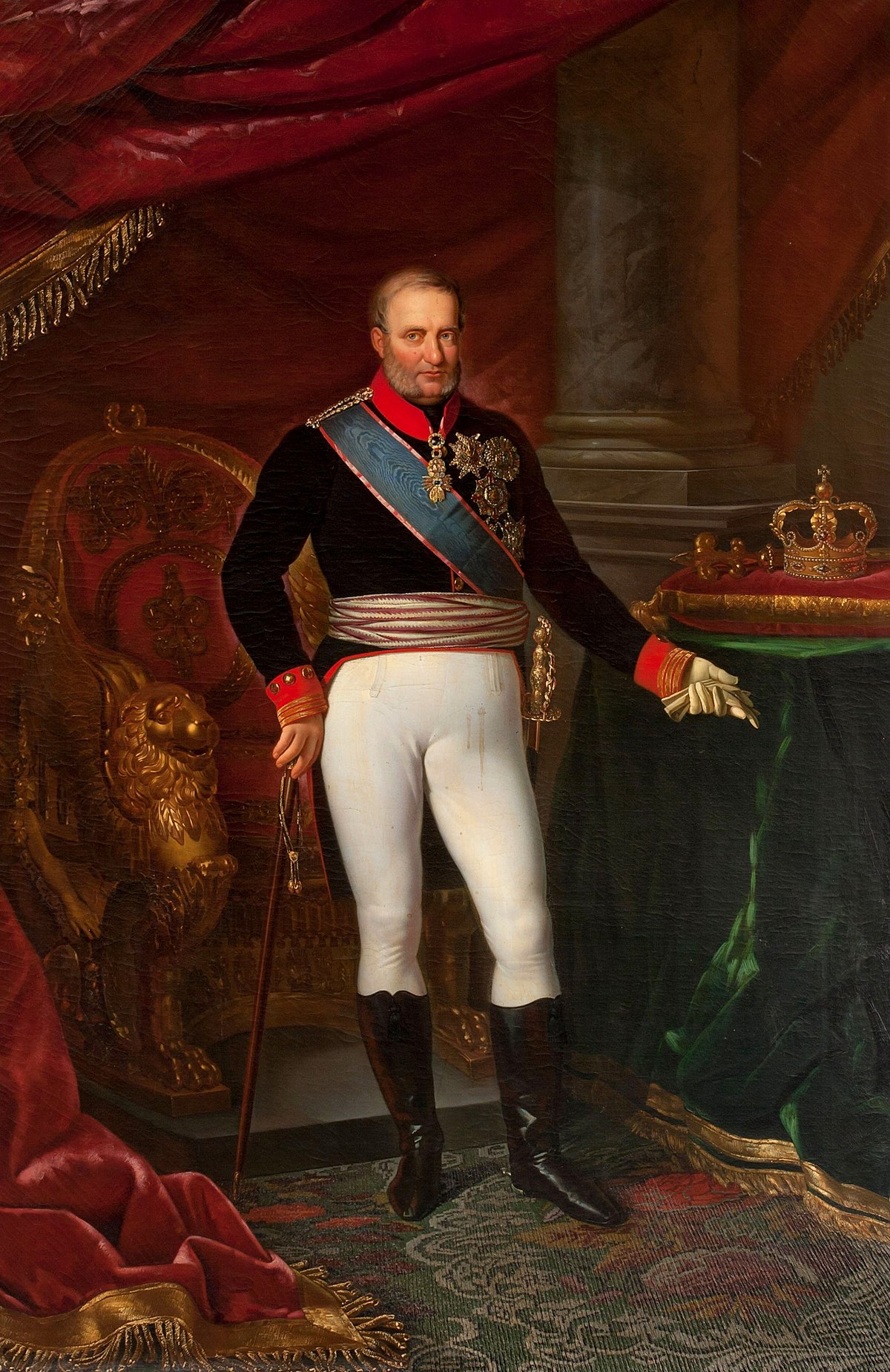
Francesco I delle Due Sicilie, born on August 14, 1777, in Naples, was a king whose reign is often characterized by its political turmoil and severe repression. As the son of Ferdinand I of the Two Sicilies and Maria Carolina of Austria, Francesco inherited a kingdom fraught with challenges, both internal and external. His life and rule were shaped by the complex dynamics of Napoleonic Europe, the rise of nationalist movements, and the pressures of maintaining power in a rapidly changing world. This article delves into the life, reign, and legacy of Francesco I delle Due Sicilie, exploring his influence on the Kingdom of the Two Sicilies and the historical context in which he lived.
Early Life and Royal Marriage
Francesco di Borbone was born into the royal family of Naples and Sicily, a kingdom that was a significant player in the Mediterranean. His father, Ferdinand I, was the king of the newly unified Kingdom of the Two Sicilies, a union of the Kingdom of Naples and the Kingdom of Sicily. His mother, Maria Carolina, was the daughter of the Holy Roman Emperor, which connected Francesco to some of the most powerful dynasties in Europe.
As the eldest son, Francesco was groomed from a young age for leadership. His education was heavily influenced by the conservative and absolutist values of his mother, who was a dominant figure in his early life. Maria Carolina, a formidable woman in her own right, was known for her strong political influence and her deep opposition to the French Revolution, which had profound effects on the European monarchies.
In 1797, Francesco married his first cousin, Maria Clementina of Austria, daughter of Emperor Leopold II and Maria Luisa of Spain. This marriage was part of the broader strategy to strengthen ties within the Habsburg dynasty. However, this union was short-lived; Maria Clementina’s fragile health led to her death in 1801. The following year, Francesco married again, this time to Maria Isabella of Spain, another cousin, and daughter of King Charles IV of Spain. This marriage produced several children, including his successor, Ferdinand II.
The Napoleonic Era and Restoration
Francesco’s early adult years were overshadowed by the Napoleonic Wars, which brought significant upheaval to the Kingdom of Naples. In 1806, Napoleon Bonaparte’s forces invaded Naples, forcing the royal family, including Francesco, to flee to Sicily. During this period of exile, Francesco served as a lieutenant in Sicily, effectively governing the island while his father focused on resisting Napoleon’s control of the mainland.
The Treaty of Casalanza in 1815 marked the end of the Napoleonic Wars and restored Ferdinand I to the throne of the newly formed Kingdom of the Two Sicilies, which combined the territories of Naples and Sicily under one crown. Francesco, as the crown prince, was appointed as the Viceroy of Sicily, where he played a crucial role in the administration of the island.
His time as Viceroy was marked by tensions with the local Sicilian nobility and population, who resented the centralizing policies imposed by the Neapolitan government. These tensions foreshadowed the difficulties Francesco would face during his reign as king.
Reign as King: 1825-1830
Francesco I ascended to the throne on January 4, 1825, following the death of his father, Ferdinand I. His reign, though brief, was a period of significant repression and conservatism, marked by his efforts to maintain absolute power in the face of growing demands for constitutional government and national autonomy.
One of the first challenges Francesco faced was the unrest in Sicily and Naples, where liberal and nationalist movements were gaining momentum. The wave of revolutions that had swept across Europe in the early 19th century had not spared the Kingdom of the Two Sicilies. In 1820, a liberal revolution broke out in Naples, forcing Ferdinand I to grant a constitution. However, this concession was short-lived, as the king, with the support of Austria, soon revoked the constitution and restored absolute rule.
When Francesco became king, he inherited a kingdom that was deeply divided and resentful of the central authority. His response to these challenges was one of harsh repression. He relied heavily on the Austrian military to maintain order, as Austrian troops had remained in the kingdom following the restoration to ensure the stability of the Bourbon rule.
Francesco’s reign saw several notable instances of brutal suppression, particularly in the southern regions of the kingdom. One of the most infamous events was the massacre in Bosco in 1828, where government forces brutally crushed a local uprising in the Cilento region. This event, along with other acts of repression, contributed to Francesco’s reputation as a harsh and unyielding ruler.
Personal Characteristics and Governance
Francesco I was known for his conservative and authoritarian style of governance. Unlike his mother, Maria Carolina, who was a dynamic and politically astute figure, Francesco was often seen as more passive and less capable of effective leadership. He was heavily influenced by his advisors, many of whom were corrupt and self-serving, which further alienated the population from the monarchy.
His reign was characterized by a lack of significant reforms or modernization efforts, which left the Kingdom of the Two Sicilies increasingly out of step with the broader trends in Europe, where constitutionalism and industrialization were taking hold. Francesco’s failure to address the growing demands for political participation and economic development set the stage for future instability in the kingdom.
Moreover, Francesco’s personal life was marked by a certain indifference to the affairs of state. He was more interested in maintaining the status quo than in implementing the necessary reforms that could have strengthened his rule. This approach, combined with his reliance on repressive measures, only deepened the dissatisfaction among his subjects.
Legacy and Impact
Francesco I died on November 8, 1830, at the age of 53, after a reign that left the Kingdom of the Two Sicilies weakened and vulnerable to the forces of change that were sweeping across Europe. His death marked the end of a period of severe repression and set the stage for the reign of his son, Ferdinand II, who would face even greater challenges as the pressures for Italian unification grew.
Francesco’s legacy is a complex one. On the one hand, he is remembered as a king who failed to adapt to the changing political landscape of the 19th century, relying instead on outdated methods of governance and repression. His reign did little to address the underlying issues of poverty, regionalism, and political exclusion that plagued the kingdom, and these problems would continue to haunt his successors.
On the other hand, Francesco’s reign must be understood in the context of a Europe that was still grappling with the aftermath of the Napoleonic Wars and the rise of nationalism. The Bourbon monarchy in Naples was one of many old regimes struggling to maintain its power in the face of revolutionary ideologies and the demands for national self-determination.
Francesco’s inability to implement meaningful reforms or to build a more inclusive political system ultimately contributed to the decline of the Bourbon rule in southern Italy. His reign is often seen as a missed opportunity to modernize the Kingdom of the Two Sicilies and to prepare it for the challenges of the modern world.
Conclusion
Francesco I delle Due Sicilie’s life and reign were emblematic of the struggles faced by many European monarchs in the early 19th century. His efforts to maintain absolute power in the face of growing demands for constitutional government and national autonomy reflect the broader tensions of the time. However, his reliance on repression and his failure to implement meaningful reforms left his kingdom vulnerable to the forces of change that would eventually lead to the unification of Italy.
As a king, Francesco I is often remembered more for the shadows that darkened his reign than for any lasting achievements. His legacy is a reminder of the challenges of leadership in a time of profound social and political transformation and of the dangers of clinging too tightly to the past in a rapidly changing world.


