
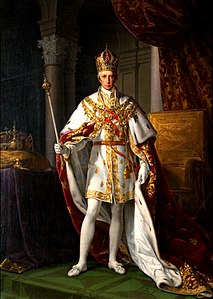
Francesco II del Sacro Romano Impero, also known as Francis II of the Holy Roman Empire, was a pivotal figure in European history, particularly during the tumultuous period that marked the end of the Holy Roman Empire and the rise of Napoleonic power. His life and reign are a reflection of the profound political, social, and military changes that swept through Europe in the late 18th and early 19th centuries. This article provides an in-depth exploration of Francesco II’s life, his rise to power, the historical context of his reign, and his lasting impact on European history.
Early Life and Background
Born on February 12, 1768, in Florence, Italy, Francesco II was the son of Leopold II, Grand Duke of Tuscany, and Maria Ludovica of Spain. His birth into the House of Habsburg-Lorraine, one of the most powerful and influential dynasties in Europe, destined him for a life of significant political and military responsibility. The Habsburgs had long been the ruling family of the Holy Roman Empire, and Francesco was groomed from a young age to continue this legacy.
At the age of sixteen, Francesco was sent to Vienna, the heart of the Habsburg Empire, to receive an education befitting his status as a future ruler. Vienna was not only the political center of the empire but also a hub of cultural and intellectual activity, which would shape Francesco’s worldview and approach to governance. His education was rigorous, focusing on military strategy, statecraft, and the complexities of European diplomacy.
Rise to Power: The Last Holy Roman Emperor
Francesco II’s rise to power was marked by a series of personal and political challenges. In 1792, following the death of his uncle, Emperor Joseph II, Francesco ascended to the throne of the Holy Roman Empire. He inherited a realm that was facing increasing external pressures, particularly from the revolutionary forces in France. The French Revolution, which began in 1789, had already begun to destabilize the traditional monarchies of Europe, and Francesco II would soon find himself at the forefront of the continent’s efforts to contain the spread of revolutionary ideals.
One of the first significant events of Francesco’s reign was his marriage to his cousin, Maria Teresa of Naples and Sicily, in 1790. This marriage was not only a union of two royal houses but also a political alliance aimed at strengthening the Habsburgs’ position in Europe. Maria Teresa would play a crucial role in Francesco’s life, providing him with twelve children and influencing some of his key political decisions, particularly in the fight against Napoleon Bonaparte.
The Napoleonic Wars and the Fall of the Holy Roman Empire
Francesco II’s reign coincided with the rise of Napoleon Bonaparte, one of the most formidable military leaders in history. The Napoleonic Wars, which raged across Europe from 1803 to 1815, were a defining period for Francesco and his empire. The Holy Roman Empire, a complex and loosely connected entity that had existed for over a thousand years, was increasingly seen as an anachronism in the face of Napoleon’s centralized and efficient French state.
The Peace of Campoformio in 1797 marked the beginning of the end for the Holy Roman Empire. After suffering repeated defeats at the hands of Napoleon, Francesco was forced to sign this treaty, which ceded significant territories to France, including the Austrian Netherlands and parts of Italy. This was a humiliating blow for the Habsburgs and a clear sign that the old order in Europe was crumbling.
Recognizing the inevitability of change, Francesco took a bold step in 1804 by declaring himself Emperor of Austria, thus creating a new, more centralized empire that could better resist Napoleon’s advances. This move was both a pragmatic response to the changing political landscape and a symbolic gesture that signaled the end of the Holy Roman Empire as it had been known. Two years later, in 1806, Francesco formally abdicated the title of Holy Roman Emperor, effectively dissolving the empire that had existed since the time of Charlemagne.
The Austrian Empire and the Aftermath of Napoleon’s Defeat
While the Holy Roman Empire was no more, Francesco’s creation of the Austrian Empire allowed him to maintain his family’s influence and continue to play a central role in European politics. The new empire, though smaller and more centralized, was more resilient in the face of Napoleon’s aggression.
The turning point came in 1810 when Francesco, under immense pressure, married his daughter, Marie Louise, to Napoleon. This marriage was part of a broader strategy to secure peace with France and protect Austria’s remaining territories. However, the alliance was short-lived. Napoleon’s disastrous invasion of Russia in 1812 and the subsequent collapse of his power in Europe allowed Francesco to reassert himself as a leading figure in the anti-French coalition.
In 1813, Francesco joined forces with Russia, Prussia, and Britain in the Sixth Coalition, which ultimately defeated Napoleon at the Battle of Leipzig. This victory marked the beginning of the end for Napoleon, who was exiled to the island of Elba in 1814. The defeat of Napoleon allowed Francesco to recover many of the territories lost during the Napoleonic Wars, but he wisely chose not to attempt a restoration of the Holy Roman Empire, recognizing that the political landscape of Europe had irrevocably changed.
The Congress of Vienna and the Restoration of Europe
Following Napoleon’s defeat, Francesco played a significant role in the Congress of Vienna, which took place from 1814 to 1815. The Congress was a gathering of European powers aimed at restoring stability and order to a continent that had been ravaged by nearly two decades of war. The key objectives of the Congress were to redraw the map of Europe, restore the balance of power, and prevent the rise of another figure like Napoleon.
Francesco’s representative at the Congress was his foreign minister, Klemens von Metternich, who emerged as one of the leading architects of the post-Napoleonic order. Metternich’s influence on Francesco was profound, and together they worked to establish a system that would maintain the status quo and suppress revolutionary movements across Europe. This system, known as the Metternich System, or the Concert of Europe, was based on the principles of conservatism, legitimacy, and the balance of power.
One of the most significant outcomes of the Congress of Vienna was the creation of the German Confederation, a loose association of German states that replaced the Holy Roman Empire. While not as powerful as its predecessor, the Confederation provided a framework for cooperation among the German states and served as a buffer against French expansionism.
The Legacy of Francesco II: A Complex and Controversial Figure
Francesco II’s legacy is a complex one, shaped by the dramatic events of his time and the decisions he made in response to them. As the last Holy Roman Emperor, he presided over the end of an empire that had been a cornerstone of European politics for over a millennium. His decision to dissolve the Holy Roman Empire and create the Austrian Empire was a pragmatic response to the challenges posed by Napoleon, but it also marked the end of an era.
Francesco’s reign is often viewed through the lens of his association with Metternich and the conservative order they established in Europe. The Metternich System, while successful in maintaining peace in Europe for several decades, was also criticized for its repression of liberal and nationalist movements. Francesco’s support for this system has led some historians to view him as a reactionary figure, more concerned with preserving his family’s power than with addressing the demands for change that were sweeping across Europe.
However, it is also important to recognize the difficult circumstances under which Francesco ruled. The French Revolution and the rise of Napoleon were existential threats to the old order in Europe, and Francesco’s actions can be seen as efforts to navigate these challenges and preserve the Habsburg monarchy in a rapidly changing world. His ability to adapt to these challenges, albeit through conservative means, allowed Austria to remain a major power in Europe well into the 19th century.
Francesco II’s Personal Life and Final Years
On a personal level, Francesco’s life was marked by tragedy and loss. He was married four times, with each marriage bringing both joy and sorrow. His first wife, Elisabeth of Württemberg, died tragically shortly after giving birth to their only child, who also did not survive. His second marriage to Maria Teresa of Naples and Sicily was more successful, producing twelve children and a strong political alliance. However, Maria Teresa’s death in 1807 was a significant blow to Francesco, both personally and politically.
Francesco’s third marriage to Maria Ludovika of Austria-Este was also short-lived, as she died in 1816. His fourth and final marriage to Caroline Augusta of Bavaria brought some stability to his later years, but Francesco continued to face the pressures of ruling an empire in a time of great change.
Francesco II died on March 2, 1835, in Vienna at the age of 67. His death marked the end of an era, as he was one of the last monarchs to have ruled during the tumultuous period of the Napoleonic Wars. His legacy, though mixed, is one of resilience and adaptation in the face of unprecedented challenges.
Conclusion: The End of an Era and the Dawn of a New Europe
Francesco II del Sacro Romano Impero was a ruler who faced immense challenges during one of the most turbulent periods in European history. His reign saw the end of the Holy Roman Empire, the rise and fall of Napoleon, and the redrawing of the European map at the Congress of Vienna. While his legacy is often associated with conservatism and the suppression of revolutionary movements, Francesco’s actions were driven by a desire to preserve his family’s power and maintain stability in a rapidly changing world.
The dissolution of the Holy Roman Empire and the creation of the Austrian Empire under Francesco’s leadership marked the end of an era and the beginning of a new chapter in European history. His reign, though controversial, was a testament to the complexities of leadership in a time of great upheaval. Francesco II remains a significant figure in European history, and his life and legacy continue to be studied and debated by historians today.


