
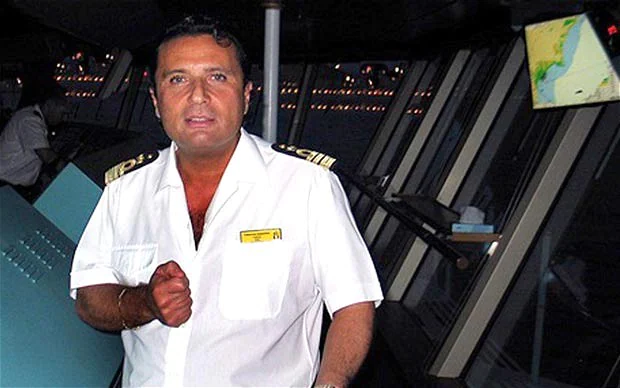
Francesco Schettino was born on November 14, 1960, in Castellammare di Stabia, Naples, Italy. He became widely known as the captain of the cruise ship Costa Concordia, which tragically sank off the coast of Giglio Island, Tuscany, on January 13, 2012. This disaster not only thrust Schettino into the international spotlight but also led to his fall from grace, with the once-respected mariner now often cited as a symbol of failed leadership and maritime irresponsibility.
Early Life and Career
Francesco Schettino’s early years were relatively unremarkable, hailing from a traditional Italian family in the port city of Castellammare di Stabia, a region known for its deep maritime roots. Schettino’s path seemed predestined for the sea, and he pursued a career in the maritime industry, eventually climbing the ranks to become a captain for Costa Crociere, a major Italian cruise line.
Before the infamous Costa Concordia disaster, Schettino enjoyed a relatively successful career, known among his peers as a competent, if somewhat flamboyant, captain. His maritime career was marked by his ambitious desire to lead a ship, and his tenure with Costa Crociere provided him with the opportunity to do so. However, his ambitions and the events leading up to the night of January 13, 2012, would dramatically alter his life and legacy.
The Costa Concordia Disaster
The Costa Concordia was a luxury cruise liner that embarked on the “Profumo di Agrumi” (Scent of Citrus) cruise through the Mediterranean in January 2012. The ship, under Schettino’s command, was scheduled to visit several iconic ports, including Savona, Marseille, Barcelona, Palma de Mallorca, Cagliari, and Palermo, before returning to Civitavecchia, its home port.
On the night of January 13, 2012, the Concordia struck a submerged rock off the coast of Giglio Island, resulting in a 70-meter gash in the hull on the port side. The ship began to list heavily, eventually coming to rest on a rocky ledge. The proximity of the ship to the shore—a mere 96 meters—was a stark reminder of how close the vessel was to safety, yet how disastrously far it had fallen.
The incident resulted in the deaths of 32 people and injuries to many others. The evacuation, which began shortly after the impact, was chaotic, with passengers and crew members scrambling for lifeboats. The tragedy was compounded by reports that Schettino abandoned ship while many passengers were still aboard, a decision that drew widespread condemnation and led to his arrest and prosecution.
Legal Proceedings and Public Perception
Following the disaster, Francesco Schettino was arrested and charged with multiple counts, including manslaughter, causing a shipwreck, and abandoning ship. The ensuing legal battle was highly publicized, with Schettino often referred to in the media as “Captain Coward” due to his decision to leave the ship while passengers remained trapped.
The investigation revealed troubling details about the moments leading up to the disaster. Schettino was reportedly accompanied by a Moldovan dancer who was part of the crew, and there were allegations of a personal relationship between the two. It was also suggested that Schettino’s decision to perform a “salute” maneuver—a close pass to the shore—was a contributing factor to the accident. This maneuver, known as an “inchino,” was intended to impress passengers and those on shore, but it ultimately proved disastrous.
In 2016, Francesco Schettino was sentenced to 16 years in prison for his role in the disaster. His conviction was upheld by the Italian Supreme Court in 2017, sealing his fate as the man responsible for one of the most notorious maritime disasters in recent history.
The Aftermath and Schettino’s Legacy
The Costa Concordia disaster had far-reaching consequences beyond the immediate loss of life and the destruction of the ship. It prompted significant changes in maritime safety regulations, particularly concerning the procedures for passenger evacuation and the responsibilities of ship captains. The disaster also led to a greater emphasis on the training and preparedness of crew members, with a focus on ensuring that such a tragedy could never happen again.
Francesco Schettino’s name has since become synonymous with negligence and failure in leadership. The media portrayal of Schettino, often sensationalized, reflects a deep societal disdain for those who shirk responsibility in moments of crisis. The captain’s actions on that fateful night are often contrasted with the expected conduct of a leader, especially one entrusted with the lives of so many people.
Schettino’s life post-trial has been largely out of the public eye, with his imprisonment marking the end of a dramatic fall from grace. His story, however, remains a cautionary tale in the maritime world, a stark reminder of the heavy responsibilities that come with command.
Historical Context and Nuances
To fully understand Francesco Schettino’s actions and the public’s reaction to them, it’s essential to consider the broader historical context of maritime disasters and leadership expectations. Throughout history, ship captains have been viewed as the ultimate authority aboard their vessels, often expected to go down with their ship rather than abandon it. This unwritten rule has been romanticized in literature and film, creating a powerful narrative about duty, honor, and sacrifice.
The Costa Concordia disaster, therefore, not only challenged but also shattered these long-held beliefs. Schettino’s actions were seen as a betrayal of this sacred maritime code, and his failure to take responsibility in the face of disaster struck a chord with the public, leading to widespread condemnation.
In contrast to past maritime heroes, who have been lauded for their bravery and steadfastness, Schettino’s legacy is one of failure and disgrace. This dichotomy has fueled ongoing debates about leadership, accountability, and the human capacity for error under pressure.
Fame and Infamy: The Duality of Schettino’s Legacy
Francesco Schettino’s fame, or rather infamy, is a complex phenomenon. On one hand, he is remembered as the captain of a ship that met a tragic end, a man who failed to fulfill his duties when it mattered most. On the other hand, his story serves as a powerful reminder of the importance of leadership and the dire consequences that can arise from its absence.
In the years following the disaster, Schettino has been the subject of numerous articles, documentaries, and analyses, each seeking to understand the man behind the headlines. While some have tried to delve into the psychological and situational factors that may have influenced his decisions, the general consensus remains that Schettino’s actions were inexcusable.
His story continues to be a point of reference in discussions about crisis management, ethics, and the responsibilities of those in positions of power. The Costa Concordia disaster, and by extension, Francesco Schettino’s life, offers valuable lessons for leaders in all fields, highlighting the critical importance of integrity, courage, and accountability.
Conclusion
Francesco Schettino’s life is a tale of contrasts: from a respected captain to a man reviled for his actions during a disaster that claimed the lives of 32 people. His story is a sobering reminder of the weight of responsibility that comes with leadership and the tragic consequences that can result from its failure. As history continues to judge Schettino, his name will likely remain a symbol of what can go wrong when those entrusted with the lives of others fail to uphold their duties.
In the broader context, the Costa Concordia disaster has led to important changes in maritime safety and highlighted the need for strong, principled leadership. Francesco Schettino may have gained notoriety for his failures, but his story also serves as a powerful lesson in the importance of accountability and the profound impact of leadership decisions.


