
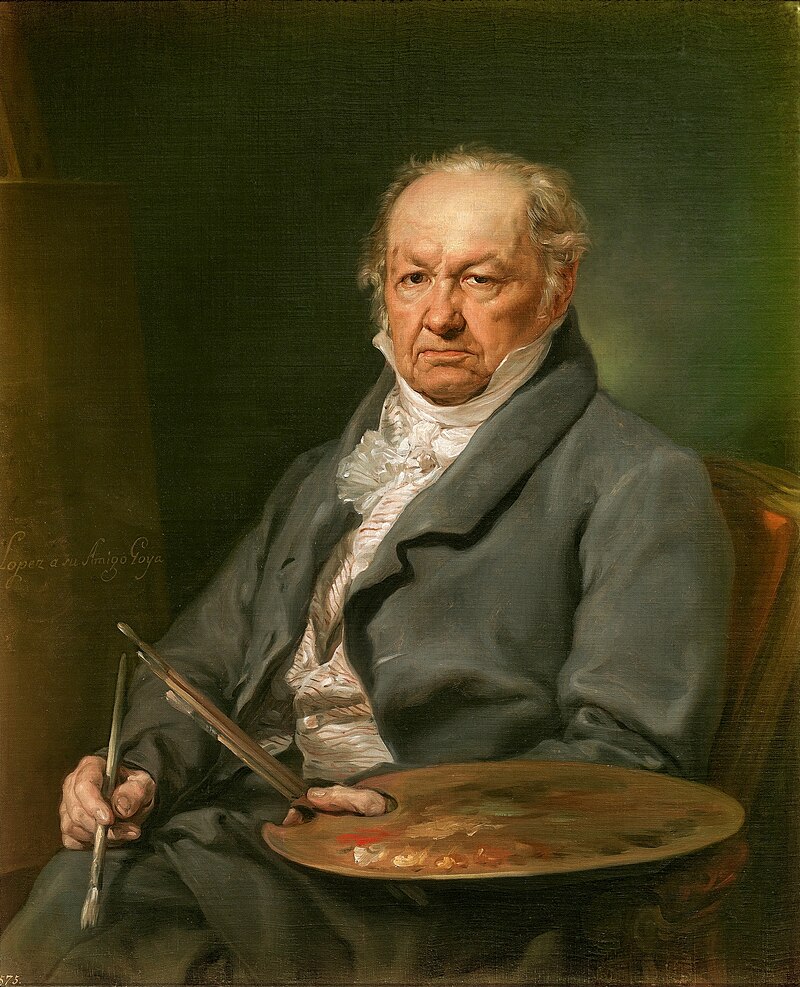
Francisco José de Goya y Lucientes, known simply as Francisco Goya, was a pioneering Spanish painter and printmaker whose work transcended the constraints of his era. Born on March 30, 1746, in Fuendetodos, Spain, Goya’s life and career provide a fascinating glimpse into the evolution of Spanish art and the broader European artistic landscape of the 18th and early 19th centuries.
Early Life and Training
Goya was born into a modest family; his father, José Goya, was a master gilder, and his mother, Gracia Lucientes, came from a family of artisans. Growing up in the small village of Fuendetodos, Goya was exposed to artistic craftsmanship from a young age. His early education in art began under the guidance of José Luzán Martínez, a painter from Zaragoza. Luzán’s teachings in drawing and painting laid the groundwork for Goya’s future artistic endeavors.
In 1769, Goya ventured to Italy, inspired by the work of Venetian painter Giovanni Battista Tiepolo, whose vibrant and dramatic style left a profound impact on him. This journey marked a crucial turning point in his artistic development, providing him with new influences and perspectives. After returning to Spain, Goya settled in Zaragoza, where he began to gain recognition for his work.
Rise to Prominence
Goya’s professional breakthrough came when he was commissioned to create frescoes for the Basilica of Our Lady of the Pillar in Zaragoza. This opportunity, facilitated by his connections with prominent figures like the Bayeu brothers, allowed Goya to showcase his skills on a grand scale. His work during this period was characterized by its vivid color and dynamic compositions.
In 1774, Goya was commissioned to create designs for tapestries for the Royal Tapestry Factory of Santa Bárbara, a project that occupied much of his career. These tapestries, depicting scenes of everyday life and landscapes, were notable for their lively and detailed portrayal of Spanish society.
Major Works and Artistic Achievements
“El Parasole” and “La Familia del Infante Don Luis”
One of Goya’s most famous works from this period is “El Parasole” (The Parasol), painted in 1777. This work exemplifies Goya’s ability to capture the elegance and vibrancy of Spanish society. The painting depicts a young woman in an elaborate dress and hat, enjoying a leisurely moment outdoors, showcasing Goya’s talent for portraying light, texture, and social dynamics.
In 1784, Goya created “La Familia del Infante Don Luis” (The Family of Infante Don Luis), a significant portrait of the royal family. This work highlights Goya’s skill in portraiture, capturing the personalities and social status of his subjects with remarkable accuracy.
“La Familia de Carlos IV” and “La Maja Desnuda”
Goya’s relationship with the Spanish court was solidified when he was appointed as the court painter to King Charles IV in 1789. His portrait “La Familia de Carlos IV” (The Family of Charles IV) stands out as a critical representation of the Spanish royal family. The painting is notable for its unflattering but honest portrayal of the royal family, reflecting Goya’s keen observation and satirical edge.
Another notable work from this period is “La Maja Desnuda” (The Nude Maja), completed around 1800-1805. This provocative painting, featuring a reclining nude woman, was a departure from traditional portraiture and reflected Goya’s exploration of sensuality and the human form. It remains one of his most iconic and controversial pieces.
Later Works and Social Commentary
“Los Caprichos” and “Disasters of War”
Goya’s later works are marked by a shift toward darker themes and social critique. In 1797, he began working on “Los Caprichos,” a series of etchings that satirize the social and political issues of the time. These works are characterized by their imaginative and often grotesque depictions of human folly and corruption.
The turmoil of the Napoleonic Wars deeply affected Goya, leading him to produce “Los Desastres de la Guerra” (The Disasters of War). This series of etchings, created between 1810 and 1820, offers a harrowing portrayal of the brutality and suffering caused by war. The stark and graphic imagery reflects Goya’s response to the horrors of conflict and his disillusionment with political power.
“Black Paintings” and Final Years
In the later years of his life, Goya’s work took on an increasingly somber and introspective tone. His “Black Paintings,” created during his time at the Quinta del Sordo (Deaf Man’s Villa), are some of his most enigmatic and haunting works. These paintings, including “Saturn Devouring His Son,” reflect a profound sense of despair and existential angst.
In 1824, Goya left Spain for France, settling in Bordeaux, where he continued to work until his death on April 16, 1828. His final works included “La Lechera de Bordeaux” (The Milkmaid of Bordeaux) and a portrait of his grandson, Mariano.
Legacy and Influence
Francisco Goya’s contributions to art are immense and enduring. His ability to capture the complexities of human nature, his innovative techniques, and his willingness to challenge societal norms have solidified his reputation as one of the greatest artists in history.
Goya’s impact extends beyond his own era, influencing subsequent generations of artists and thinkers. His work foreshadowed the modernist movements of the 19th and 20th centuries, and his exploration of dark themes and social critique paved the way for future artistic and political commentary.
Conclusion
Francisco Goya’s life and work represent a compelling narrative of artistic innovation and social critique. From his early successes in Spain to his profound and sometimes unsettling explorations of human nature, Goya’s legacy is a testament to the power of art to reflect and shape the human experience. His contributions to the art world continue to resonate, making him a timeless figure in the history of Western art.


