
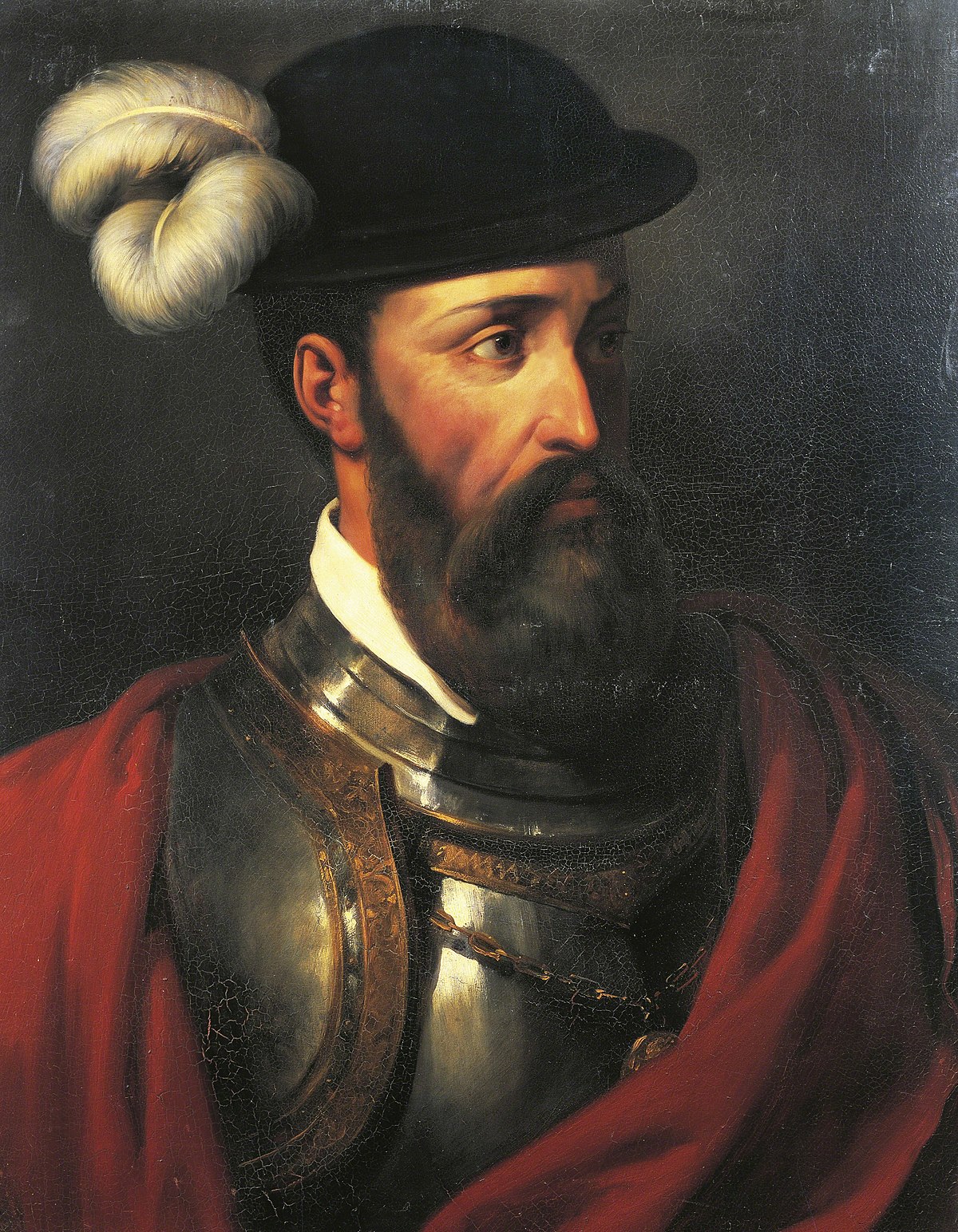
Francisco Pizarro is a name etched in the annals of history as one of the most notorious conquistadors of the 16th century. Born around 1475 in Trujillo, a town in the Extremadura region of Spain, Pizarro rose from humble beginnings to become the conqueror of the mighty Inca Empire and the founder of Lima, the present-day capital of Peru. His life, marked by ambition, brutality, and military genius, played a pivotal role in the Spanish colonization of South America.
Early Life and Background
Francisco Pizarro González was born into a modest family. His father, Gonzalo Pizarro, was a colonel who had fought in the Italian campaigns, but Francisco’s early life was far from privileged. Raised in conditions of poverty, Pizarro’s childhood was spent in Trujillo, where he reportedly worked as a swineherd, a far cry from the grandiose life he would later lead.
Despite the harshness of his upbringing, Pizarro harbored ambitions that extended beyond the boundaries of his small hometown. In search of fortune and adventure, he made his way to Seville, the bustling port city that served as Spain’s gateway to the New World. Here, he seized the opportunity to embark on a journey that would forever alter the course of history.
The Call of the New World
The lure of the New World was irresistible to many young Spaniards of Pizarro’s time. Tales of vast wealth and untold riches spurred a wave of expeditions to the Americas. In 1509, Pizarro joined an ill-fated expedition to Colombia, marking his first foray into the unknown lands of the New World. Though the venture was unsuccessful, it did not deter Pizarro from pursuing further opportunities.
In 1513, Pizarro joined the expedition led by Vasco Núñez de Balboa, which resulted in the European discovery of the Pacific Ocean. This expedition was a turning point for Pizarro, who, through his association with Balboa, began to establish himself as a significant figure among the Spanish explorers. However, when Balboa fell out of favor with the Spanish authorities, Pizarro was tasked with arresting him, a move that secured Pizarro’s loyalty to the Spanish crown and earned him the position of mayor of Panama City.
The Ambition to Conquer
The early 1520s were a time of great excitement and ambition for Pizarro. News of Hernán Cortés’ conquest of the Aztec Empire in Mexico reached Panama, igniting a desire in Pizarro to emulate Cortés’ success. The stories of immense wealth and powerful civilizations to the south captured Pizarro’s imagination, leading him to set his sights on the unexplored territories of South America.
In 1524, Pizarro, along with fellow conquistadors Diego de Almagro and Hernando de Luque, embarked on a series of expeditions aimed at exploring and ultimately conquering the lands south of Panama. These expeditions were fraught with peril, including hostile encounters with indigenous tribes and the harsh realities of uncharted territories. Despite these challenges, Pizarro and his men pressed on, driven by the promise of wealth and glory.
The Quest for Peru
Pizarro’s determination to conquer new lands culminated in a pivotal moment in 1528 when he returned to Spain to seek official support for his ventures. Impressed by Pizarro’s tales of a rich and powerful empire in the south, King Charles V granted him the authority to conquer the lands that would later be known as Peru. Armed with royal backing, Pizarro returned to the New World in 1530, ready to embark on the most significant campaign of his life.
The conquest of the Inca Empire began in earnest in 1532 when Pizarro and a small band of around 160 men landed in the region now known as northern Peru. The Incas, at the time, were embroiled in a civil war between the ruling emperor Atahualpa and his brother Huáscar. Pizarro astutely exploited this internal conflict to his advantage.
Pizarro’s first major encounter with the Incas took place in Cajamarca, where he met with Atahualpa. Despite being vastly outnumbered, Pizarro devised a cunning plan to capture the emperor. During a carefully orchestrated meeting, Pizarro’s forces ambushed the unsuspecting Inca, taking Atahualpa prisoner. This bold move effectively crippled the Inca leadership and marked the beginning of the end for the empire.
The Fall of the Inca Empire
The capture of Atahualpa was a masterstroke in Pizarro’s campaign. Realizing the importance of the emperor to the Inca people, Pizarro demanded a ransom for Atahualpa’s release—a ransom that would go down in history as one of the largest ever paid. The Incas filled a room with gold and silver to meet Pizarro’s demands, hoping to secure the emperor’s freedom.
However, once the ransom was paid, Pizarro showed no intention of honoring his agreement. Fearing that Atahualpa might rally his people against the Spanish, Pizarro had him executed, effectively decapitating the Inca leadership. With Atahualpa’s death, the Spanish conquest of the Inca Empire accelerated. Pizarro’s forces, now bolstered by reinforcements from Spain, marched on the Inca capital of Cuzco, capturing it in 1533. The fall of Cuzco marked the collapse of the Inca Empire, and Pizarro’s dominance over the region was cemented.
The Founding of Lima
With the Inca Empire effectively subdued, Pizarro turned his attention to consolidating Spanish control over the newly conquered territories. In 1535, he founded the city of Lima, which would become the administrative center of the Spanish colony in Peru. Lima’s strategic location along the Pacific coast made it an ideal hub for trade and governance, ensuring its status as the most important city in the region.
Pizarro’s founding of Lima was not just a military and administrative act; it was also symbolic of the lasting impact of Spanish colonization. The city’s establishment marked the beginning of a new era in South American history, one characterized by the blending of indigenous cultures with European influences. Lima quickly grew into a thriving metropolis, becoming the capital of the Viceroyalty of Peru and a focal point of Spanish power in the Americas.
Conflicts and Betrayals
Despite his success, Pizarro’s later years were marked by internal conflicts and betrayals. The immense wealth and power he had amassed led to tensions with his former allies, most notably Diego de Almagro. The once-close relationship between Pizarro and Almagro deteriorated into open hostility, culminating in a violent conflict over control of the conquered territories.
The rivalry between Pizarro and Almagro reached its peak in 1538, when Pizarro defeated Almagro’s forces in the Battle of Las Salinas. Almagro was captured and executed on Pizarro’s orders, but the victory came at a high cost. The animosity between the Pizarro and Almagro factions continued to simmer, ultimately leading to Pizarro’s own demise.
In 1541, Francisco Pizarro was assassinated by a group of conspirators loyal to the Almagro family. They stormed his palace in Lima, where Pizarro fought valiantly but was ultimately overwhelmed and killed. His death marked the end of an era in the Spanish conquest of the Americas.
Legacy of Francisco Pizarro
Francisco Pizarro’s legacy is a complex and controversial one. On one hand, he is remembered as a brilliant military strategist and a key figure in the expansion of the Spanish Empire. His conquest of the Inca Empire, one of the most powerful civilizations of the time, was a feat of audacity and cunning that changed the course of history.
However, Pizarro’s legacy is also stained by the brutality and violence that characterized his campaigns. The methods he employed—deception, betrayal, and outright slaughter—have left a dark mark on his historical reputation. The destruction of the Inca Empire and the subjugation of its people were part of a larger pattern of exploitation and colonization that had devastating consequences for the indigenous populations of the Americas.
Pizarro’s founding of Lima stands as a testament to his role in shaping the future of Peru, but it also symbolizes the imposition of Spanish rule and culture over the indigenous peoples. The city of Lima, now a vibrant and diverse metropolis, reflects the complex legacy of its founder—a legacy that is both celebrated and lamented.
Historical Context and Nuances
The life and exploits of Francisco Pizarro cannot be fully understood without considering the broader historical context in which he lived. The Age of Exploration was a time of unprecedented global expansion, driven by European powers’ desire for wealth, land, and influence. The Spanish crown, in particular, was eager to expand its empire and capitalize on the riches of the New World.
Pizarro’s actions were shaped by the values and motivations of his time—ambition, religious zeal, and the pursuit of glory. The conquistadors, of whom Pizarro was a leading figure, were often ruthless in their quest for wealth and power, and their actions had profound and lasting impacts on the cultures and societies they encountered.
The fall of the Inca Empire, facilitated by Pizarro, was not just a military conquest but also a cultural and spiritual upheaval. The introduction of Christianity, the Spanish language, and European customs transformed the Andean world, leading to the erosion of indigenous traditions and the establishment of a new colonial order.
Conclusion
Francisco Pizarro remains one of history’s most enigmatic and controversial figures. His life was marked by remarkable achievements and notorious acts of violence. From his humble beginnings in Spain to his rise as the conqueror of the Inca Empire, Pizarro’s story is one of ambition, conquest, and legacy.
While his actions brought great wealth and power to Spain, they also led to the destruction of one of the most advanced civilizations of the pre-Columbian Americas. Today, Pizarro is remembered both as a founding figure in Peruvian history and as a symbol of the darker aspects of European colonization.
As we reflect on Pizarro’s life and legacy, it is important to consider the complex and often contradictory nature of historical figures. Francisco Pizarro’s impact on the world was immense, and his story continues to be a subject of fascination, debate, and reinterpretation.


