
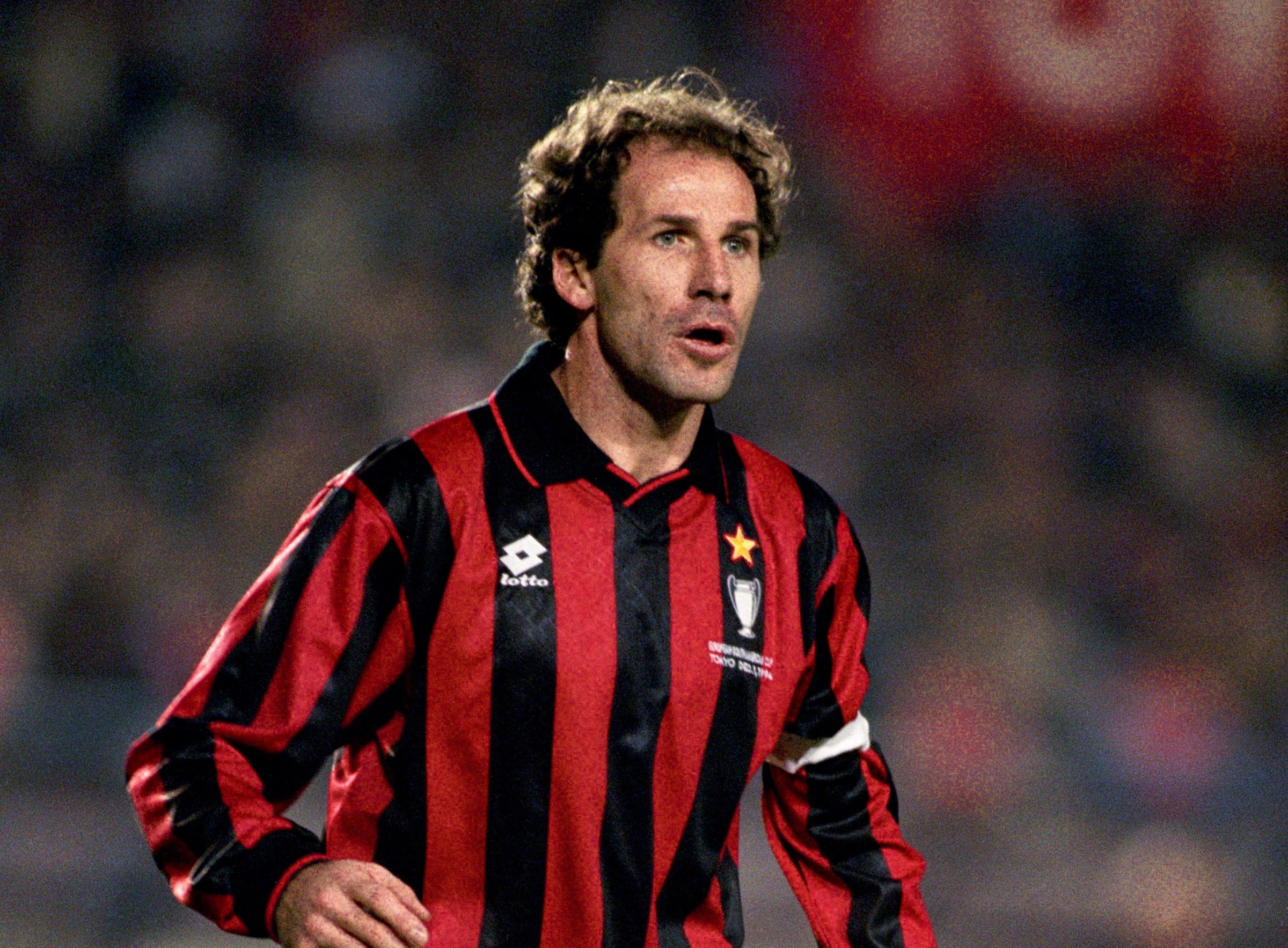
Franco Baresi, born on May 8, 1960, in Travagliato, Brescia, Italy, is a legendary figure in the world of football. Known for his loyalty to AC Milan, his exceptional defensive skills, and his leadership on and off the pitch, Baresi has left an indelible mark on the sport. His career spans over two decades, during which he achieved significant success with Milan and the Italian national team.
Early Life and Entry into Football
Franco Baresi, originally named Franchino, grew up in a family passionate about football. His older brother, Giuseppe Baresi, also became a professional footballer. The Baresi brothers initially tried out for Inter Milan, but while Giuseppe was accepted, Franco was rejected. Undeterred, Franco attended a trial with AC Milan and was accepted into their youth academy, marking the beginning of his lifelong association with the club.
Loyalty to AC Milan
Baresi made his debut for AC Milan in the 1977-1978 season. His early years were marked by challenges, including Milan’s relegation to Serie B in 1980 due to a match-fixing scandal. Despite offers from other clubs, Baresi chose to stay with Milan and helped the team return to Serie A. His decision to remain loyal to Milan during these tough times cemented his status as a club legend.
Ascendancy in the 1980s
Baresi became Milan’s captain at just 22 years old, a testament to his leadership qualities and footballing intelligence. Under his captaincy, Milan won the Serie B title and returned to Serie A. However, the team faced another relegation in the 1981-1982 season due to poor performance. Baresi’s resilience shone through as he led Milan back to the top tier once again.
Golden Era with Milan
The late 1980s and early 1990s were the golden years for AC Milan, largely due to Baresi’s leadership and the tactical innovations of coach Arrigo Sacchi. Sacchi’s revolutionary approach to football, emphasizing a high press and zonal marking, found its perfect executor in Baresi. Milan won the Serie A title in 1988, breaking a nine-year drought.
European Success
Baresi’s Milan also dominated Europe, winning the European Cup (now the UEFA Champions League) in 1989 and 1990. The team, featuring stars like Marco van Basten, Ruud Gullit, and Frank Rijkaard, became one of the greatest in football history. Baresi’s defensive prowess and tactical acumen were crucial to their success.
Under Fabio Capello, who succeeded Sacchi, Milan continued their dominance. Baresi won four more Serie A titles and another Champions League in 1994. His ability to read the game, combined with his leadership and technical skills, made him one of the best defenders in the world.
International Career with Italy
Baresi made his debut for the Italian national team in 1982 under coach Enzo Bearzot. However, he became a regular starter only in 1986 under Azeglio Vicini. He played a key role in Italy’s journey to the semifinals in the 1988 UEFA European Championship and the 1990 FIFA World Cup, held in Italy. The 1990 World Cup, known for the “Notti Magiche” (Magical Nights), saw Italy finish third.
1994 World Cup and Captaincy
In 1991, Baresi was named captain of the national team. He led Italy to the 1994 World Cup in the United States. Despite suffering a knee injury in the opening match against Norway, Baresi made a remarkable recovery to play in the final against Brazil. The match ended in a goalless draw, and Italy lost on penalties. Baresi’s missed penalty in the shootout was a heartbreaking moment, but his performance throughout the tournament was lauded.
Retirement and Legacy
Baresi retired from professional football on June 1, 1997, at the age of 37, after a remarkable 20-year career with AC Milan. In honor of his contributions, Milan retired his iconic number 6 jersey, a first in Italian football history.
Coaching and Post-Retirement Activities
Baresi’s coaching career was less illustrious than his playing days. He had brief stints as a director of football at Fulham and as the head of Milan’s youth academy. Despite these challenges, his legacy as a player remains untarnished.
In 2013, Baresi was inducted into the Italian Football Hall of Fame, recognizing his immense contributions to the sport. He remains involved with AC Milan, serving as an ambassador and continuing to inspire future generations of footballers.
Personal Life
Franco Baresi is married to Maura Lari, and the couple has two children: Edoardo, born in 1991, and Giannandrea, whom they adopted in 1997. Baresi is known for his humility and dedication, traits that have endeared him to fans and teammates alike.
Style of Play and Impact
Baresi was renowned for his exceptional defensive skills, tactical intelligence, and leadership. He was a master of the offside trap and possessed excellent ball control and passing ability, often initiating attacks from the back. His ability to read the game and make crucial interceptions made him a cornerstone of Milan’s defense.
Comparisons and Influence
Often compared to the legendary Franz Beckenbauer, Baresi was affectionately nicknamed “Kaiser Franz” by Milan fans. His style of play and influence extended beyond his defensive duties; he was a playmaker from the back, contributing to both defense and attack.
Baresi’s influence on future generations of defenders is profound. Players like Alessandro Nesta, Fabio Cannavaro, and Paolo Maldini, who succeeded him as Milan’s captain, have often cited Baresi as an inspiration.
Historical Context and Nuances
Baresi’s career must be viewed within the broader context of Italian football’s evolution. His loyalty to AC Milan during times of turmoil, including relegations and financial crises, highlights a level of dedication that is rare in modern football. Baresi’s commitment to Milan is emblematic of an era when loyalty and club identity were paramount.
Tactical Evolution
Baresi’s career coincided with significant tactical evolutions in football. The transition from traditional man-marking systems to zonal marking and the implementation of the offside trap were pivotal in defining modern defensive strategies. Baresi’s role in these tactical shifts, particularly under Arrigo Sacchi, showcases his adaptability and footballing intelligence.
Conclusion
Franco Baresi’s life and career are a testament to his unparalleled skill, dedication, and leadership. From his humble beginnings in Travagliato to becoming a legendary figure at AC Milan and in international football, Baresi’s journey is marked by significant achievements and unwavering loyalty. His contributions to the sport, both on and off the field, have left an indelible mark on football history.
As an ambassador for AC Milan and a role model for young players, Baresi’s legacy continues to inspire. His story is a powerful reminder of the values of loyalty, resilience, and excellence, making Franco Baresi a true legend of the beautiful game.


