
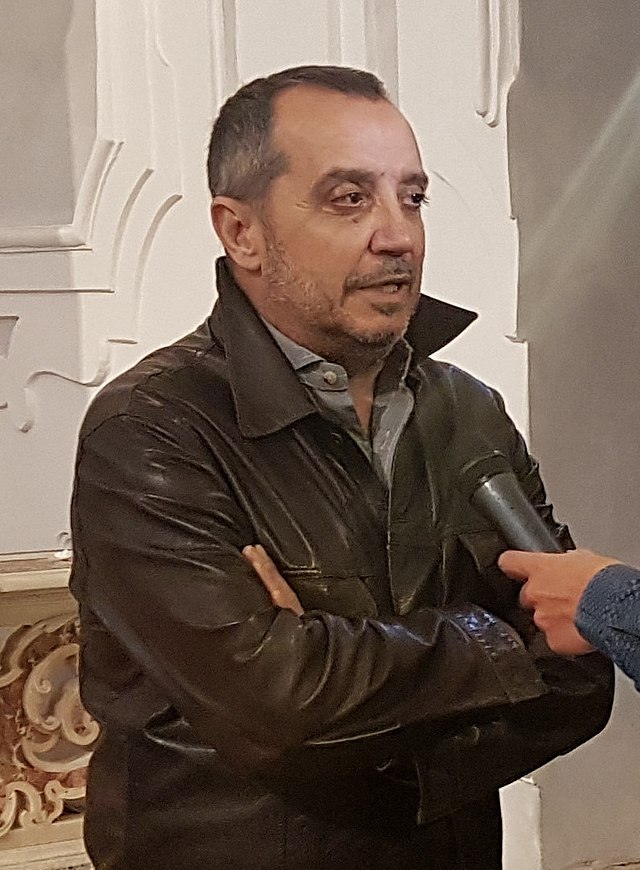
Franco Di Mare is a name that resonates deeply in the realms of journalism and Italian television. Born on July 28, 1955, in Naples, Italy, Di Mare has had an illustrious career that spans several decades, marked by his fearless reporting from war zones, his insightful journalism, and his influential roles within RAI, Italy’s national public broadcasting company. This article provides a comprehensive look at the life and career of Franco Di Mare, exploring the milestones that have defined his journey from a young political science student to a respected journalist, television presenter, and author.
Early Life and Education
Franco Di Mare’s path to journalism began in his hometown of Naples, where he developed an early interest in current affairs and storytelling. After completing his high school education, Di Mare pursued higher studies at the University of Naples Federico II, where he earned a degree in Political Science. His academic background laid a solid foundation for his future career in journalism, equipping him with a deep understanding of political systems, international relations, and the socio-economic forces shaping the world.
The Beginnings of a Journalism Career
Di Mare’s professional journey in journalism began in the early 1980s, following his graduation. He initially worked for several local newspapers and smaller media outlets, honing his skills as a reporter. His talent for storytelling and his relentless pursuit of the truth quickly caught the attention of larger media organizations. In 1991, after years of working in the trenches of local journalism, Di Mare secured a position with RAI, marking the beginning of his long and distinguished career with the national broadcaster.
Reporting from the Frontlines: War Correspondent
Franco Di Mare’s career took a significant turn when he became a war correspondent for RAI. His role as an international correspondent saw him covering some of the most critical and dangerous conflicts of the late 20th and early 21st centuries. Di Mare’s reporting took him to the heart of war-torn regions across the globe, where he provided in-depth coverage of events that shaped modern history.
The Balkan Wars
One of the most notable periods of Di Mare’s career was during the Balkan Wars of the 1990s. The disintegration of Yugoslavia led to a series of brutal conflicts, including the wars in Bosnia, Kosovo, and Croatia. Di Mare was on the ground in these war zones, providing firsthand accounts of the human suffering, political chaos, and ethnic violence that characterized these conflicts. His reports were widely recognized for their depth and sensitivity, shedding light on the complexities of the war and the plight of the civilians caught in the crossfire.
Other Conflict Zones
In addition to the Balkans, Di Mare’s work as a war correspondent took him to other conflict-ridden regions, including Somalia, Mozambique, Rwanda, and Algeria. He was also present during the Gulf Wars, where he reported on the hostilities in the Middle East, providing viewers with critical insights into the geopolitical dynamics at play.
Di Mare’s fearless approach to journalism, often placing himself in great personal danger, earned him a reputation as one of Italy’s most respected war correspondents. His work during this period was instrumental in bringing international awareness to the atrocities and humanitarian crises occurring in these regions.
The Transition to National and International Reporting
While Franco Di Mare’s early career was largely defined by his international reporting, he also made significant contributions to domestic journalism in Italy. His investigations into organized crime, particularly in regions such as Sicily, Calabria, Campania, and Puglia, were highly regarded. Di Mare’s in-depth coverage of the Italian Mafia’s influence on politics and society helped to expose the inner workings of these criminal organizations and their impact on everyday life in Italy.
Rise to Fame: From Reporting to Television Hosting
As Franco Di Mare’s reputation as a journalist grew, so did his opportunities within RAI. In the early 2000s, he made the transition from field reporting to television hosting, a move that brought him into the homes of millions of Italians.
Hosting Unomattina
In 2002, Di Mare moved from TG2 to TG1, RAI’s flagship news program. Just two years later, he became a regular host on Unomattina, one of Italy’s most popular morning television programs. Initially hosting Unomattina Estate, Di Mare quickly became a staple of the program, bringing his journalistic integrity and engaging personality to the show.
His role as a television host allowed Di Mare to reach a broader audience and solidified his status as one of Italy’s most recognizable media figures. His ability to discuss a wide range of topics—from politics and economics to culture and lifestyle—made him a versatile and respected presenter.
Success with Sabato e domenica
Following his success with Unomattina, Di Mare was given the opportunity to host Sabato e domenica, a weekend news and current affairs program that became a significant hit. The show, which aired from 2005 to 2009, drew high ratings and further established Di Mare’s credentials as a top-tier television journalist. His ability to blend hard news with more accessible, human-interest stories made the program a success and showcased his broad appeal as a presenter.
Franco Di Mare’s Role as an Author
In addition to his work in journalism and television, Franco Di Mare is also an accomplished author. Over the years, he has written several books, many of which draw on his experiences as a war correspondent and his observations of the world.
Notable Works
-
“Il cecchino e la bambina. Emozioni e ricordi di un inviato di guerra” (2009): This book is a deeply personal account of Di Mare’s experiences as a war correspondent. It delves into the emotional toll of reporting from conflict zones and the lasting impact these experiences have had on his life.
-
“Non chiedere perché” (2011): A novel inspired by Di Mare’s time in Bosnia, where he adopted a young girl named Stella. The book explores themes of love, loss, and the bonds that form in the most unlikely of circumstances.
-
“Casimiro Roléx” (2012): A satirical novel that critiques Italian society and the media landscape. Through the character of Casimiro Roléx, Di Mare offers a sharp commentary on the superficiality and corruption that he perceives in the world around him.
-
“Il paradiso dei diavoli” (2012): Another fictional work that combines elements of mystery and social commentary, reflecting Di Mare’s broad range as a writer.
-
“Il caffè dei miracoli” (2015): A novel that mixes humor and drama, exploring the complexities of life in a small Italian town.
-
“Il teorema del babà” (2017): A collection of short stories that blend the personal with the universal, showcasing Di Mare’s ability to tell compelling stories that resonate with readers.
-
“Barnaba il mago” (2018): A novel that touches on themes of magic and reality, illustrating Di Mare’s imaginative storytelling.
-
“Sarò Franco. Manuale di sopravvivenza civile tra disincanto e speranza” (2019): This book serves as a guide to navigating modern life, offering advice and reflections on how to maintain hope and integrity in a complex world.
Later Career and Leadership at RAI
Franco Di Mare’s influence at RAI extended beyond his roles as a journalist and television host. In 2019, he was appointed Vice Director of RAI 1, with a focus on news and current affairs programming. His responsibilities included overseeing the network’s editorial content and ensuring that RAI maintained its reputation for high-quality journalism.
In May 2020, Di Mare was appointed Director of RAI 3, one of the network’s most prominent channels. In this role, he was responsible for overseeing all programming on the channel, including news, documentaries, and entertainment shows. Under his leadership, RAI 3 continued to produce content that was both informative and engaging, reflecting Di Mare’s commitment to public service broadcasting.
Personal Life and Legacy
Franco Di Mare’s personal life has also been marked by significant events that have shaped his worldview and his work. In 1997, while covering the war in Bosnia, Di Mare encountered a young girl named Stella, whom he later adopted. This act of compassion and love had a profound impact on Di Mare’s life and became a central theme in his writing and public persona.
In 2021, Di Mare found himself at the center of a controversy involving the popular Italian singer and influencer Fedez. The dispute arose after Fedez accused RAI of censorship during the annual May Day concert, a claim that Di Mare, as Director of RAI 3, strongly denied. The incident sparked a national debate about freedom of expression and the role of public broadcasters in Italy.
In April 2024, Franco Di Mare made a poignant and public announcement on television, revealing that he had been diagnosed with an incurable tumor. Just a few weeks later, on May 17, 2024, Di Mare passed away at the age of 68. His death marked the end of an era for Italian journalism and left a lasting legacy of courage, integrity, and dedication to the truth.
Conclusion
Franco Di Mare’s career is a testament to the power of journalism and the impact that one person can have on society. From his early days as a local reporter to his role as one of Italy’s most respected journalists and television hosts, Di Mare’s contributions to the field are immense. His work has not only informed and educated millions of viewers but has also inspired a generation of journalists to pursue the truth, no matter the cost.
As we reflect on Franco Di Mare’s life and legacy, it is clear that his influence will continue to be felt for years to come. His commitment to storytelling, his fearless reporting from the world’s most dangerous places, and his ability to connect with audiences on a deep and personal level have secured his place as one of Italy’s most beloved and respected journalists.


