
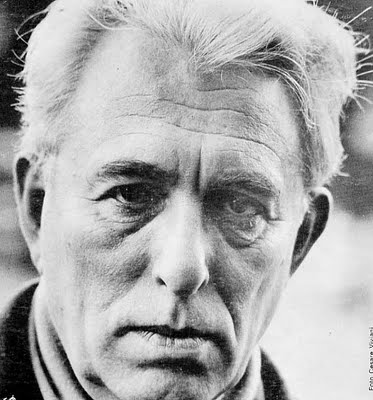
Franco Fortini, born Franco Lattes on September 10, 1917, in Florence, Italy, was a towering figure in post-World War II intellectual circles. He made his mark as a poet, novelist, literary critic, translator, and polemicist. Fortini’s life and work are emblematic of the intellectual turmoil and ideological battles of the 20th century, particularly in the wake of World War II. His contributions to literature and thought, particularly through his engagement with Marxism and his critique of contemporary society, have left an indelible mark on Italian and European intellectual history.
Early Life and Education
Franco Fortini was born to a Jewish father and a Catholic mother in a period marked by significant political and social upheaval. His early life was shaped by the rise of fascism in Italy, which would later profoundly influence his work and ideological stance. Fortini pursued higher education in Florence, where he enrolled in the faculties of Letters and Law. However, the racial laws enacted by the fascist regime in 1938 severely disrupted his academic career. To evade the consequences of these laws, he adopted his mother’s surname, Fortini, in 1940. Despite this, he was expelled from the university due to the discriminatory policies of the time.
War Years and Resistance
The outbreak of World War II marked a turning point in Fortini’s life. Drafted into the Italian army, he served as a soldier but eventually found himself in Switzerland, where he joined the Italian Resistance movement. The war years were a time of significant personal and ideological development for Fortini. His experiences during this period, particularly his involvement with the anti-fascist partisans, would later inform much of his literary and critical work.
After the war, Fortini relocated to Milan, a city that would become central to his intellectual and literary endeavors. He began working in the literary field, contributing to various prestigious journals and newspapers, including Il Sole 24 Ore and Corriere della Sera. In addition to his writing, Fortini took up teaching, eventually becoming a professor of the History of Criticism at the University of Siena.
Intellectual Evolution and Marxist Commitment
Franco Fortini’s intellectual journey is marked by his engagement with various ideological currents, most notably his transition from hermeticism to critical Marxism. Initially, he was influenced by the hermetic literary movement, which sought to explore the complexities and ambiguities of human experience through a dense, symbolic language. However, Fortini’s growing disillusionment with the social and political status quo led him to embrace Marxism, particularly its critical variant.
Fortini’s Marxism was not dogmatic; rather, it was a tool for critiquing contemporary society and the intellectual establishment. He was particularly critical of the emerging “new guard” among intellectuals and politicians, whom he saw as betraying the revolutionary potential of Marxism. His commitment to revolutionary ideals was not just theoretical; it permeated his literary output, both in prose and poetry.
Literary Contributions
Franco Fortini’s literary output is vast and varied, encompassing poetry, novels, essays, and translations. His poetry is characterized by its deep engagement with history, politics, and the human condition. One of his most significant poetic works is Una volta per sempre (Once and For All), published in 1978. This volume is a comprehensive collection of his poetic works, reflecting the evolution of his thought and style over the decades.
In addition to his poetry, Fortini wrote several novels and essays that further explored his ideological concerns. His novels, such as Agonia di Natale (Christmas Agony, 1948) and Sere in Valdassola (Evenings in Valdassola, 1963), offer a profound critique of contemporary society and its contradictions.
Fortini’s work as a translator is also noteworthy. He translated several important literary works into Italian, bringing the ideas of foreign writers to an Italian audience. His translations were not merely linguistic exercises; they were acts of cultural and political mediation, reflecting his belief in the transformative power of literature.
The Role of Poetry
For Franco Fortini, poetry was not just a form of artistic expression; it was a means of bearing witness to the crises and contradictions of history. He viewed poetry as a tool for consciousness-raising and testimony, even as he recognized its limitations in effecting concrete social change. One of his most famous lines encapsulates this view: “La poesia non muta nulla. Nulla è sicuro, ma scrivi” (“Poetry changes nothing. Nothing is certain, but write”).
Fortini’s approach to poetry was deeply philosophical, influenced by his engagement with Marxism and his critique of contemporary society. His poetry often grapples with the tension between the personal and the political, the private and the public. He sought to highlight the “here and now,” to emphasize the immediacy of the human experience, even as he acknowledged the inescapable presence of history.
Legacy and Impact
Franco Fortini’s legacy is that of a “revolutionary intellectual” who used his literary and critical talents to challenge the status quo. His work remains a touchstone for those interested in the intersections of literature, politics, and ideology. Fortini’s influence extends beyond the realm of literature; his ideas have had a significant impact on Italian and European intellectual history.
Fortini passed away on November 28, 1994, in Milan at the age of 77. His death marked the end of an era, but his work continues to be studied and debated by scholars, writers, and activists. Giulio Einaudi, a prominent Italian publisher, once described Fortini as a “true, scathing, even violent voice,” whose work was a “breath of fresh air” in the stifling intellectual climate of the time. Einaudi’s words capture the essence of Fortini’s contribution: he was a man “against” the prevailing currents, a voice of dissent and critique in a time of conformity.
Conclusion
Franco Fortini was a multifaceted intellectual whose work encompassed poetry, fiction, criticism, and translation. His life and work are a testament to the power of literature as a tool for social and political critique. Fortini’s commitment to Marxist ideals, his critique of contemporary society, and his deep engagement with the intellectual currents of his time make him a significant figure in 20th-century literature and thought.
As we reflect on Fortini’s life and work, it is essential to recognize the historical and cultural context in which he wrote. The post-war period was a time of significant upheaval, and Fortini’s work reflects the tensions and contradictions of this era. His legacy is not just in the words he wrote but in the ideas he championed—ideas that continue to resonate today.
Franco Fortini’s life is a story of intellectual courage, artistic innovation, and unwavering commitment to social justice. His work challenges us to think critically about the world around us and to use our words as a force for change.


