
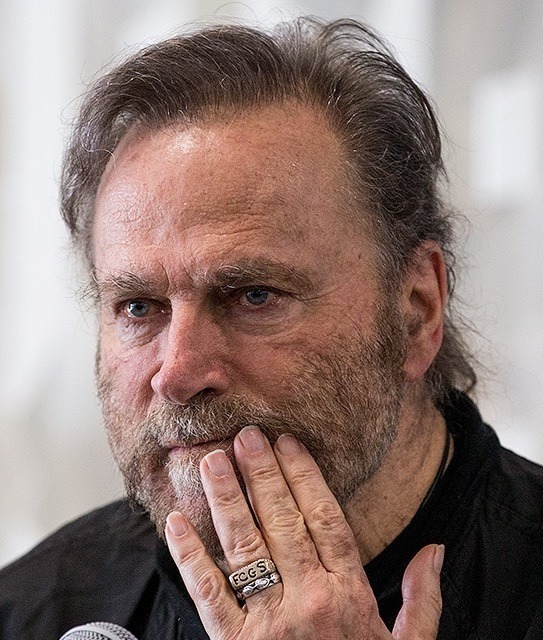
Franco Nero, born as Franco Sparanero on November 23, 1941, in San Prospero, Parma, Italy, is a distinguished figure in the world of cinema. With a career spanning over five decades, Nero has made an indelible mark on the film industry, not only in Italy but also internationally. His journey from humble beginnings to becoming one of the most recognizable faces in the world of cinema is a testament to his talent, charisma, and dedication. This article explores Franco Nero’s life, from his early years to his rise to fame, and highlights the significant milestones that have defined his illustrious career.
Early Life and Background
Franco Nero was born into a modest family in the small town of San Prospero. He pursued his early education with a focus on practical skills, obtaining a diploma in accounting. Despite his academic inclinations, Nero was drawn to the arts, particularly acting. His passion for performance led him to abandon his studies in Economics and Commerce at the university level in favor of enrolling in acting classes at the prestigious Piccolo Teatro di Milano. This decision marked the beginning of what would become a legendary career in film and television.
The Path to Stardom
Franco Nero’s journey to fame began in the mid-1960s, during a time when Italian cinema was gaining international recognition. He made his film debut in 1964 with “La ragazza in prestito,” a movie that showcased his raw talent and potential. However, it was his role in the 1966 film “Django,” directed by Sergio Corbucci, that catapulted him to stardom. Playing the titular character, a lone gunslinger in a violent world, Nero’s portrayal became iconic, establishing him as a leading figure in the Spaghetti Western genre. “Django” not only achieved commercial success but also became a cultural phenomenon, influencing countless films and even inspiring Quentin Tarantino’s “Django Unchained” decades later.
Following “Django,” Nero’s career continued to soar. His striking blue eyes, athletic build, and intense screen presence made him a favorite among directors and audiences alike. In 1967, he starred in “Camelot,” a film adaptation of the legendary Arthurian tales. Nero’s role as Lancelot was particularly significant, as it led to his long-standing relationship with British actress Vanessa Redgrave. The couple’s romance, which began on the set of “Camelot,” resulted in the birth of their son, Carlo Gabriel, who would go on to become a filmmaker himself.
Diverse Roles and Global Recognition
Throughout the 1960s and 1970s, Franco Nero continued to expand his repertoire, taking on a wide variety of roles that showcased his versatility as an actor. He portrayed detectives, knights, and historical figures with equal ease, earning a reputation as one of the most talented and reliable actors of his generation. In 1968, Nero won the prestigious David di Donatello award for his performance in “Il giorno della civetta,” a film based on Leonardo Sciascia’s novel about the Sicilian Mafia. This award cemented his status as a major player in Italian cinema.
Nero’s ability to embody complex characters was further demonstrated in his portrayal of White Fang in two films based on Jack London’s novels: “White Fang” (1973) and “Challenge to White Fang” (1974). His performances in these films showcased his ability to convey both the physicality and emotional depth required for such demanding roles. Additionally, his portrayal of Giacomo Matteotti in the 1973 film “The Matteotti Murder” highlighted his commitment to bringing historically significant figures to life on screen.
In 1976, Nero took on a more psychologically challenging role in “Marcia trionfale,” a film that delved into the dark side of military life. His performance was critically acclaimed, further solidifying his reputation as a versatile actor capable of tackling a wide range of genres and themes. He continued to push boundaries with his role in “Querelle de Brest” (1982), a film directed by Rainer Werner Fassbinder, which explored themes of identity and desire.
Continuing Success and Legacy
As the years passed, Franco Nero remained a prominent figure in both Italian and international cinema. His enduring appeal was due in part to his ability to adapt to the changing landscape of the film industry. He was a frequent collaborator with some of the most renowned directors of his time, including Luis Buñuel, who cast him in “Tristana” (1970), and Tinto Brass, with whom he worked on several projects.
In the 1980s and 1990s, Nero expanded his presence on television, taking on roles in various TV movies and miniseries. One of his most notable television roles was that of Fra Cristoforo in the 1988 adaptation of Alessandro Manzoni’s “I Promessi Sposi” (The Betrothed), directed by Salvatore Nocita. This role, based on one of the most revered characters in Italian literature, allowed Nero to reach a new audience and further cement his status as a cultural icon in Italy.
Nero’s career continued to thrive into the 21st century. In 2001, he starred in the Italian television drama “Nessuno escluso,” directed by Massimo Spano. Despite the passage of time, Nero’s charm and talent remained undiminished, and he continued to captivate audiences with his performances. His enduring popularity can be attributed to his unique blend of charisma, physical presence, and acting prowess, which have made him a beloved figure across generations.
Personal Life and Relationships
Franco Nero’s personal life has been as colorful as his on-screen career. His relationship with Vanessa Redgrave, which began in the late 1960s, was one of the most talked-about romances in the entertainment world. The couple’s son, Carlo Gabriel Nero, has followed in his parents’ footsteps, establishing himself as a director and screenwriter.
Despite the challenges of maintaining a relationship in the public eye, Nero and Redgrave’s bond remained strong over the years. The couple eventually married in 2006, solidifying their decades-long partnership. Their relationship has been a source of inspiration to many, demonstrating the enduring power of love and commitment in the often tumultuous world of show business.
Awards and Recognitions
Over the course of his career, Franco Nero has received numerous awards and accolades, both in Italy and internationally. In addition to his David di Donatello award, he has been recognized for his contributions to cinema with various honors, including lifetime achievement awards at film festivals around the world. These accolades are a testament to Nero’s impact on the film industry and his enduring legacy as one of Italy’s greatest actors.
Franco Nero in the 21st Century
As Franco Nero continues to work well into his 70s and 80s, his contributions to cinema show no signs of slowing down. He has taken on roles in both independent and mainstream films, often portraying characters that reflect his vast experience and depth as an actor. His ability to seamlessly transition between different genres and formats—from Spaghetti Westerns to historical dramas to contemporary thrillers—has kept him relevant in an ever-evolving industry.
In recent years, Nero has also ventured into directing, adding another dimension to his already impressive career. His directorial debut, “Forever Blues” (2005), was well-received, showcasing his talent behind the camera as well as in front of it. This move into directing has allowed Nero to explore new creative avenues while continuing to contribute to the art form that has defined his life.
Conclusion
Franco Nero’s life and career are a testament to the power of talent, perseverance, and adaptability. From his early days in Italy to his rise to international stardom, Nero has remained a constant presence in the world of cinema. His performances have captivated audiences for decades, and his contributions to film and television have left an indelible mark on the industry.
As we look back on the life and career of Franco Nero, it is clear that he is not just an actor but a cultural icon. His work has transcended borders, genres, and generations, making him a true legend in the world of entertainment. Whether on the big screen, on television, or behind the camera, Franco Nero’s legacy will continue to inspire future generations of filmmakers and actors for years to come.


