
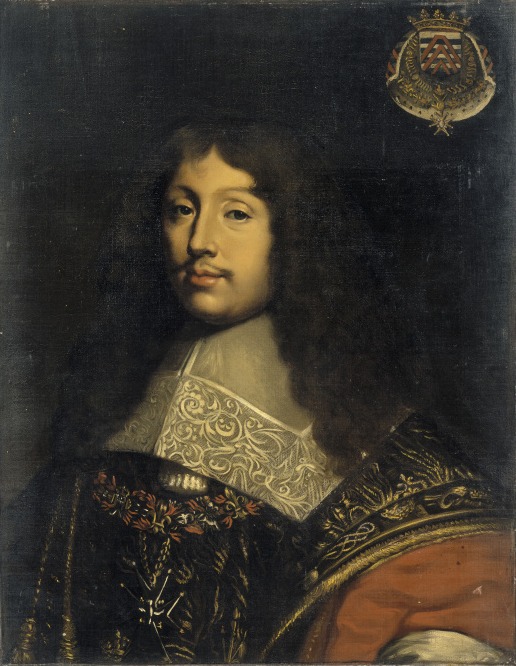
François de La Rochefoucauld, born François VI, Duke of La Rochefoucauld, and Prince of Marcillac, is one of the most renowned figures in French literature and philosophy. Born on September 15, 1613, in Paris, he lived through a turbulent period in French history, characterized by political intrigue, civil unrest, and significant cultural developments. La Rochefoucauld is best known for his Maximes, a collection of epigrams that encapsulate his philosophical outlook on human nature, morality, and society. His life, marked by military service, political involvement, and intellectual pursuits, offers a rich narrative that intertwines with the broader historical context of 17th-century France.
Early Life and Noble Heritage
François de La Rochefoucauld was born into one of France’s oldest and most prestigious noble families. His father, François V, Duke of La Rochefoucauld, and his mother, Gabrielle du Plessis-Liancourt, ensured that their son received an excellent education, befitting his noble status. From an early age, François was groomed for a life of public service and military distinction. The La Rochefoucauld family was deeply embedded in the fabric of the French aristocracy, and young François was expected to uphold the family’s legacy.
At just 16 years old, François entered military service, a common path for young noblemen of his time. His early military career saw him participating in various campaigns, where he demonstrated bravery and a strong sense of duty. However, despite his valor on the battlefield, La Rochefoucauld never achieved significant military recognition or high-ranking titles, a fact that would later influence his cynical view of the social and political structures of his time.
In 1628, at the age of 15, La Rochefoucauld married Andrée de Vivonne, a union that was more about consolidating noble alliances than romantic love. This marriage, like many of the period, was arranged to strengthen familial ties and secure political influence.
Military Service and Political Intrigue
La Rochefoucauld’s early adult life was deeply intertwined with the political and military affairs of France. He served under King Louis XIII and later under Cardinal Richelieu, one of the most powerful and controversial figures in French history. Richelieu’s influence on French politics was profound, and La Rochefoucauld, through his connections with the court, found himself involved in the complex web of political intrigue that characterized the reign of Louis XIII.
One of the most significant influences on La Rochefoucauld during this period was his association with Madame de Chevreuse, a prominent noblewoman known for her involvement in various conspiracies against Cardinal Richelieu. Madame de Chevreuse was not only a political ally but also a close confidante and possibly a romantic interest for La Rochefoucauld. Through her, he became involved in several plots against Richelieu, which ultimately led to his temporary downfall and imprisonment.
The Fronde, a series of civil wars in France between 1648 and 1653, marked a turning point in La Rochefoucauld’s life. The Fronde was essentially a rebellion by the French nobility against the centralizing policies of the monarchy and the increasing power of Cardinal Mazarin, Richelieu’s successor. La Rochefoucauld was an active participant in the Fronde, motivated by both personal grievances and a genuine belief in the cause of the nobility. However, the Fronde was ultimately unsuccessful, and its failure marked the end of La Rochefoucauld’s political ambitions.
Literary Achievements and the Maximes
After the political turmoil of the Fronde, La Rochefoucauld withdrew from public life and began to focus more on his literary and philosophical pursuits. It was during this period of relative quietude that he composed his most famous work, the Maximes. Published in 1665 under the title Réflexions ou sentences et maximes morales, this collection of epigrams distilled La Rochefoucauld’s thoughts on human nature, morality, and society into concise and often biting aphorisms.
The Maximes are characterized by their cynicism and their profound insight into the complexities of human behavior. La Rochefoucauld’s observations about the motivations behind people’s actions reveal a deep skepticism about altruism and virtue. For example, one of his most famous maxims states, “Our virtues are most often only vices in disguise.” This reflects his belief that human actions are frequently driven by self-interest, even when they appear virtuous.
The Maximes quickly gained popularity and solidified La Rochefoucauld’s reputation as one of the leading intellectual figures of his time. His work was celebrated for its sharp wit, elegance of expression, and deep psychological insight. The Maximes have since become a cornerstone of French literature, influencing generations of writers and thinkers.
Personal Relationships and Influence of Women
Throughout his life, La Rochefoucauld was greatly influenced by the women in his life. After Madame de Chevreuse, another significant figure was Madame de Sablé, a salonnière whose Parisian salon became a hub for intellectual discussion and literary activity. It was in her salon that La Rochefoucauld refined many of the ideas that would later appear in the Maximes. The intellectual environment provided by Madame de Sablé and other prominent women of the time was crucial in shaping La Rochefoucauld’s philosophical outlook.
Perhaps the most important relationship of his later life was with Madame de La Fayette, the author of La Princesse de Clèves, one of the first French novels. Their deep friendship lasted until La Rochefoucauld’s death and was marked by mutual respect and intellectual exchange. Madame de La Fayette’s influence is evident in La Rochefoucauld’s work, and she was one of the few people who could challenge his often pessimistic views.
The Maximes in Historical Context
To fully appreciate La Rochefoucauld’s Maximes, it’s essential to understand the historical context in which they were written. The 17th century in France was a time of significant political and social upheaval. The monarchy was consolidating power, often at the expense of the traditional nobility. The rise of absolutism under Louis XIV, who became king in 1643, further diminished the power of the nobility, leading to a sense of disillusionment and frustration among many aristocrats, including La Rochefoucauld.
This disillusionment is reflected in the Maximes. La Rochefoucauld’s writings can be seen as a response to the changing social and political landscape of France, where old values and institutions were being challenged. His work is often interpreted as a critique of the hypocrisy and vanity he perceived in the courtly life of the time. In many ways, the Maximes serve as a moral and psychological commentary on the transition from a feudal society to a more centralized, bureaucratic state.
The Maximes also reflect the influence of other intellectual currents of the time, particularly the rise of skepticism and the growing interest in the inner workings of the human mind. La Rochefoucauld’s emphasis on self-interest and the often hidden motives behind human actions aligns with the broader philosophical trends of the 17th century, which included a focus on rationalism and the questioning of traditional moral and religious beliefs.
Legacy and Enduring Influence
François de La Rochefoucauld’s influence extends far beyond his own time. His Maximes have been studied and admired by countless readers and scholars over the centuries. The work’s enduring appeal lies in its universal insights into human nature, which remain relevant even in today’s world. La Rochefoucauld’s ability to distill complex psychological and moral observations into pithy, memorable statements has ensured that his work continues to be quoted and referenced across a wide range of disciplines.
In the centuries since their publication, the Maximes have influenced a diverse array of writers and thinkers. The French Enlightenment philosophers, including Voltaire and Rousseau, drew on La Rochefoucauld’s insights in their own critiques of society and human nature. In the 19th century, writers such as Stendhal and Honoré de Balzac were inspired by La Rochefoucauld’s exploration of the darker aspects of human behavior. Even in the 20th century, existentialist philosophers like Jean-Paul Sartre found resonance in La Rochefoucauld’s emphasis on the complexities and contradictions of the human condition.
La Rochefoucauld’s legacy is also evident in the continued popularity of the epigrammatic style, which has been adopted by countless writers and public figures. His influence can be seen in the aphorisms of Friedrich Nietzsche, the wit of Oscar Wilde, and even in the sharp social commentary of contemporary writers.
Later Life and Death
In the later years of his life, La Rochefoucauld continued to be active in the intellectual circles of Paris. Despite the setbacks and disillusionments of his earlier years, he maintained a close network of friends and correspondents, many of whom were among the leading literary and philosophical minds of the time.
La Rochefoucauld suffered from poor health in his later years, a condition that was exacerbated by the injuries he had sustained during his military service. His declining health, however, did not prevent him from continuing to write and engage in the intellectual life of the time. He remained close to Madame de La Fayette, who provided him with support and companionship during his final years.
François de La Rochefoucauld died on March 17, 1680, in Paris. His death marked the end of a remarkable life that had spanned some of the most tumultuous and transformative periods in French history. He was buried in the family chapel at the church of St. Paul in Paris, leaving behind a legacy that would continue to influence French literature and thought for centuries to come.
Conclusion
François de La Rochefoucauld’s life and work offer a profound exploration of the human condition, one that resonates across the ages. His Maximes remain a touchstone for anyone interested in the complexities of human nature, offering insights that are as relevant today as they were in the 17th century. La Rochefoucauld’s ability to capture the subtleties of human behavior in concise, elegant prose has ensured that his work continues to be read, studied, and appreciated by generations of readers.
In reflecting on La Rochefoucauld’s life, it is clear that his experiences—whether in the corridors of power, on the battlefield, or in the salons of Paris—shaped a worldview that was deeply skeptical, yet profoundly insightful. His Maximes are not merely observations; they are a testament to a life lived with a keen awareness of the ironies and contradictions that define the human experience. As such, François de La Rochefoucauld stands as a towering figure in the history of French literature and philosophy, his work a lasting contribution to our understanding of ourselves and the world we inhabit.


