
Introduction
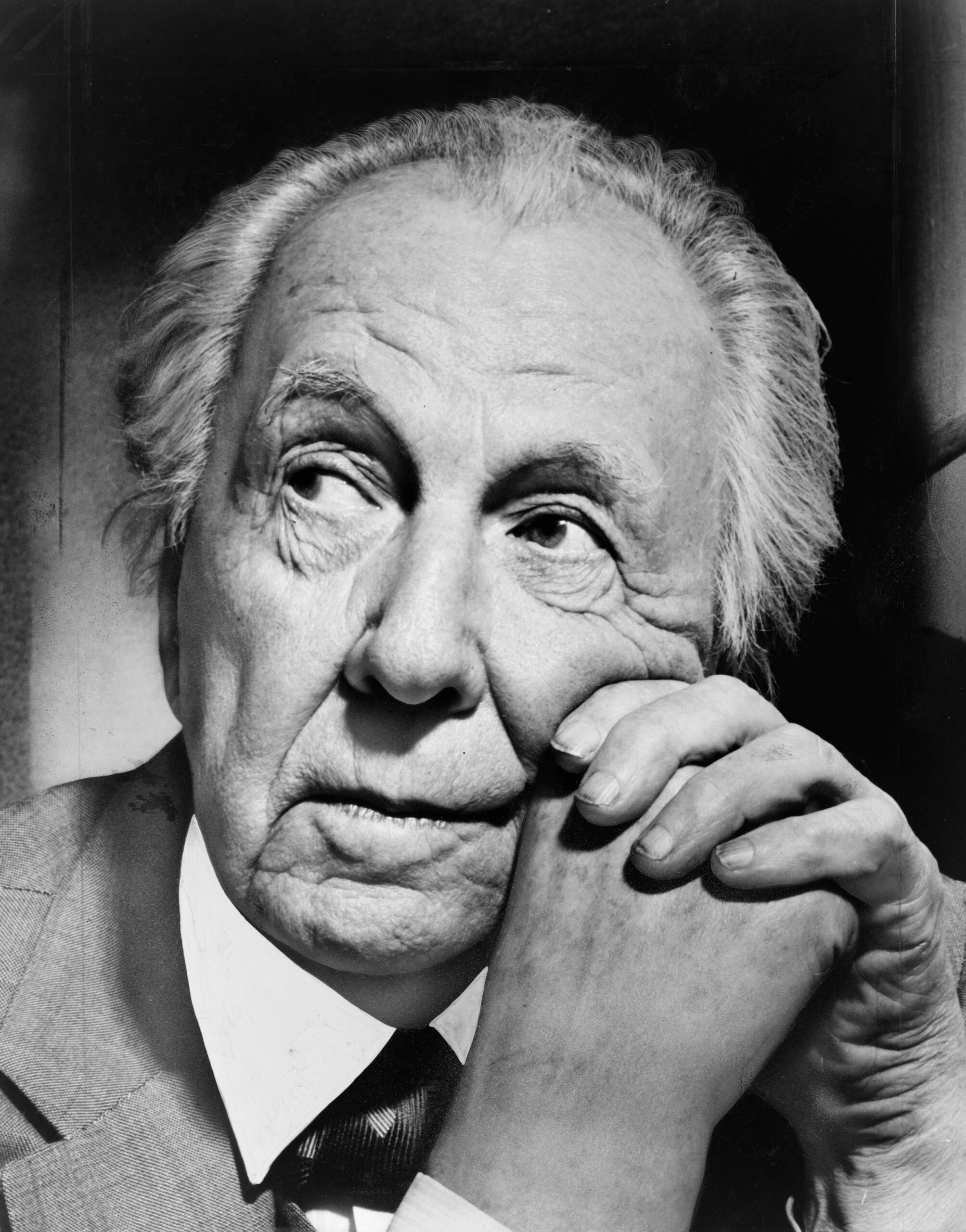
Frank Lloyd Wright, a name synonymous with innovation in architecture, stands as one of the most influential figures in modern architecture. Born on June 8, 1867, in Richland Center, Wisconsin, Wright’s career spanned over seven decades, during which he designed more than a thousand structures, including some of the most iconic buildings in American history. His unique approach to design, often referred to as “organic architecture,” sought to harmonize human habitation with the natural world. This article delves into the life, fame, and enduring legacy of Frank Lloyd Wright, offering insights into his architectural philosophy, key projects, and the historical context that shaped his work.
Early Life and Influences
Frank Lincoln Wright, later known as Frank Lloyd Wright, was born into a family with a rich cultural background. His father, William Cary Wright, was a preacher and musician, while his mother, Anna Lloyd Jones, was a teacher with a strong Welsh heritage. It was Anna who recognized her son’s potential and nurtured his interest in architecture from an early age. She believed that her son was destined to build great structures, and she surrounded him with influences that would shape his future career, including a set of Froebel blocks, which emphasized geometric shapes and spatial relationships—principles that would later manifest in Wright’s architectural designs.
Wright’s formal education in architecture began at the University of Wisconsin-Madison, where he studied civil engineering. However, his passion for architecture led him to Chicago, where he became an apprentice to the renowned architect Louis Sullivan, often referred to as the “father of skyscrapers.” Sullivan’s influence on Wright was profound, instilling in him the principles of modern architecture and the importance of developing a distinctly American style, free from European conventions.
The Birth of Organic Architecture
Wright’s architectural philosophy, which he called “organic architecture,” was revolutionary. He believed that buildings should be in harmony with their environment, both natural and human-made. This approach was a direct challenge to the prevailing architectural norms of the time, which often prioritized ornate, European-inspired designs. Instead, Wright’s designs emphasized simplicity, natural materials, and open interior spaces.
Wright’s concept of organic architecture extended beyond just the physical structure; it was about creating a living, breathing space that served as a sanctuary for its inhabitants. His designs often featured low-pitched roofs, overhanging eaves, and open floor plans, all of which were intended to blend the structure with the landscape seamlessly. This philosophy was not just aesthetic but also ethical, reflecting Wright’s belief that architecture should promote a better way of living.
Early Career and Prairie School
Wright’s early work is closely associated with the Prairie School, a movement that emerged in the American Midwest in the late 19th and early 20th centuries. The Prairie School architects, including Wright, sought to create a new, distinctly American style of architecture that reflected the broad, flat landscapes of the Midwest.
Wright’s designs during this period were characterized by horizontal lines, flat or hipped roofs with broad overhanging eaves, windows grouped in horizontal bands, and integration with the landscape. One of the most iconic examples of Wright’s Prairie style is the Robie House in Chicago, completed in 1910. The Robie House is considered a masterpiece of modern architecture, with its bold, horizontal lines, open interior spaces, and use of natural materials like brick and wood.
Personal Struggles and Triumphs
Despite his professional success, Wright’s personal life was marked by turbulence. His first marriage to Catherine Tobin ended in divorce, and his personal life became the subject of scandal when he left his wife and children to live with Mamah Borthwick Cheney, the wife of one of his clients. This period of Wright’s life was marked by both personal and professional challenges, but it also fueled some of his most innovative work.
Tragedy struck in 1914 when a servant at Wright’s home, Taliesin, in Spring Green, Wisconsin, set fire to the house and murdered seven people, including Mamah Borthwick Cheney and her two children. The event was a devastating blow to Wright, but he eventually rebuilt Taliesin, which became his primary residence and studio for the rest of his life.
Mid-Career Renaissance and Taliesin Fellowship
The 1930s marked a renaissance in Wright’s career. During this period, he designed some of his most famous works, including Fallingwater and the Johnson Wax Headquarters. Fallingwater, built in 1935 for the Kaufmann family in Pennsylvania, is often cited as the quintessential example of organic architecture. The house is dramatically cantilevered over a waterfall, blending seamlessly with the surrounding landscape. It remains one of Wright’s most celebrated works and is a UNESCO World Heritage Site.
In 1932, Wright established the Taliesin Fellowship, an architectural apprenticeship program that attracted students from around the world. The Fellowship was more than just a school; it was a community where students lived, worked, and learned under Wright’s guidance. Taliesin West, built in the desert near Scottsdale, Arizona, served as the winter campus for the Fellowship and as Wright’s personal residence. Taliesin West exemplifies Wright’s principles of organic architecture, with its use of local materials and design that harmonizes with the arid landscape.
Later Works and Legacy
As Wright aged, his work continued to evolve, becoming even more ambitious and visionary. In the 1940s and 1950s, he designed the Guggenheim Museum in New York City, one of his most iconic buildings. The Guggenheim, with its unique spiral design, broke away from the traditional museum layout, creating a space where visitors could experience art in a continuous flow. The museum was completed in 1959, shortly after Wright’s death, and it remains a landmark of modern architecture.
Wright’s influence extended far beyond his buildings. He was a prolific writer and lecturer, advocating for his vision of a better, more humane architecture. His ideas about urban planning, particularly his concept of Broadacre City—a decentralized, car-based utopia—continue to be studied and debated by architects and urban planners today.
The Historical Context and Wright’s Impact on Modern Architecture
Frank Lloyd Wright’s work must be understood within the broader context of architectural history. At the time Wright began his career, the architectural landscape was dominated by styles that borrowed heavily from European traditions. Beaux-Arts and neoclassical designs were prevalent, particularly in public buildings and wealthy private residences. However, as the United States began to forge its identity as a modern nation, there was a growing desire for an architectural style that was distinctly American.
Wright’s rejection of European architectural traditions was both radical and timely. His embrace of simplicity, natural materials, and integration with the landscape resonated with the American ethos of individualism and self-reliance. Wright’s designs were not just buildings; they were a statement of what American architecture could be—innovative, forward-looking, and deeply connected to the environment.
Wright’s influence can be seen in the work of many later architects, including his former apprentices. His ideas laid the groundwork for movements such as the International Style, which emphasized minimalism and functionality, and the mid-century modern movement, which popularized the integration of indoor and outdoor spaces.
Conclusion
Frank Lloyd Wright’s legacy as one of the greatest architects of the 20th century is undeniable. His innovative designs, groundbreaking architectural philosophy, and the sheer scope of his work have left an indelible mark on the world of architecture. From the serene, nature-inspired homes of the Prairie School to the bold, futuristic forms of his later works, Wright’s influence continues to be felt today.
Wright’s life was as complex and dynamic as his architecture. His willingness to challenge conventions, both in his personal life and in his work, set him apart as a true pioneer. As we look back on his career, it is clear that Frank Lloyd Wright was not just an architect; he was a visionary who forever changed the way we think about the spaces we inhabit.
In the years since his death in 1959, Wright’s buildings have become iconic landmarks, drawing visitors from around the world. His writings and teachings continue to inspire new generations of architects. As we continue to grapple with the challenges of designing sustainable, livable spaces in the 21st century, Wright’s ideas about harmony between humans and their environment are more relevant than ever.
Frank Lloyd Wright’s story is one of genius, innovation, and an unrelenting quest to create architecture that not only meets the needs of its inhabitants but also enriches their lives. His work stands as a testament to the power of architecture to shape our world and our experience within it.


