
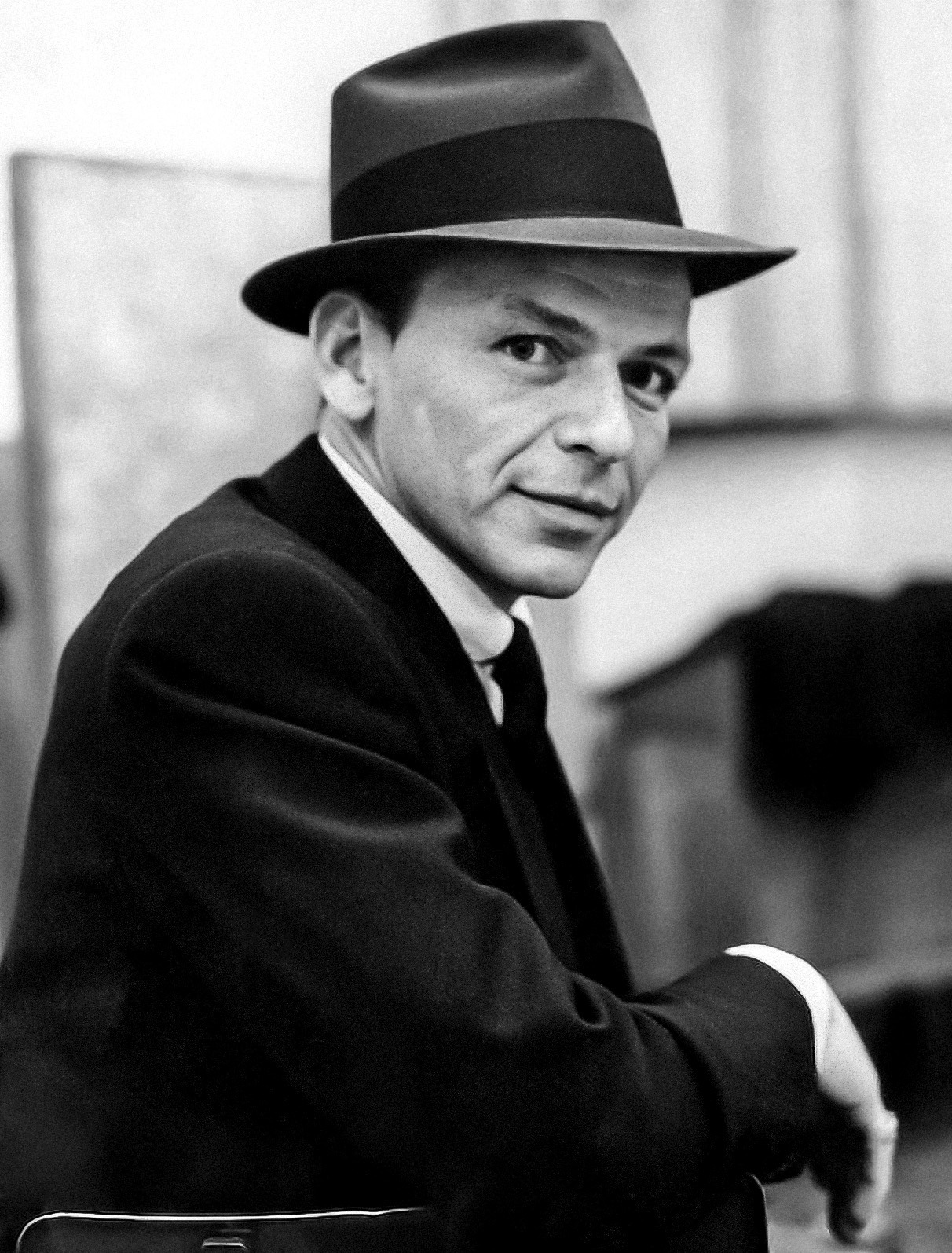
Frank Sinatra, often referred to as “The Voice,” was one of the most iconic figures in American entertainment history. Born on December 12, 1915, in Hoboken, New Jersey, Sinatra’s life and career were a fascinating blend of triumph, talent, controversy, and resilience. His contributions to music, film, and even American culture are unparalleled, making him a timeless figure whose influence is still felt today.
Early Life and Struggles
Frank Sinatra’s beginnings were humble, and his early life was marked by economic hardship. The son of Italian immigrants, Sinatra’s mother, Dolly, was a midwife of Ligurian origin, while his father, Martin, originally from Palermo, Sicily, was a firefighter and an amateur boxer. Growing up in the working-class neighborhood of Hoboken, Sinatra was no stranger to struggle. Economic necessity forced him to take on various menial jobs from a young age, including working as a dock worker, painter, and newspaper delivery boy. These experiences on the streets rather than in classrooms helped shape the grit and determination that would later characterize his career.
The Voice of a Generation
Sinatra’s rise to fame began in his teenage years when he formed a band called The Three Flashes, which later became known as The Hoboken Four after he joined. His breakthrough came when he was discovered by bandleader Harry James, who recognized Sinatra’s vocal talent. It was with the Tommy Dorsey Orchestra, however, that Sinatra truly began to make a name for himself. His smooth, crooning style, combined with his impeccable phrasing and emotional delivery, quickly earned him the nickname “The Voice.”
Throughout the 1940s and 1950s, Sinatra’s popularity soared. He recorded over 2,200 songs and released 166 albums, a testament to his prolific nature. Hits like “Strangers in the Night,” “My Way,” and “New York, New York” became anthems for generations, with “My Way” in particular cementing Sinatra’s place in music history. His ability to convey deep emotion through his voice resonated with millions, making him one of the best-selling music artists of all time.
Hollywood and Personal Life
Sinatra’s talents were not confined to music alone. He also enjoyed a successful career in Hollywood, starring in numerous films that showcased his versatility as an actor. One of his most notable performances was in the 1953 film “From Here to Eternity,” for which he won an Academy Award for Best Supporting Actor. This role marked a significant turning point in his career, helping him transition from a teen idol to a respected actor.
Sinatra’s personal life, however, was as turbulent as his professional life was successful. Known for his charm and charisma, Sinatra was a notorious ladies’ man. He married four times, each marriage attracting significant media attention. His first marriage to Nancy Barbato in 1939 produced three children: Nancy, Frank Jr., and Christina. The marriage ended in 1950, largely due to Sinatra’s affair with actress Ava Gardner, whom he married in 1951. This marriage, characterized by intense passion and frequent quarrels, lasted until 1957. Sinatra’s third marriage to actress Mia Farrow in 1966 ended in divorce after just two years. His fourth and final marriage to Barbara Marx in 1976 lasted until his death in 1998.
Despite his marital troubles, Sinatra’s charm and charisma continued to attract attention. He was often linked romantically to several high-profile women, including Lana Turner, Marilyn Monroe, Anita Ekberg, and Angie Dickinson. These relationships kept Sinatra in the public eye and contributed to his enduring legacy as a Hollywood legend.
Social and Political Influence
Frank Sinatra was not just an entertainer; he was also a significant social and political figure. During the 1950s, at the height of racial segregation in the United States, Sinatra used his influence to advocate for civil rights. He was a close friend of Sammy Davis Jr., one of the few African American members of the Rat Pack, and often spoke out against racial discrimination. Sinatra’s commitment to civil rights was evident in his refusal to perform in venues that practiced segregation and his public support for the desegregation of schools and public facilities.
Sinatra’s political affiliations were complex and often changed over time. Initially a staunch supporter of the Democratic Party, he campaigned for Franklin D. Roosevelt and John F. Kennedy. However, by the 1970s, his political views had shifted, and he became a supporter of Republican candidates, including Richard Nixon and Ronald Reagan. Despite this shift, Sinatra’s influence remained strong, and he continued to be a sought-after figure in political circles.
The Sinatra Legend
Frank Sinatra’s legacy is one of unparalleled influence in both the music and entertainment industries. His voice, often described as “timeless,” continues to captivate audiences around the world. His ability to connect with listeners on an emotional level, coupled with his impeccable timing and phrasing, set him apart from other artists of his time.
Sinatra’s influence extended beyond music to fashion and culture. His signature fedora hat and sharp suits became synonymous with 1950s and 1960s style. The “Sinatra look” continues to be emulated by fashion enthusiasts and celebrities alike, further solidifying his status as a cultural icon.
Despite his immense success, Sinatra’s life was not without controversy. Throughout his career, he was dogged by rumors of ties to organized crime, particularly with infamous mob figures like Sam Giancana. These allegations, while never proven, added an air of mystery and intrigue to Sinatra’s persona, contributing to the mythos surrounding him.
The Final Curtain
Frank Sinatra’s final years were marked by both triumph and tragedy. He continued to perform well into his 70s, with his concerts drawing large crowds eager to see “The Chairman of the Board” in action. In 1996, to celebrate his 80th birthday, the Empire State Building was lit in blue in his honor, a tribute to his famous blue eyes. This event was a testament to Sinatra’s enduring appeal and the love and admiration he commanded from fans worldwide.
On May 14, 1998, Frank Sinatra passed away at the age of 82. His death marked the end of an era, but his music and legacy continue to live on. In the years since his passing, Sinatra’s influence has remained strong, with his songs still being played on the radio and his films continuing to be celebrated.
Conclusion
Frank Sinatra was more than just a singer or actor; he was a cultural phenomenon. His life, marked by incredible highs and devastating lows, is a testament to his resilience, talent, and enduring appeal. From his early days in Hoboken to his final curtain call, Sinatra lived life on his terms, and in doing so, he left an indelible mark on the world of entertainment. His legacy as “The Voice” is secure, and his influence will undoubtedly continue to be felt for generations to come.


