
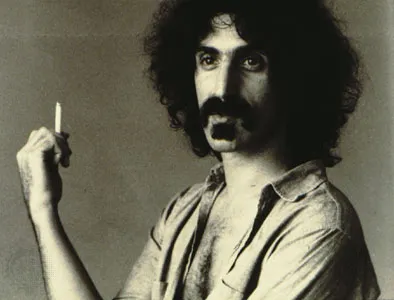
Frank Zappa stands as one of the most influential and complex figures in the history of modern music. Born on December 21, 1940, in Baltimore, Maryland, Zappa was much more than just a rock guitarist; he was a prolific composer, a daring experimenter, and an outspoken critic of societal norms. Over the course of his career, Zappa released more than 80 albums, spanning genres from rock to jazz, classical music to avant-garde, leaving a lasting impact on the world of music and beyond.
Early Life and Musical Beginnings
Frank Zappa was born into an Italian-American family with deep roots in Sicily. His father, Francis Zappa, was a chemist and mathematician, and his mother, Rose Marie, had a Sicilian heritage. This cultural background would later influence Zappa’s eclectic musical style. From a young age, Zappa exhibited a keen interest in music, albeit unconventional for a child. He was drawn to the avant-garde works of composers like Igor Stravinsky, Edgard Varèse, and Karlheinz Stockhausen, whose influences are evident in Zappa’s later compositions.
Zappa’s early experimentation with music began in his teenage years. He explored various instruments, but his primary focus was on percussion and guitar. Despite his lack of formal musical training, Zappa’s self-taught approach allowed him to develop a unique style that blended diverse influences, from classical and jazz to rhythm and blues. His early exposure to modernist composers laid the foundation for his lifelong pursuit of musical innovation.
The Birth of The Mothers of Invention and Early Success
In 1964, Frank Zappa joined a local rhythm and blues band called The Soul Giants. Soon after, he took over as the band’s leader, transforming it into The Mothers of Invention, a group that would become synonymous with Zappa’s pioneering approach to rock music. The band’s debut album, Freak Out!, released in 1966, was a groundbreaking double LP that fused rock with experimental sounds, satirical lyrics, and complex arrangements. Freak Out! was one of the first concept albums in rock history and set the stage for Zappa’s future work, which often defied categorization.
Freak Out! was followed by a series of albums that cemented Zappa’s reputation as a musical innovator. Albums like Absolutely Free (1967) and We’re Only in It for the Money (1968) continued to push the boundaries of rock music, incorporating elements of jazz, doo-wop, and classical music. These albums also showcased Zappa’s sharp wit and satirical take on American culture, politics, and the music industry. Despite their complexity, these works found a dedicated audience, and Zappa quickly established himself as a cult figure in the rock world.
Exploring New Musical Frontiers: Jazz, Classical, and Beyond
While Zappa is often remembered for his contributions to rock music, his work extended far beyond this genre. In 1969, Zappa released Hot Rats, an album that marked his first major foray into jazz fusion. Featuring extended instrumental tracks and virtuosic performances, Hot Rats was a critical and commercial success, and it remains one of Zappa’s most celebrated works. The album’s standout track, “Peaches en Regalia,” has since become a jazz standard.
Zappa’s interest in jazz continued throughout his career, as evidenced by albums like The Grand Wazoo (1972) and Waka/Jawaka (1972). However, his musical curiosity didn’t stop there. Zappa was also deeply involved in classical music, and he composed numerous orchestral and chamber works. His collaboration with French conductor Pierre Boulez in the 1980s, which resulted in the album The Perfect Stranger (1984), is a testament to his ability to bridge the gap between rock and classical music.
In addition to jazz and classical music, Zappa was a pioneer in electronic music. He was an early adopter of the Synclavier, a digital synthesizer that allowed him to compose and perform complex pieces that would have been impossible with traditional instruments. Zappa’s use of the Synclavier can be heard on albums like Jazz from Hell (1986), which won a Grammy Award for Best Rock Instrumental Performance.
Satire, Social Commentary, and Controversy
Frank Zappa was not just a musician; he was a social commentator and provocateur who used his music to critique societal norms and challenge authority. His lyrics often addressed controversial topics such as censorship, consumerism, and political corruption. Albums like Over-Nite Sensation (1973) and Apostrophe (’) (1974) featured songs that satirized American culture and mocked the hypocrisy of the establishment.
Zappa’s willingness to tackle sensitive issues head-on often brought him into conflict with the authorities. In the 1980s, he became a vocal opponent of the Parents Music Resource Center (PMRC), a group that advocated for the labeling of music with explicit content. Zappa testified before the United States Senate, defending free speech and artistic expression. His testimony was a defining moment in the debate over censorship in music and solidified his reputation as a defender of civil liberties.
Despite the controversy that surrounded much of his work, Zappa remained unapologetic and steadfast in his beliefs. He once famously said, “Art is making something out of nothing and selling it,” a statement that encapsulates his irreverent approach to both music and life.
Later Years: Expanding His Legacy
As the 1980s progressed, Zappa continued to push the boundaries of music and technology. He remained prolific, releasing a steady stream of albums, many of which featured live recordings and studio experiments. Zappa’s live performances were legendary for their complexity and improvisational nature, often featuring a rotating cast of highly skilled musicians.
One of Zappa’s most ambitious projects during this period was Civilization Phaze III (1994), an album that combined Synclavier compositions with live orchestral performances. The album was a continuation of themes explored in his earlier work Lumpy Gravy (1968) and was one of his final completed projects before his death.
In addition to his musical endeavors, Zappa was also involved in various other projects. He dabbled in filmmaking, directing and producing several films, including 200 Motels (1971), a surreal and experimental film that explored the life of a rock band on tour. Zappa also published an autobiography, The Real Frank Zappa Book (1989), which offered insights into his life, career, and views on the music industry.
Personal Life and Final Years
Frank Zappa’s personal life was as unconventional as his music. He married Gail Sloatman in 1967, and the couple had four children: Moon Unit, Dweezil, Ahmet, and Diva. All of Zappa’s children have followed in their father’s footsteps, pursuing careers in music and entertainment. Zappa’s family life was often the subject of media attention, particularly due to the unusual names he gave his children and his open disdain for conventional societal norms.
In 1991, Zappa was diagnosed with terminal prostate cancer. Despite his illness, he remained active in the studio, continuing to compose and record music. He also embarked on a series of live performances in Europe, which were some of his last public appearances. Zappa passed away on December 4, 1993, at the age of 52, leaving behind a vast and diverse body of work that continues to influence musicians and artists across genres.
Legacy and Cultural Impact
Frank Zappa’s influence on music and popular culture is immeasurable. His innovative approach to composition, his fearless exploration of different musical styles, and his sharp social commentary have left an indelible mark on the world of music. Zappa’s work has been cited as an influence by a wide range of artists, from rock bands like The Beatles and Led Zeppelin to composers like John Zorn and Steve Reich.
Zappa’s legacy also extends beyond music. He was a staunch advocate for free speech, artistic freedom, and the right to challenge authority. His activism, particularly in the fight against censorship, has inspired countless musicians and artists to speak out on social and political issues.
In the years since his death, Zappa’s music has continued to be celebrated and studied by fans and scholars alike. His albums are regularly reissued, and his influence can be heard in the work of contemporary musicians. In 1995, Zappa was posthumously inducted into the Rock and Roll Hall of Fame, and in 1997, he was awarded the Grammy Lifetime Achievement Award, cementing his status as one of the most important and innovative musicians of the 20th century.
Conclusion: The Enduring Genius of Frank Zappa
Frank Zappa was a true original, a musician who defied categorization and pushed the boundaries of what was possible in music. His vast and varied body of work spans genres, challenges conventions, and continues to inspire new generations of artists. Whether through his complex compositions, his biting satire, or his relentless pursuit of artistic freedom, Zappa remains a towering figure in the history of music.
As we look back on Zappa’s life and career, it’s clear that his influence will endure for generations to come. His fearless creativity, his refusal to conform, and his dedication to his craft make him not only a musical icon but also a symbol of artistic integrity and innovation. Frank Zappa may have left us too soon, but his music and his message continue to resonate, reminding us of the power of art to challenge, to provoke, and to inspire.


