
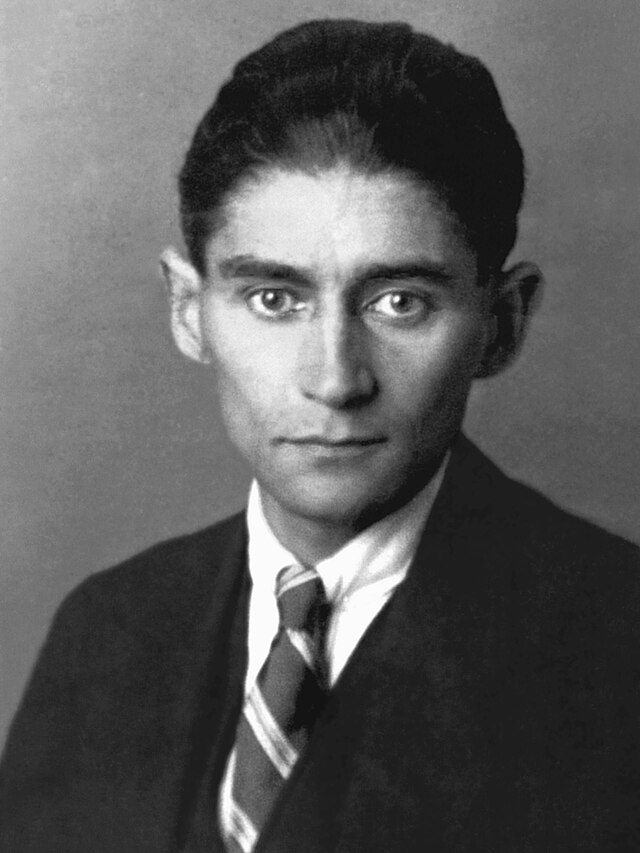
Franz Kafka, born on July 3, 1883, in Prague, then part of the Austro-Hungarian Empire and now the Czech Republic, is one of the most influential and enigmatic writers of the 20th century. Known for his profound and often unsettling literary works, Kafka’s life and legacy continue to captivate and intrigue readers and scholars around the world. This article delves into his life, achievements, and the broader impact of his work, providing a comprehensive look at the man behind the iconic stories.
Early Life and Family Background
Franz Kafka was born into a middle-class Jewish family. His father, Hermann Kafka, was a successful merchant, while his mother, Julie Kafka, came from a family of wealthy brewers. Kafka’s relationship with his father was notoriously strained, a fact that deeply influenced his work and personal life. This tumultuous relationship is poignantly explored in his famous “Letter to His Father,” where Kafka expresses the profound impact of his father’s authoritarian demeanor on his own psychological development.
Kafka was the eldest of six children, and his family dynamics were complex. His father’s domineering nature and the rigid expectations placed upon Kafka shaped much of his emotional and intellectual landscape. Despite these challenges, Kafka received a good education, attending German-speaking schools in Prague, which provided him with a foundation for his later literary achievements.
Education and Early Career
Kafka’s academic journey was marked by a sense of reluctance and disillusionment. In 1906, he earned a degree in law from the German University in Prague, a field he had little passion for but was pursued largely due to familial pressure. After graduating, Kafka worked in various positions, including a stint at an insurance company, which provided him with financial stability but little personal satisfaction.
During his professional career, Kafka struggled to reconcile his duties as a bureaucrat with his passion for writing. His job in the insurance industry, while providing a steady income, was often at odds with his literary aspirations. Despite the demands of his job, Kafka’s commitment to writing never waned. His literary works often reflect his existential concerns and his critique of bureaucratic systems, mirroring his own experiences in the workplace.
Major Works and Literary Achievements
Kafka’s literary output, though relatively small, has had a profound and lasting impact. His major works include “The Metamorphosis,” “The Trial,” and “The Castle,” each of which explores themes of alienation, guilt, and the struggle for meaning in an indifferent world.
“The Metamorphosis” (1915): Kafka’s most famous work, “The Metamorphosis,” tells the story of Gregor Samsa, a man who wakes up one morning to find himself transformed into a gigantic insect. The novella is a powerful exploration of identity, alienation, and family dynamics, reflecting Kafka’s own feelings of estrangement and inadequacy.
“The Trial” (published posthumously in 1925): This novel follows the story of Josef K., who is inexplicably arrested and prosecuted by an inaccessible and opaque legal system. The work delves into themes of authority, justice, and the absurdity of bureaucratic institutions, illustrating Kafka’s critique of the legal system and his existential anxieties.
“The Castle” (published posthumously in 1926): “The Castle” is a complex and unfinished novel that portrays the struggles of the protagonist, K., as he tries to gain access to a mysterious and elusive bureaucracy. The novel is often seen as a metaphor for the elusive nature of meaning and the challenges of navigating institutional power.
Kafka’s works are characterized by their surreal and often nightmarish quality, reflecting his own struggles with mental and physical health. His writing style, marked by its precision and emotional depth, has earned him a place among the greatest literary figures of the 20th century.
Personal Life and Relationships
Kafka’s personal life was marked by a series of complex and often troubled relationships. His romantic entanglements, including his relationships with Felice Bauer, Milena Jesenská, and Dora Diamant, were often fraught with difficulty and heartbreak. Kafka’s relationships were deeply influenced by his own insecurities and his struggles with his family and health.
Felice Bauer: Kafka’s relationship with Felice Bauer was marked by intense but ultimately unfulfilled passion. The couple was engaged twice but never married, and their relationship ended in 1914. Kafka’s correspondence with Bauer provides valuable insight into his personal life and creative process.
Milena Jesenská: Kafka’s relationship with Milena Jesenská, a writer and translator, was both emotionally intense and fraught with difficulties. Their correspondence, published posthumously, offers a glimpse into Kafka’s inner world and his struggles with his own sense of inadequacy.
Dora Diamant: Kafka’s relationship with Dora Diamant, who became his partner in the final years of his life, was marked by mutual support and affection. Diamant’s presence in Kafka’s life provided him with some measure of comfort and stability during his final years.
Health and Final Years
Kafka’s health was a major concern throughout his life. He was diagnosed with tuberculosis in 1917, a condition that worsened over time and significantly impacted his quality of life. Despite his declining health, Kafka continued to write and work until his final days.
In 1922, Kafka resigned from his job at the insurance company due to his deteriorating health. He spent the remaining years of his life in Prague, living with his family and seeking medical treatment. His health continued to decline, and he was eventually admitted to a sanatorium near Vienna, where he died on June 3, 1924, at the age of 40.
Kafka’s premature death was a significant loss to the literary world. Despite his relatively short life, his work has had a profound and enduring impact, influencing generations of writers and thinkers.
Legacy and Influence
Franz Kafka’s legacy is characterized by his profound influence on literature and his exploration of existential themes. His work has inspired a wide range of interpretations and has been studied extensively in the context of existentialism, surrealism, and modernism.
Kafka’s writing is often seen as a response to the social and political changes of his time, reflecting the anxieties and uncertainties of the early 20th century. His exploration of themes such as alienation, bureaucracy, and the search for meaning has resonated with readers across different cultures and generations.
Kafka’s influence extends beyond literature, impacting fields such as psychology, philosophy, and art. His work has been analyzed through various theoretical lenses, including psychoanalysis and existentialism, highlighting the depth and complexity of his writing.
Conclusion
Franz Kafka’s life and work continue to be a source of fascination and scholarly inquiry. His exploration of existential themes and his innovative narrative techniques have established him as one of the most important literary figures of the 20th century. Despite the challenges he faced in his personal life, Kafka’s contributions to literature remain profound and enduring.
For a more in-depth exploration of Franz Kafka’s life and work, visit Biography Online.


