
Introduction
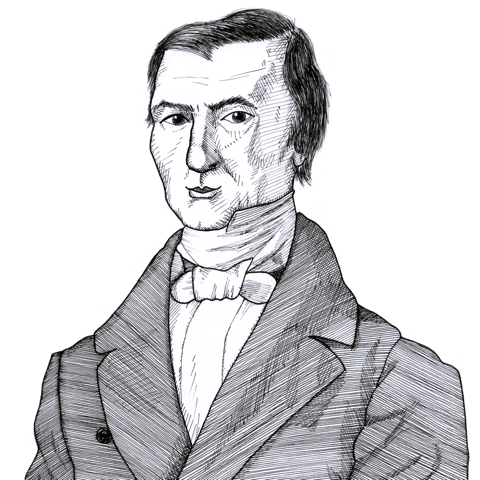
Frédéric Bastiat was a prominent 19th-century French economist, writer, philosopher, and politician, celebrated for his contributions to economic theory and liberal political philosophy. Born on June 30, 1801, in Bayonne, Aquitaine, Bastiat is best known for his advocacy of free trade, minimal government intervention, and individual liberties. This article explores Bastiat’s life, career, and enduring legacy, providing detailed insights into his influential works and the historical context that shaped his ideas.
Early Life and Education
Childhood and Family Background
Frédéric Bastiat was born into a family of merchants and landowners in Bayonne, a city in southwestern France. Tragically, he was orphaned at the age of nine and subsequently raised by his grandfather. This early loss had a profound impact on him, fostering a sense of independence and resilience that would characterize his later work.
Education and Early Influences
Bastiat’s formal education was cut short at the age of 16 when he left school to join the family business in agriculture and trade. This practical experience in commerce provided him with a firsthand understanding of economic principles and the importance of free markets. The economist Thomas DiLorenzo has noted that Bastiat’s business background significantly influenced his later economic theories.
Political and Economic Career
Early Political Engagement
Bastiat’s political career began in the 1830s when he became active in the liberal movements that swept through France. A staunch advocate for liberty, he participated in the 1830 Revolution and frequently ran for public office. His efforts paid off when he was elected as a deputy to the French National Assembly, where he served multiple terms.
Advocacy for Free Trade
One of Bastiat’s primary political goals was to promote free trade. He argued that unrestricted commerce between nations would lead to greater prosperity and peace. Bastiat believed that government intervention in the economy, through tariffs and protectionist policies, hindered economic growth and infringed on individual freedoms.
Key Political Positions
Throughout his political career, Bastiat championed several liberal causes. He advocated for reducing the size and expenditures of the state, expanding political rights to women, opposing colonial ventures, and supporting the right to form labor unions. His commitment to these principles often placed him at odds with the prevailing political establishment.
Major Works and Contributions
“Economic Sophisms”
Published in 1845, “Economic Sophisms” is perhaps Bastiat’s most famous work. This collection of essays critiques various economic fallacies and protectionist policies. The book is notable for its clear and accessible style, making complex economic concepts understandable to a broad audience.
One of the most well-known essays in the book is the satirical “Petition of the Candlemakers,” in which Bastiat mockingly suggests that the government should block out the sun to protect the candle industry from unfair competition. This essay illustrates the absurdity of protectionist logic and highlights the benefits of free competition.
“The Law”
In 1850, Bastiat published “The Law,” a seminal work that outlines his vision of a just legal system. He argues that the law’s primary function is to protect individual rights, specifically life, liberty, and property. Bastiat contends that any government action beyond this scope constitutes a violation of personal freedom and leads to what he terms “legal plunder.”
“What Is Seen and What Is Not Seen”
Also published in 1850, this essay introduces the concept of opportunity cost, which examines the unseen consequences of economic decisions. In his famous “Parable of the Broken Window,” Bastiat explains that while repairing a broken window stimulates spending, it also diverts resources from other productive uses, thus highlighting the hidden costs of such economic activities.
Philosophical and Economic Theories
Utilitarianism and Natural Rights
Bastiat’s philosophical approach combined elements of utilitarianism and natural rights theory. He believed that economic policies should promote the greatest happiness for the greatest number of people, while also respecting individuals’ inherent rights to life, liberty, and property. This dual focus set the foundation for his critique of government intervention and his advocacy for free markets.
Critique of Government Intervention
Bastiat was a vocal critic of government intervention in the economy. He argued that state actions, such as tariffs, subsidies, and regulations, often produced unintended negative consequences and hindered economic efficiency. Bastiat believed that individuals, acting in their own self-interest within a framework of free markets, could achieve better outcomes than any government planning.
Influence on Austrian Economics and Libertarianism
Bastiat’s ideas had a profound impact on later economic thought, particularly the Austrian School of Economics and the modern libertarian movement. His emphasis on individual liberty, free markets, and limited government resonated with thinkers like Ludwig von Mises, Friedrich Hayek, and Murray Rothbard. Bastiat’s work continues to inspire advocates of economic freedom and classical liberalism.
Later Life and Legacy
Final Years and Death
Bastiat’s career as an economist and politician was relatively brief but impactful. He began his work in earnest in 1844, and despite suffering from tuberculosis, he maintained a rigorous schedule of writing, speaking, and political engagement. Unfortunately, his illness worsened, and he passed away in Rome on December 24, 1850.
Enduring Impact
Frédéric Bastiat’s contributions to economic thought and political philosophy have endured long after his death. His clear articulation of economic principles and his passionate defense of liberty continue to influence scholars, policymakers, and advocates of free markets. Bastiat’s work remains a cornerstone of classical liberal thought and a testament to the enduring power of ideas.
Notable Works
Bastiat authored numerous essays and books, many of which remain relevant today. Some of his notable works include:
- “Economic Sophisms” (1845, 1848)
- “The Law” (1850)
- “What Is Seen and What Is Not Seen” (1850)
- “The State” (1848)
- “Property and Law” (1848)
- “Justice and Fraternity” (1848)
- “Economic Harmonies” (1850)
These works collectively offer a comprehensive view of Bastiat’s economic philosophy and his vision for a society based on individual freedom and voluntary cooperation.
Conclusion
Frédéric Bastiat’s life and work exemplify the power of ideas to shape economic and political thought. As an economist, writer, and politician, Bastiat championed the principles of free trade, limited government, and individual liberty. His clear and persuasive arguments against protectionism, government intervention, and legal plunder continue to resonate with those who advocate for economic freedom and classical liberalism.
Bastiat’s legacy is a testament to his intellectual rigor and his unwavering commitment to the principles of liberty. His writings remain a vital resource for understanding the foundational concepts of free-market economics and the philosophical underpinnings of a free society. As we navigate contemporary economic and political challenges, Bastiat’s insights offer valuable guidance and inspiration for building a more just and prosperous world.


