
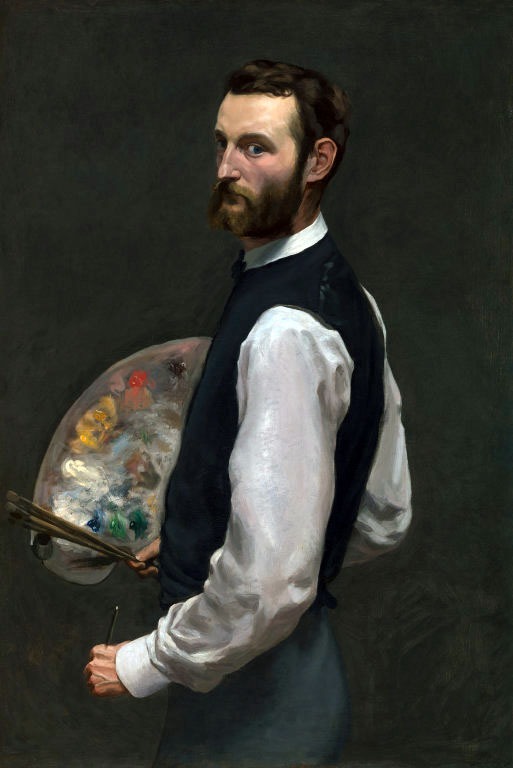
Frédéric Bazille, born Jean Frédéric Bazille on December 6, 1841, in Montpellier, France, is a pivotal figure in the history of French Impressionism. Despite his short life, Bazille’s contributions to the art world were significant and continue to be celebrated today. This article delves into Bazille’s life, his rise to fame, and the key highlights of his career, providing detailed insights and explanations while considering the nuances and historical context that shaped his work.
Early Life and Education
Born into a well-off Protestant family, Bazille’s early life was marked by privilege and opportunity. His parents, who valued education, supported his initial decision to study medicine. In 1862, Bazille moved to Paris to pursue his medical studies. However, his passion for painting soon eclipsed his medical ambitions, leading him to abandon his studies and dedicate himself entirely to art—a decision that did not sit well with his family.
Influenced by the works of Eugène Delacroix, Bazille enrolled in the studio of Charles Gleyre, a well-known Swiss painter. It was here that he met future Impressionist luminaries like Claude Monet, Pierre-Auguste Renoir, and Alfred Sisley. These friendships would prove crucial in Bazille’s development as an artist and his involvement in the burgeoning Impressionist movement.
The School of Batignolles
Bazille quickly became an integral part of the artist community in Paris. He set up his studio in the Batignolles district, which soon became a hub for young avant-garde artists. This group, often referred to as the “School of Batignolles,” included notable figures such as Édouard Manet, Edgar Degas, Camille Pissarro, Paul Cézanne, and Berthe Morisot.
This collective was instrumental in the development of Impressionism, a movement characterized by its emphasis on capturing light and natural scenes through loose brushwork and vibrant colors. Bazille’s studio served as a meeting place where these artists exchanged ideas and critiqued each other’s work, fostering a collaborative and innovative environment.
Artistic Style and Major Works
Bazille’s artistic style blended classical elements with emerging Impressionist techniques. His works often featured outdoor scenes and domestic interiors, characterized by a keen attention to light and color. Some of his most notable paintings include:
“La Robe Rose” (1864)
Painted during a stay at his family’s villa in Méric, “La Robe Rose” (The Pink Dress) exemplifies Bazille’s ability to harmonize classical composition with Impressionist light. The painting depicts a woman in a pink dress standing on a terrace, with sunlight filtering through the foliage, creating a play of light and shadow. This work is now housed in the Musée d’Orsay in Paris.
“Réunion de Famille” (1867)
This large-scale painting, also known as “The Family Reunion,” portrays Bazille’s family gathered at their estate in Montpellier. The composition is carefully balanced, with each family member rendered in meticulous detail. The painting’s light and color capture the relaxed atmosphere of the summer gathering. “Réunion de Famille” is also part of the Musée d’Orsay collection.
“L’Atelier de la Rue La Condamine” (1870)
In “The Studio on Rue La Condamine,” Bazille depicts his Paris studio, featuring fellow artists like Renoir and Manet. This painting is notable for its detailed representation of the studio space, including various artworks and materials scattered around. It provides a glimpse into the working environment of Bazille and his peers during the height of the Impressionist movement. This work is also displayed at the Musée d’Orsay.
Other significant works include “Porte de la Reine à Aigues-Mortes” (1867), which showcases Bazille’s skill in landscape painting, and “Scène d’été” (1869-1870), a vibrant depiction of a summer scene that exemplifies his mastery of color and light.
Personal Life and Relationships
Bazille’s personal life was intertwined with his professional one, as he maintained close relationships with many of his fellow artists. His friendships with Monet, Renoir, and Sisley were particularly influential, and they often painted together en plein air (outdoors), a hallmark of the Impressionist technique.
Despite his significant relationships with men, Bazille’s sexuality remains a topic of speculation. He never married, and his close bonds with male friends have led some to question his sexual orientation. However, during Bazille’s time, homosexuality was highly stigmatized and often repressed, especially among the upper classes to which Bazille’s family belonged.
The Franco-Prussian War and Bazille’s Death
The outbreak of the Franco-Prussian War in 1870 had a profound impact on Bazille’s life and career. The war disrupted plans for the first independent Impressionist exhibition, and Bazille, driven by a sense of duty, chose to enlist in the French army. Despite efforts by his friends to dissuade him, Bazille joined a regiment of Zouaves as a volunteer.
Tragically, Bazille was killed in action during the Battle of Beaune-la-Rolande on November 28, 1870, just a few days before his 29th birthday. His untimely death cut short a promising career, leaving behind a body of work that, while relatively small, had a lasting influence on the art world.
Posthumous Recognition and Legacy
Four years after Bazille’s death, the first Impressionist exhibition was held in 1874. Many of Bazille’s works were included, solidifying his posthumous recognition as a key figure in the movement. His paintings, characterized by their innovative use of light and color, continue to be celebrated for their contribution to the development of modern art.
Bazille’s legacy is preserved in major art institutions worldwide. The Musée d’Orsay in Paris houses several of his most important works, ensuring that his contributions to Impressionism are accessible to the public. Additionally, exhibitions dedicated to Bazille and his contemporaries regularly highlight his role in the movement’s history.
Historical Context and Influence
Frédéric Bazille’s work must be understood within the broader context of 19th-century French art and the emergence of Impressionism. During this period, artists were increasingly rejecting the formal constraints of academic painting, seeking instead to capture the immediacy of the natural world and the effects of light.
Bazille’s integration of classical compositional techniques with Impressionist innovation exemplifies the transitional nature of this period. His collaborative relationships with Monet, Renoir, and other artists highlight the importance of community and shared experimentation in the development of new artistic movements.
Bazille’s contributions to art extend beyond his own works; his support and camaraderie with fellow artists helped create an environment conducive to creative breakthroughs. His studio at Batignolles was more than a workplace; it was a crucible for the ideas that would define Impressionism and shape the course of modern art.
Conclusion
Frédéric Bazille’s life, though tragically brief, was marked by artistic innovation and profound influence on the Impressionist movement. From his early days in Montpellier to his integral role in the Paris art scene, Bazille consistently pushed the boundaries of traditional painting. His works, characterized by their mastery of light and color, continue to inspire and captivate audiences.
Bazille’s legacy is a testament to his talent and the collaborative spirit of the Impressionist movement. His contributions to art, both through his own paintings and his support of his peers, have left an indelible mark on the history of modern art. As we continue to explore and appreciate his work, Bazille’s place as a key figure in the evolution of Impressionism remains firmly established.


