
Introduction
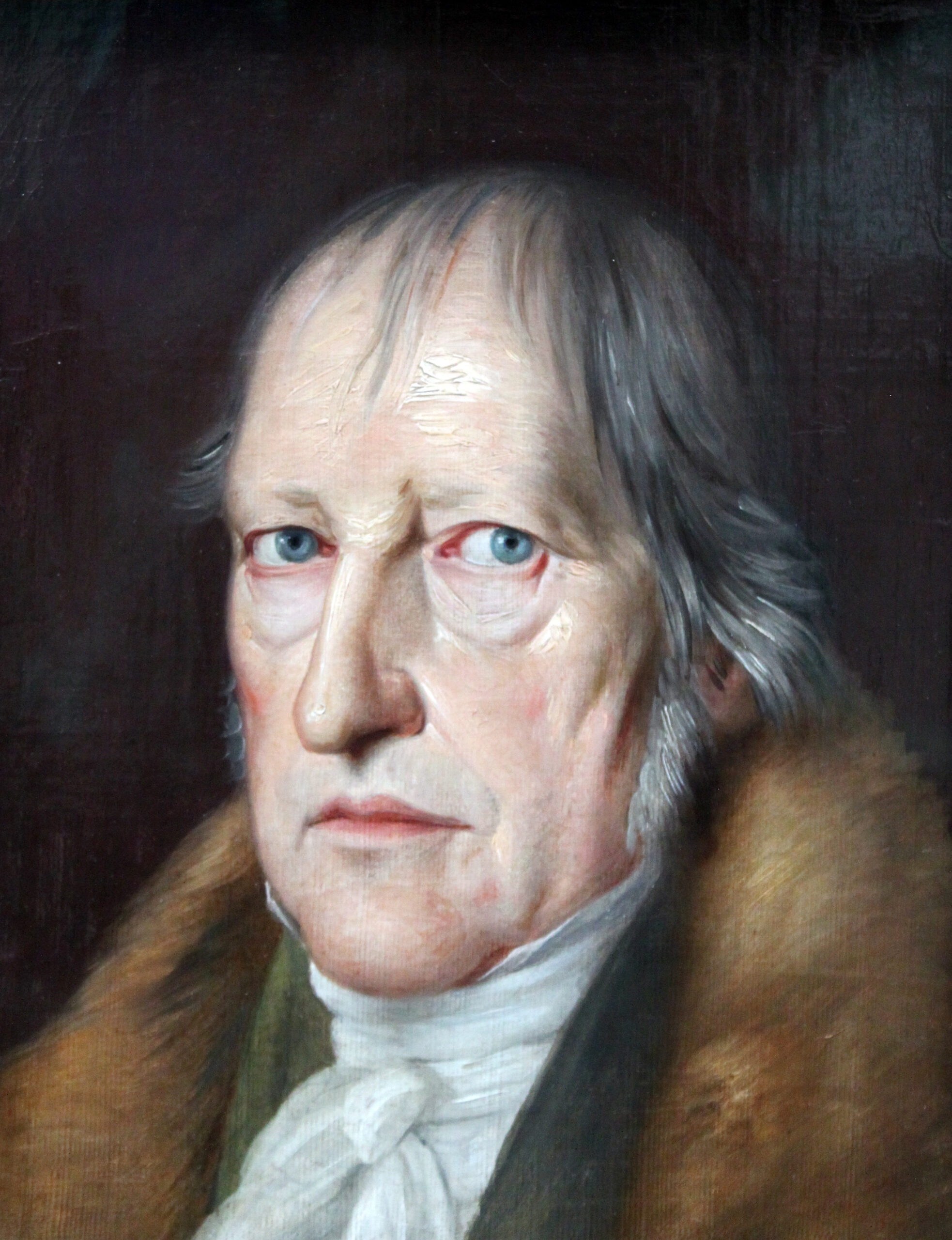
Friedrich Hegel, full name Georg Wilhelm Friedrich Hegel, stands as one of the most influential figures in Western philosophy. Born on August 27, 1770, in Stuttgart, the capital of the Duchy of Württemberg, Hegel’s contributions to philosophy have shaped not only the intellectual landscape of Germany but also the broader discourse in Europe and beyond. His philosophical system, known as Hegelianism, delves into complex ideas such as dialectics, the nature of reality, and the progression of history. This article explores Hegel’s life, fame, and key contributions to philosophy, providing a comprehensive overview of his life and the impact he had on intellectual thought.
Early Life and Education
Friedrich Hegel was born into a modest family. His father, Georg Ludwig Hegel, was a government official, while his mother, Maria Magdalena Fromm, hailed from a family of scholars. Hegel was the eldest of three children. His upbringing in Stuttgart provided him with access to a robust educational system. He attended the Realgymnasium, an institution that combined a humanistic and religious curriculum, reflecting the Lutheran orthodoxy of the time.
The early loss of his mother in 1784 due to an epidemic of dysentery marked a significant event in his young life. Hegel’s subsequent education at the University of Tübingen further molded his intellectual trajectory. Although he enrolled to study theology, his interest in philosophy gradually took precedence. During his time at the Stift, a theological seminary affiliated with the university, Hegel formed significant friendships with fellow students Friedrich Hölderlin and Friedrich Schelling, both of whom would also leave their mark on German philosophy.
Early Career and Intellectual Development
Hegel’s dissatisfaction with the rigid orthodoxy of his education led him to explore alternative philosophical ideas. In 1793, he completed his studies at Tübingen, obtaining the title of Kandidat, a qualification that allowed him to pursue a career in the church. However, Hegel chose a different path. He accepted a position as a private tutor in Bern, Switzerland, a role that provided him with ample time for reading and writing.
It was during this period that Hegel began to seriously engage with the works of Immanuel Kant. His early writings, such as the “Life of Jesus,” reflect his efforts to reconcile Kantian philosophy with religious thought. The years in Bern were also marked by the development of his ideas on the nature of Christianity and popular religion, as evidenced in his work “The Positivity of the Christian Religion.”
Move to Jena and Academic Success
The turning point in Hegel’s career came when he moved to Jena in 1801, thanks to the encouragement and support of his friend Schelling, who had secured a teaching position at the local university. Jena was a hotbed of intellectual activity, home to key figures in the Romantic movement and critical philosophy. Hegel published his first major work, “The Difference Between Fichte’s and Schelling’s System of Philosophy,” during this period, marking his entrance into academic life.
Hegel began teaching as a private lecturer at the University of Jena, where he attracted a small but dedicated group of students. His lectures covered a wide range of topics, from logic to metaphysics and the philosophy of nature. The intellectual environment of Jena, combined with his frequent interactions with Goethe and Schiller, fueled the development of his philosophical system.
The Phenomenology of Spirit and the Napoleonic Wars
In 1807, Hegel published what is perhaps his most famous work, the “Phenomenology of Spirit” (“Phänomenologie des Geistes”). This dense and challenging text explores the evolution of consciousness and the development of self-awareness through history. Hegel introduces the concept of the dialectic, a process in which contradictions within ideas or reality are resolved through their synthesis, leading to the progression of thought and history.
The publication of the “Phenomenology of Spirit” coincided with significant historical events. The Napoleonic Wars were reshaping Europe, and Hegel witnessed the Battle of Jena in 1806, an event that profoundly influenced his thinking about history and the state. Hegel saw Napoleon as a world-historical figure, embodying the spirit of the age and the rational progression of history.
Later Years and the Berlin Period
After the upheaval of the Napoleonic Wars, Hegel moved to Bamberg, where he briefly worked as a newspaper editor before accepting a teaching position in Nuremberg. In 1811, he married Marie von Tucher, with whom he had two sons. His time in Nuremberg was productive, culminating in the publication of the first volume of his “Science of Logic” (“Wissenschaft der Logik”) in 1812.
In 1816, Hegel was appointed to a professorship at the University of Heidelberg, but his most significant academic appointment came two years later when he accepted a position at the University of Berlin. Berlin, the intellectual heart of Prussia, offered Hegel a platform to further develop and disseminate his ideas. His lectures on the philosophy of history, the philosophy of right, and aesthetics attracted a wide audience and cemented his reputation as one of the leading philosophers of his time.
The Hegelian System and its Impact
Hegel’s philosophical system is vast and complex, encompassing logic, metaphysics, ethics, and political philosophy. At its core is the idea of the dialectic, a method of understanding the progression of ideas and history through contradictions and their resolutions. Hegel’s “Science of Logic” and “Encyclopedia of the Philosophical Sciences” outline his system in detail, providing a comprehensive framework for understanding reality, knowledge, and human existence.
Hegel’s influence extended beyond philosophy. His ideas on the state, civil society, and history shaped the development of political theory in the 19th century. His notion that history follows a rational progression, culminating in the realization of freedom, resonated with thinkers across Europe. Hegel’s emphasis on the role of the state as the embodiment of ethical life influenced the development of German nationalism and the later unification of Germany.
Hegel’s Legacy and Influence
Hegel’s death in 1831 from a cholera epidemic did not diminish his influence. In fact, the Hegelian school flourished after his death, dividing into various factions, including the Young Hegelians, who sought to radicalize his ideas, and the Right Hegelians, who emphasized the conservative aspects of his thought. Karl Marx, one of the most famous Young Hegelians, developed his own dialectical materialism as a critique and extension of Hegelian philosophy.
Hegel’s impact on subsequent philosophical thought cannot be overstated. His ideas influenced a wide range of thinkers, from existentialists like Jean-Paul Sartre to critical theorists of the Frankfurt School. In the 20th century, Hegel’s work was reinterpreted by philosophers such as Alexandre Kojève and Herbert Marcuse, who saw in Hegel’s dialectic a way to understand the complexities of modernity and the potential for human emancipation.
Conclusion
Friedrich Hegel remains a towering figure in the history of philosophy. His contributions to the understanding of history, reality, and the human condition continue to be studied and debated by scholars around the world. Hegel’s life, marked by intellectual rigor and a deep engagement with the philosophical and political issues of his time, offers valuable insights into the development of modern thought. As we continue to grapple with the challenges of the 21st century, Hegel’s ideas provide a framework for understanding the forces that shape our world and the possibilities for its transformation.


