
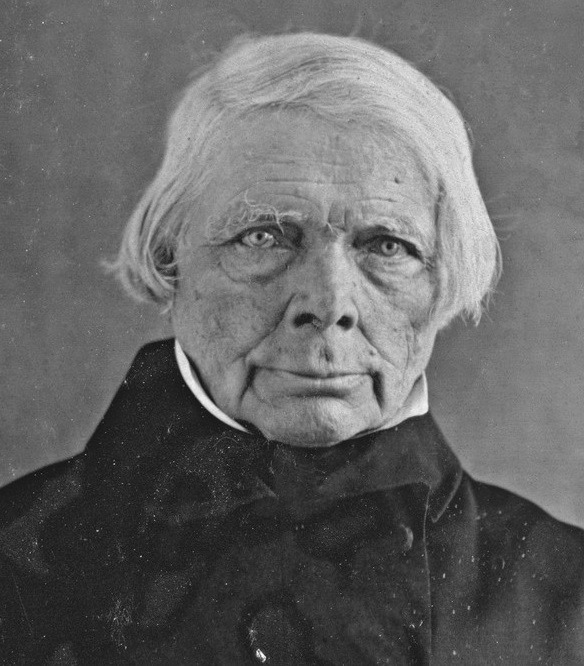
Friedrich Wilhelm Joseph von Schelling, a towering figure in the realm of philosophy, was born on January 27, 1775, in Leonberg, Germany. Schelling’s intellectual legacy is profound, as he is regarded as one of the principal architects of German Idealism, alongside contemporaries like Johann Gottlieb Fichte and Georg Wilhelm Friedrich Hegel. His work traversed various philosophical landscapes, influencing both his peers and successive generations of thinkers.
Early Life and Intellectual Precocity
Schelling’s journey into the intellectual world began early. Born to a learned Protestant pastor, young Friedrich displayed extraordinary intellectual abilities. By the age of eight, he had mastered the classical languages of Latin and Greek, a feat that set the tone for his future academic endeavors. By fifteen, Schelling was studying theology at the Tübinger Stift, a prestigious seminary in Tubingen, where he forged friendships with prominent figures like Friedrich Hölderlin and Hegel.
During his time at the seminary, Schelling was deeply influenced by the philosophical ideas of Fichte and Immanuel Kant. The French Revolution’s revolutionary fervor also reached the halls of the seminary, igniting a passion for revolutionary ideals in Schelling and his peers. This intellectual environment was crucial in shaping Schelling’s early philosophical development.
Academic Ascension and Early Works
After completing his theological studies, Schelling moved to Leipzig, where he worked as a tutor and delved into the study of natural sciences. During this period, he became associated with the Romantic movement, engaging with key figures like the brothers Wilhelm and Friedrich Schlegel, Johann Wolfgang von Goethe, Novalis, and Friedrich Schiller. Schelling’s early philosophical works were deeply influenced by this intellectual milieu, where Romanticism and Idealism intersected.
In 1798, Schelling secured a position at the University of Jena, largely thanks to Goethe’s recommendation. At Jena, he collaborated with Fichte, although their intellectual partnership soon gave way to disagreements. Schelling’s tenure at Jena was marked by significant philosophical contributions, including his works “Ideas for a Philosophy of Nature” (1797) and “On the Soul of the World” (1798). These texts laid the groundwork for his later development of a system that sought to integrate transcendental idealism with a philosophy of nature.
The Philosophy of Identity and the Absolute
Between 1803 and 1806, Schelling held a professorship at the University of Würzburg. During this time, he developed his philosophy of the Absolute, a central concept in his thought. Schelling’s Absolute was an undifferentiated identity that transcended the dichotomies of finite and infinite, matter and spirit, and the real and the ideal. He argued that art, through its synthesis of conscious and unconscious processes, was the only true medium through which the Absolute could be apprehended.
This period also saw the beginning of Schelling’s estrangement from Fichte and the emergence of his philosophical rivalry with Hegel. The latter’s “Phenomenology of Spirit,” published in 1807, critiqued Schelling’s system, marking a significant intellectual rift between the two former friends.
Personal Life and Philosophical Evolution
Schelling’s personal life was intertwined with his intellectual pursuits. In Jena, he married Caroline Schlegel, a significant intellectual figure in her own right. Caroline, who had separated from Wilhelm August von Schlegel, was a constant source of inspiration for Schelling until her death in 1809. Her passing deeply affected him and coincided with a shift in his philosophical outlook.
Following Caroline’s death, Schelling began to distance himself from the systematic philosophy he had previously espoused. He moved towards what he termed the “philosophy of freedom,” a system that emphasized the importance of individual freedom and the limitations of rationalism. This shift marked the beginning of what scholars refer to as the second phase of Schelling’s thought.
In 1812, Schelling remarried, this time to Paulina Gotter, with whom he had six children. He continued his academic career, teaching at the University of Erlangen from 1820 to 1826, before moving back to Munich, where he delivered his famous “Munich Lectures” on modern philosophy. Despite the rise of Hegelian philosophy, which overshadowed his own work, Schelling’s ideas continued to evolve, particularly through his engagement with mythological themes and the development of his “positive philosophy.”
Later Life and Legacy
In 1841, Schelling was invited to take up the chair of philosophy at the University of Berlin, a position previously held by Hegel. This move marked the final phase of Schelling’s career, during which he sought to articulate his “positive philosophy,” a system that stood in contrast to Hegelian Idealism. Schelling’s later work drew on mythology and sought to address the limitations of purely rationalist systems of thought. Although his lectures attracted few students, they had a profound impact on some of the era’s most influential thinkers, including Søren Kierkegaard, Friedrich Engels, and Mikhail Bakunin.
Schelling’s influence extended into the 20th century, with philosophers like Martin Heidegger recognizing the significance of his work. Heidegger, in particular, saw Schelling as a precursor to existentialist thought, highlighting his exploration of freedom, existence, and the limits of human understanding.
Friedrich Schelling’s Historical Context and Impact
Understanding Schelling’s contributions requires a consideration of the broader intellectual and historical context of his time. The late 18th and early 19th centuries were periods of significant upheaval in Europe, marked by the French Revolution, the rise of Romanticism, and the development of German Idealism. Schelling’s work was deeply influenced by these currents, and his philosophy can be seen as an attempt to reconcile the tensions between Enlightenment rationalism and Romanticism’s emphasis on emotion and individuality.
Schelling’s early work, particularly his philosophy of nature, was groundbreaking in its attempt to bridge the gap between the natural sciences and philosophy. By proposing that nature itself was a manifestation of the Absolute, Schelling offered a new way of understanding the relationship between mind and matter, one that would influence later developments in both philosophy and science.
His philosophy of identity and the Absolute represented a significant departure from the dualisms that had dominated much of Western thought. By positing an underlying unity behind the apparent oppositions of existence, Schelling laid the groundwork for a more holistic understanding of reality, one that would be taken up and expanded upon by later philosophers, including Hegel.
Despite the overshadowing influence of Hegel, Schelling’s work remained relevant throughout the 19th century, particularly through his influence on existentialist and later phenomenological thought. His exploration of the limitations of rationalism, the role of freedom in human existence, and the importance of mythology and art in understanding the Absolute provided a rich source of ideas for subsequent generations of thinkers.
Conclusion
Friedrich Schelling’s life and work are a testament to the complexity and depth of German Idealism. His philosophical journey, from his early collaborations with Fichte and Hegel to his later development of a unique system of thought, reflects the dynamic intellectual landscape of his time. Although often overshadowed by his contemporaries, Schelling’s contributions to philosophy are undeniable, and his ideas continue to resonate in contemporary philosophical discourse.
Schelling passed away on August 20, 1854, in Bad Ragaz, Switzerland, at the age of 79. His death marked the end of an era in German philosophy, but his legacy lives on through the continued study and appreciation of his work. As scholars continue to explore the nuances of his thought, Schelling’s place in the pantheon of great philosophers remains secure, a testament to his enduring influence on the development of Western philosophy.


