
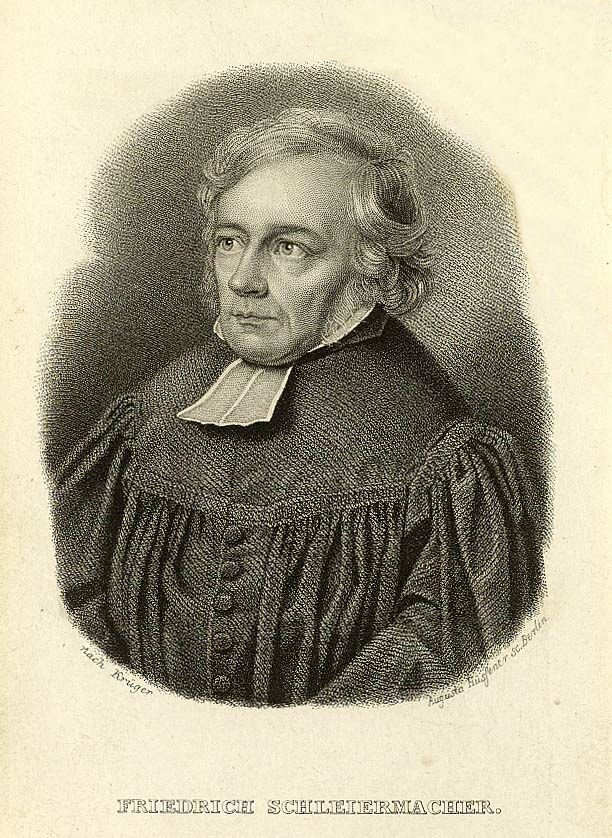
Friedrich Daniel Ernst Schleiermacher, born on November 21, 1768, in Breslau (now Wroclaw, Poland), is widely regarded as one of the most influential theologians and philosophers of the 19th century. His work laid the foundation for modern Protestant theology and played a significant role in shaping the intellectual landscape of his time. Schleiermacher’s life was marked by his deep engagement with religious thought, his embrace of Romanticism, and his innovative approach to theology, which continues to resonate in contemporary discussions. This article explores the life, achievements, and enduring impact of Friedrich Schleiermacher, providing a comprehensive view of his contributions to theology, philosophy, and the broader cultural context of his era.
Early Life and Education: The Formation of a Theologian
Friedrich Schleiermacher was born into a Protestant family, where his father served as a Calvinist pastor. This early exposure to religious life profoundly influenced Schleiermacher’s intellectual development. His formal education began at a seminary run by the Moravian Church, a Protestant group known for its pietistic emphasis on personal faith and communal living. The Moravian tradition, with its focus on a heartfelt, experiential Christianity, left a lasting imprint on Schleiermacher, even as he later moved beyond its doctrinal confines.
At the seminary, Schleiermacher was introduced to classical Greek and Latin literature, alongside rigorous religious instruction. However, he soon found the Moravian teachings too restrictive, particularly their reluctance to engage with contemporary intellectual trends. This dissatisfaction led Schleiermacher to leave the seminary and, much to his father’s dismay, enroll at the University of Halle in 1787.
University of Halle: Intellectual Awakening
The University of Halle was a major center of Enlightenment thought, and it was here that Schleiermacher’s intellectual horizons expanded dramatically. He immersed himself in the study of philosophy and theology, engaging deeply with the works of Aristotle, Plato, Immanuel Kant, Baruch Spinoza, and Friedrich Heinrich Jacobi. This period of study was pivotal, as it marked Schleiermacher’s shift towards a more critical and enlightened approach to religion, moving away from the strict pietism of his upbringing.
Schleiermacher’s exposure to Kant’s critical philosophy, in particular, had a profound impact on his thinking. Kant’s ideas about the limits of human reason and the role of moral autonomy resonated with Schleiermacher, who began to develop his own views on the nature of religion and its place in human life. By the time he completed his studies, Schleiermacher had laid the groundwork for what would become his lifelong project: reconciling the insights of Enlightenment philosophy with the deep, personal experience of faith.
Early Career and Pastoral Work
After completing his studies, Schleiermacher passed his theological exams with distinction and began his career as an educator and pastor. From 1790 to 1793, he served as a private tutor in the household of Count Heinrich Dohna-Schlobitten in East Prussia. This period allowed him to refine his ideas about education and the role of religion in shaping moral character.
In 1794, Schleiermacher took his final theological exams and was ordained as a pastor. His first assignment was in the small town of Landsberg, where he served for two years before being called to a more prominent position as a preacher at the Charité Hospital in Berlin in 1796. This move to Berlin marked a significant turning point in Schleiermacher’s life, as it brought him into contact with the vibrant intellectual and cultural life of the Prussian capital.
Berlin and the Birth of Romantic Theology
Berlin in the late 18th century was a hub of intellectual activity, and it was here that Schleiermacher found his place among the leading thinkers of the time. He became closely associated with the Romantic movement, which sought to challenge the rationalism of the Enlightenment by emphasizing emotion, individuality, and the sublime aspects of human experience. Schleiermacher’s engagement with Romanticism deeply influenced his theological work, leading him to develop a new approach to religion that prioritized personal experience over dogmatic adherence to doctrine.
In 1799, Schleiermacher published his seminal work, On Religion: Speeches to Its Cultured Despisers. This book was a response to the growing secularization of European society and the increasing skepticism towards religion among the educated classes. In it, Schleiermacher argued that religion is not primarily a matter of doctrine or ethics, but a deeply personal, intuitive experience of the infinite. He described religion as “the feeling of absolute dependence,” a direct and immediate awareness of one’s relationship with the divine. This idea became the cornerstone of what would later be known as “Romantic Theology.”
Philosophical and Theological Contributions
Schleiermacher’s work in Berlin was not limited to theology. He was also a prolific philosopher and translator. Between 1799 and 1800, he published several important works, including Monologues and Confidential Letters on Schlegel’s Lucinde, which explored the nature of individuality and the role of love in human life. He also began translating Plato’s dialogues into German, a project that would occupy him for many years and significantly influence his philosophical thought.
In 1803, Schleiermacher published Critique of Moral Theory, in which he examined the ethical implications of Kant’s philosophy. Although he admired Kant’s emphasis on moral autonomy, Schleiermacher was critical of what he saw as the overly formal and abstract nature of Kantian ethics. He argued for a more holistic approach to morality, one that took into account the emotional and relational aspects of human life.
Academic Career and the Napoleonic Wars
Schleiermacher’s growing reputation as a thinker and theologian led to his appointment as a professor of theology at the University of Halle in 1804. His return to his alma mater was initially successful, but the outbreak of the Napoleonic Wars soon disrupted his academic career. The French occupation of Halle in 1806 forced Schleiermacher to leave the city, and he returned to Berlin, where he would spend the rest of his life.
Back in Berlin, Schleiermacher became a key figure in the efforts to rebuild Prussian society after the devastation of the Napoleonic Wars. He played a central role in the founding of the University of Berlin in 1810, where he was appointed to the chair of theology. Schleiermacher’s vision for the new university was one that combined rigorous academic scholarship with a deep commitment to the moral and spiritual development of students. His influence on the intellectual life of Berlin during this period was immense, and he became one of the most respected and influential figures in Prussian society.
Theological Synthesis: The Christian Faith
In the final phase of his career, Schleiermacher focused on synthesizing his theological and philosophical ideas into a comprehensive system of thought. This work culminated in the publication of his magnum opus, The Christian Faith, between 1821 and 1822. In this book, Schleiermacher sought to reconcile the insights of modern philosophy with the core doctrines of Christianity, creating a theological framework that could withstand the challenges of the Enlightenment and Romanticism.
The Christian Faith is structured around the concept of “God-consciousness,” which Schleiermacher defined as the awareness of the divine that underlies all religious experience. He argued that this consciousness is universal, transcending specific religious traditions, and that the task of theology is to articulate this experience in a way that is meaningful for contemporary believers. Schleiermacher’s emphasis on experience and individual consciousness set the stage for many of the theological developments of the 19th and 20th centuries, influencing figures such as Søren Kierkegaard, Paul Tillich, and Karl Barth.
Legacy and Influence
Friedrich Schleiermacher’s impact on theology and philosophy is profound and enduring. His ideas about religion as a personal, experiential reality rather than a set of dogmatic beliefs challenged traditional Protestant orthodoxy and opened new avenues for theological exploration. Schleiermacher’s work laid the groundwork for the development of liberal theology, which emphasizes the importance of individual experience and reason in the interpretation of religious texts.
Schleiermacher’s influence extends beyond theology. His engagement with Romanticism and his emphasis on the importance of language, culture, and individuality have left a lasting mark on fields such as hermeneutics, ethics, and education. Prominent philosophers, including Wilhelm Dilthey, Hans-Georg Gadamer, and Paul Ricoeur, have drawn on Schleiermacher’s ideas in their own work, further extending his legacy into the modern era.
Conclusion
Friedrich Schleiermacher’s life and work represent a critical juncture in the history of theology and philosophy. His efforts to bridge the gap between faith and reason, tradition and modernity, have made him a central figure in the intellectual history of the West. Schleiermacher’s vision of religion as a deeply personal and experiential reality continues to resonate with scholars and believers alike, making his work as relevant today as it was in his own time.
As we continue to grapple with questions of faith, identity, and meaning in the modern world, Schleiermacher’s insights offer valuable guidance. His life reminds us of the importance of intellectual openness, the courage to question established norms, and the power of personal conviction in the pursuit of truth.


