
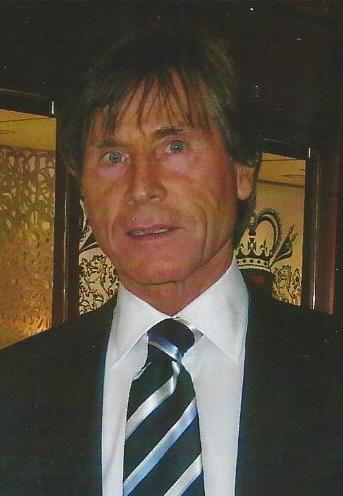
Gabriele Oriali, born on November 25, 1952, in Como, Italy, is a name synonymous with Italian football both as a celebrated midfielder and an influential football executive. His career, spanning from a promising young player to a key figure in football management, encapsulates the essence of Italian footballing excellence and the complexities of the sport’s administration. This article delves into Oriali’s journey, highlighting his achievements, controversies, and lasting impact on the sport.
Early Life and Football Beginnings
Gabriele Oriali’s early life was marked by a humble beginning. While working as a barber’s apprentice to earn extra money, he began his football journey playing as a right-back for the amateur team Cusano Milanino. His potential was evident early on, and by the age of thirteen, Oriali’s talent was recognized by the F.C. Internazionale Milano (Inter Milan), who signed him for 100,000 lire—a significant amount for a young player at the time.
Transitioning from defense to midfield, Oriali quickly adapted to his new role, showcasing his skills as a tenacious and strategic midfielder. His debut for Inter Milan came in the 1970/71 season under coach Giovanni Invernizzi, marking the beginning of a distinguished career with the club.
A Career with Inter Milan
Oriali’s tenure at Inter Milan was marked by both consistency and success. Throughout the 1970s, he became a key player for the team, contributing significantly to their domestic and European success. During his time with Inter, Oriali helped the club secure two Serie A titles in 1970/71 and 1979/80, as well as two Coppe Italia in 1978 and 1982.
Nicknamed “Piper” by the renowned sports journalist Gianni Brera, Oriali was known for his dynamic playing style, reminiscent of a pinball moving rapidly across the field. His ability to cover extensive ground and disrupt the opposition’s play made him a standout figure in Italian football during this period.
Triumph at the 1982 World Cup
The pinnacle of Oriali’s playing career came in 1982 when he was an integral part of the Italian national team that won the FIFA World Cup in Spain. His first call-up to the national team was on December 21, 1978, for a friendly against Spain. By the 1980 UEFA European Championship, Oriali had established himself as a key player, though Italy did not progress beyond fourth place.
The 1982 World Cup saw Oriali playing a crucial role in Italy’s triumph, showcasing his defensive prowess and midfield control. His contributions were pivotal in Italy’s success, and his performance earned him widespread recognition and cemented his legacy as one of Italy’s footballing greats.
Later Playing Career and Transition to Management
After the 1982 World Cup, Oriali continued his career with Inter Milan until 1984, before moving to Fiorentina. His time with Fiorentina was short-lived, and he retired from professional football in 1987, having scored 43 goals in 392 Serie A appearances.
Transitioning from player to football executive, Oriali began his new career as a director. He started as the General Director of Solbiatese, where he played a crucial role in promoting the team to Serie C2. His managerial skills were further honed as he took on the role of Sports Director for Bologna in 1994.
At Bologna, Oriali’s impact was immediate, overseeing significant player acquisitions and achieving promotions from Serie C1 to Serie B in 1995 and from Serie B to Serie A in 1996. His time at Bologna was marked by successful signings, including Carlo Nervo, Francesco Antonioli, and Michele Paramatti, which helped the club stabilize and thrive in Serie A.
Success with Parma and Return to Inter Milan
In 1997, Oriali moved to Parma, where he continued his successful career as a football executive. His time at Parma was highlighted by major achievements, including winning the UEFA Cup in 1999 and the Coppa Italia in 1999. His strategic acquisitions, such as Abel Balbo and Juan Sebastián Verón, were instrumental in Parma’s domestic and European success.
Oriali’s return to Inter Milan in 1999 marked a new chapter in his career. He served as an intermediary between the club’s management and the team and as a market consultant. During his second stint with Inter, Oriali played a crucial role in acquiring several high-profile players, including Luis Figo, Zlatan Ibrahimovic, and Samuel Eto’o. His efforts contributed to Inter Milan’s dominance in Italian football, including winning five consecutive Serie A titles from 2006 to 2010, a UEFA Champions League title in 2010, and numerous domestic cups.
The Passport Scandal and Its Aftermath
In 2001, Oriali’s career was marred by controversy when he was implicated in a passport scandal involving the illegal naturalization of Uruguayan player Álvaro Recoba. The scandal led to Oriali being banned for a year and fined, although he maintained his innocence throughout the proceedings. In 2006, Oriali faced further legal scrutiny, though a partial exoneration later cleared some of the charges against him.
Despite these controversies, Oriali’s contributions to football were significant, and his involvement in high-profile transfers and club management remained influential. He continued to play a role in football even as he faced legal challenges, demonstrating his resilience and commitment to the sport.
Later Career and Legacy
After leaving Inter Milan in 2010 due to differences with the club’s management, Oriali continued to contribute to football as a media commentator and analyst. He joined Premium Calcio as an opinionist and provided insights into Serie A and European competitions. In August 2014, Oriali was appointed team manager of the Italian national team by FIGC President Carlo Tavecchio, succeeding Gigi Riva. His role involved managing the national team’s logistics and operations, reflecting his ongoing influence in Italian football.
Oriali’s legacy is marked by his dual role as both a player and executive who significantly shaped Italian football. His contributions to Inter Milan, Parma, and the Italian national team demonstrate his profound impact on the sport. Despite facing controversies, Oriali’s achievements and role in football history remain noteworthy.
In summary, Gabriele Oriali’s journey from a young talent in Como to a revered football executive highlights a career filled with triumphs and challenges. His influence on Italian football, both on and off the pitch, has cemented his place as a significant figure in the sport’s history.


