
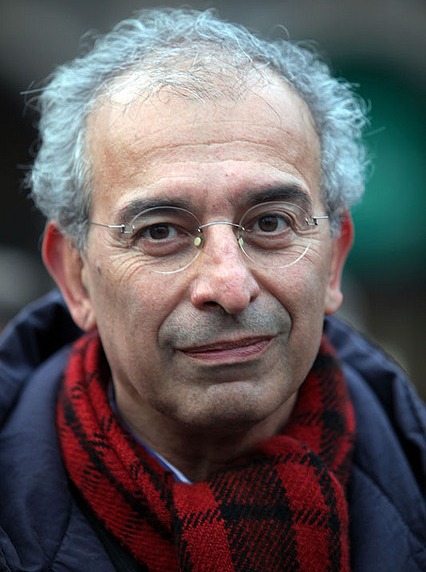
Gad Lerner is a prominent figure in the world of journalism and media, known for his incisive analysis, fearless commentary, and a career that spans several decades. Born on December 7, 1954, in Beirut, Lebanon, Lerner has become one of the most recognized and influential journalists in Italy. His journey from a young, passionate writer to a symbol of modern, investigative journalism reflects not only his personal determination but also the evolving landscape of media and communication in Europe. This article provides a detailed insight into Gad Lerner’s age, fame, and life highlights, offering a comprehensive understanding of the man behind the stories.
Early Life and Education
Gad Lerner was born into a Jewish family in Beirut, Lebanon, during a time of significant political and social upheaval in the Middle East. His parents, who had roots in Eastern Europe, later moved to Italy, where Lerner would grow up and begin his illustrious career. His early experiences in Lebanon and Italy exposed him to a diverse cultural and political landscape, which would deeply influence his perspective as a journalist.
Lerner’s academic journey began in Milan, where he pursued his education with a focus on humanities and social sciences. His early exposure to various cultural and political discourses shaped his understanding of the world and honed his skills in critical thinking and analysis. This foundation would later prove invaluable as he embarked on his career in journalism, where his ability to navigate complex issues and present them with clarity and depth became his hallmark.
The Beginnings of a Journalistic Career
Gad Lerner’s journalistic career began in 1976, when he joined the Italian daily newspaper Lotta Continua. This period marked a time of significant political activism in Italy, and Lotta Continua was at the forefront of leftist movements in the country. Lerner quickly rose through the ranks, becoming the deputy editor of the paper, a role that allowed him to shape the publication’s editorial direction and influence public discourse.
During his time at Lotta Continua, Lerner developed a reputation for his rigorous investigative journalism and his commitment to social justice. His work often focused on issues related to labor rights, political corruption, and social inequality—themes that would continue to define his career. After Lotta Continua ceased publication in 1979, Lerner’s career took him to various other media outlets, including Il Lavoro in Genoa and Radio Popolare, where he further established himself as a leading voice in Italian journalism.
Rising to Prominence: The 1980s and 1990s
The 1980s and 1990s were transformative years for Gad Lerner, as he transitioned from print journalism to television, a medium that would bring him into the homes of millions of Italians. In 1983, he joined the editorial staff of L’Espresso, one of Italy’s most respected news magazines, where he worked as an investigative reporter covering political and social issues. His in-depth reports and analysis earned him national recognition, and he became known for his fearless approach to journalism.
Lerner’s move to television came in the early 1990s, where he quickly became a household name. His television debut was marked by a series of innovative programs on RAI, Italy’s public broadcasting company. Shows like Passo Falso, Profondo Nord, and Milano, Italia showcased Lerner’s ability to combine rigorous journalism with a format that was both engaging and accessible to the general public. These programs were not only popular but also groundbreaking in their approach to political and social commentary.
Lerner’s style was direct and often confrontational, but always backed by thorough research and a deep understanding of the issues at hand. His ability to foster critical debate and challenge the status quo made him a polarizing figure, admired by many for his integrity and courage, but also criticized by those who found his approach too aggressive or biased.
The Infedele Years and Beyond
One of Gad Lerner’s most significant contributions to Italian journalism came with the launch of L’infedele, a current affairs program that aired on La7, an Italian television network, from 2002 to 2012. L’infedele quickly became a staple of Italian television, known for its in-depth discussions on politics, economics, and social issues. Lerner, as the host, brought together a diverse range of guests, from politicians and intellectuals to activists and ordinary citizens, creating a platform for debate and discussion on some of the most pressing issues facing Italy and the world.
The success of L’infedele was due in large part to Lerner’s ability to ask tough questions and hold his guests accountable. He was not afraid to challenge powerful figures, and his interviews often made headlines for their intensity and depth. The program’s title, which translates to “The Infidel,” was a reflection of Lerner’s willingness to question established norms and dogmas, whether in politics, religion, or society.
After the end of L’infedele in 2012, Lerner continued to make his mark on Italian journalism. He launched a new program called Zeta in 2013, also on La7, which focused on cultural and social issues. Although Zeta was short-lived, it further demonstrated Lerner’s versatility and his commitment to exploring different facets of contemporary life.
Challenges and Controversies
Like many prominent journalists, Gad Lerner has faced his share of challenges and controversies throughout his career. His outspoken views and willingness to tackle sensitive topics have often made him a target of criticism, both from the public and from political figures. In particular, his coverage of immigration, the rise of populism, and the role of the media in politics has sparked heated debates.
Lerner’s Jewish heritage has also been a point of contention in Italy, a country with a complex history of anti-Semitism. He has faced anti-Semitic attacks both online and in public, particularly from far-right groups. Despite this, Lerner has remained steadfast in his commitment to journalism, using his platform to speak out against hate and intolerance.
In 2015, Lerner left La Repubblica, one of Italy’s leading newspapers, after a decade of contributing as an editorial writer. He cited dissatisfaction with his compensation as the primary reason for his departure, highlighting the broader issues of pay equity and the challenges faced by journalists in a rapidly changing media landscape.
Recent Work and Ongoing Influence
Despite these challenges, Gad Lerner has continued to be a significant force in Italian media. In 2017, he returned to RAI, the public broadcaster, with a new program called Operai (Workers), which aired on Rai 3. The series, co-written with Laura Gnocchi, explored the world of labor in contemporary society, focusing on the struggles and challenges faced by workers in various industries. The program was well-received for its insightful and empathetic portrayal of the working class, a theme that has been central to Lerner’s work throughout his career.
In 2019, Lerner made another return, both to La Repubblica and to television, with the launch of L’approdo on Rai 3. L’approdo was a cultural and political program that delved into the major issues of the day, continuing Lerner’s tradition of fostering critical dialogue and informed debate. The show further cemented his status as one of Italy’s leading public intellectuals, respected for his depth of knowledge and his ability to engage with complex topics in a way that was accessible to a broad audience.
Legacy and Impact
Gad Lerner’s impact on Italian journalism and media is undeniable. Over the course of his career, he has consistently pushed the boundaries of what journalism can and should be, using his platform to challenge power, question assumptions, and advocate for social justice. His work has influenced not only how news is reported in Italy but also how audiences engage with the news, encouraging a more informed and critical public.
Lerner’s legacy is also reflected in the many young journalists he has inspired and mentored. His commitment to rigorous, ethical journalism has set a standard for others in the field, and his willingness to confront difficult issues head-on has made him a role model for those who believe in the power of the press to effect change.
As media continues to evolve in the digital age, Gad Lerner’s work serves as a reminder of the importance of independent journalism and the need for voices that are willing to speak truth to power. His career is a testament to the enduring relevance of journalism in shaping public discourse and holding those in power accountable.
Conclusion
Gad Lerner’s journey from a young journalist in Beirut to one of Italy’s most respected media figures is a story of perseverance, courage, and a deep commitment to the truth. His work has spanned decades, media platforms, and a wide range of issues, always with the same underlying goal: to inform, challenge, and inspire.
As we reflect on Gad Lerner’s life and career, it is clear that his contributions to journalism go beyond the stories he has reported or the programs he has hosted. He has helped shape the very fabric of Italian media, setting a high standard for what journalism can achieve. His legacy will continue to influence the field for years to come, reminding us all of the vital role that journalists play in our society.


