
Early Life and Education
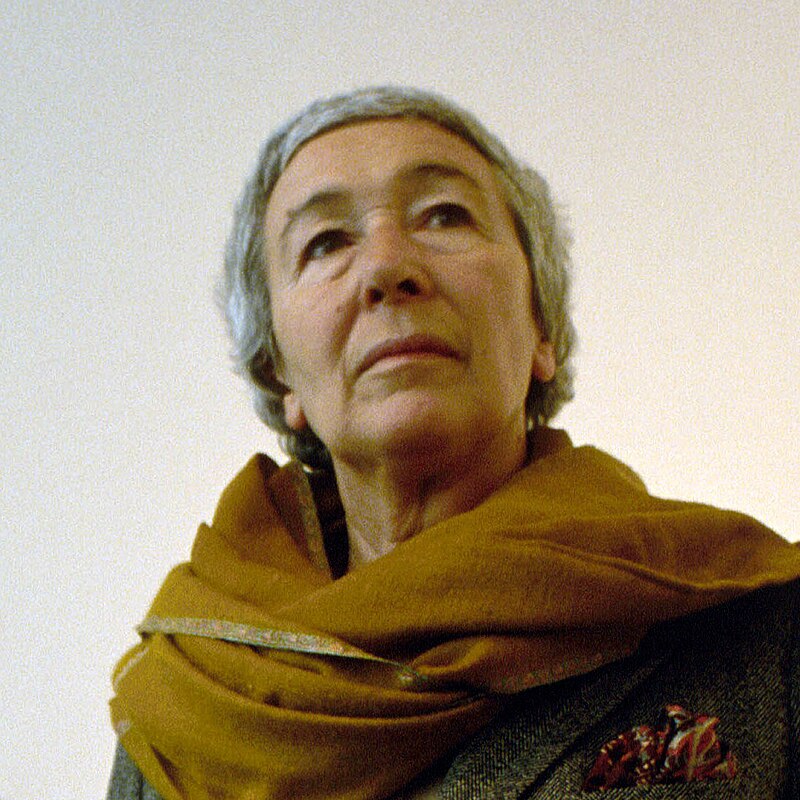
Gae Aulenti, born Gaetana Aulenti on December 4, 1927, in Palazzolo dello Stella, Italy, was a pioneering Italian architect and designer known for her significant contributions to architectural restoration and interior design. Her parents, Aldo Aulenti and Virginia Gioia, hailed from Puglia and Calabria, respectively. The name “Gae” is a diminutive of “Gaetana,” a name given to her by a formidable grandmother, as Aulenti herself recounted.
Aulenti graduated in 1953 with a degree in architecture from the prestigious Politecnico di Milano, where she also obtained her professional certification. Her education took place during a time when Italian architecture was striving to reclaim the architectural values lost in the past, resulting in the formation of the Neoliberty movement, of which Aulenti became a lifelong proponent.
Early Career and Influence
In 1955, Gae Aulenti joined the editorial staff of “Casabella-Continuità,” a prominent architecture magazine led by Ernesto Nathan Rogers. She remained with the publication until 1965. During this time, she also served as an assistant to renowned architects Giuseppe Samonà and Ernesto Nathan Rogers at the Istituto Universitario di Architettura in Venice and the Politecnico di Milano, respectively.
This period was pivotal in Aulenti’s career, as she was introduced to key figures in the field, including Renzo Piano, who was conducting research for Rogers. Her involvement with “Casabella-Continuità” and her academic roles helped her develop a robust understanding of architectural theory and practice, which would inform her future projects.
Iconic Designs and International Recognition
In 1965, Aulenti designed one of her most famous creations, the “Pipistrello” lamp, a table lamp originally conceived for the Olivetti showroom in Paris. This innovative design quickly became an iconic piece and established her reputation in the design world. She later designed another showroom for Olivetti in Buenos Aires, further enhancing her international profile.
Her collaboration with Olivetti led to a lifelong friendship with Gianni Agnelli, the head of Fiat, who entrusted her with the renovation of his apartment in Milan’s Brera district. This project marked the beginning of numerous collaborations and cemented her status as a leading figure in architecture and design.
Key Exhibitions and Projects
In 1972, Aulenti participated in the exhibition “Italy: The New Domestic Landscape” at the Museum of Modern Art (MoMA) in New York, curated by Emilio Ambasz. This exhibition showcased the works of emerging designers and architects, including Marco Zanuso, Richard Sapper, Joe Colombo, Ettore Sottsass, Gaetano Pesce, and the Archizoom, Superstudio, Gruppo Strum, and 9999 groups. Aulenti’s participation in this prestigious event highlighted her growing influence in the international design community.
Aulenti described her architectural philosophy as being in “close relation and interconnection with the existing urban environment,” seeking to transfer the multiplicity and intensity of urban elements into her architectural spaces.
Leadership and Teaching Roles
From 1974 to 1979, Aulenti served on the editorial board of “Lotus International,” a respected architecture journal. During this period, she collaborated with director Luca Ronconi on the Theatrical Design Workshop in Prato from 1976 to 1978. In 1979, she was appointed artistic director of Fontana Arte, a renowned Italian design company, where she had previously collaborated.
Throughout her career, Aulenti produced numerous lamps and furniture pieces that continue to be featured in interior design catalogs. Her designs are celebrated for their blend of functionality and aesthetic appeal.
Collaborations and Professional Relationships
Aulenti’s career was marked by collaborations with various prominent professionals, including Piero Castiglioni, Pierluigi Cerri, Daniela Puppa, and Franco Raggi. These collaborations enriched her work and expanded her influence in the design community.
She maintained a long romantic relationship with Carlo Ripa di Meana but eventually distanced herself due to what she termed the “deleterious Craxism,” referring to the political influence of Bettino Craxi.
Academic and Professional Accolades
In 1984, Aulenti was appointed a corresponding member of the Accademia Nazionale di San Luca in Rome. From 1995 to 1996, she served as president of the Accademia di Belle Arti di Brera. In 2005, she founded “Gae Aulenti Architetti Associati,” a firm dedicated to her architectural vision.
In 2002, she joined the cultural association “Libertà e Giustizia,” alongside notable figures such as Umberto Eco, Enzo Biagi, Guido Rossi, and Umberto Veronesi. This association focused on promoting freedom and justice in Italian society.
Later Years and Legacy
On October 16, 2012, just days before her death, Gae Aulenti received a lifetime achievement award from the Triennale di Milano. She passed away on October 31, 2012, at the age of 84, in Milan. In his official statement following her death, President Giorgio Napolitano described her as “a leading figure in the history of contemporary architecture, highly esteemed worldwide for her creative talent and particularly for her extraordinary ability to recover the cultural values of the historical heritage and urban environment.”
In December 2012, a circular plaza at the center of the Unicredit Tower complex in Milan’s modern Garibaldi area was named in her honor. This posthumous recognition highlights the lasting impact of her contributions to architecture and design.
Significant Architectural Works
Among Gae Aulenti’s most important works are the renovation of the Scuderie del Quirinale in Rome, the transformation of Palazzo Grassi in Venice (purchased by Fiat), and the redesign of Piazza Cadorna in Milan. She also designed iconic objects such as the “Sgarsul” rocking chair, which remains a celebrated piece in modern design.
Aulenti’s work in architectural restoration and museum design includes notable projects such as the Musée d’Orsay in Paris, where she converted a Beaux-Arts railway station into one of the world’s most famous art museums. Her approach to restoration emphasized the preservation of historical elements while integrating modern functionalities.
Conclusion
Gae Aulenti’s career spanned several decades and left an indelible mark on the fields of architecture and design. Her ability to blend historical preservation with contemporary design set her apart as a visionary architect. Her work continues to inspire architects and designers around the world, and her contributions to the cultural and urban landscape remain highly regarded.
Aulenti’s legacy is not only defined by her architectural achievements but also by her commitment to cultural and social causes. Her involvement in various cultural associations and her leadership roles in academic institutions reflect her dedication to advancing the field of architecture and promoting cultural heritage.
As an architect and designer, Gae Aulenti demonstrated an exceptional ability to create spaces that resonate with historical significance while embracing modernity. Her work is a testament to the enduring power of thoughtful and innovative design, making her a true luminary in the world of architecture.


