
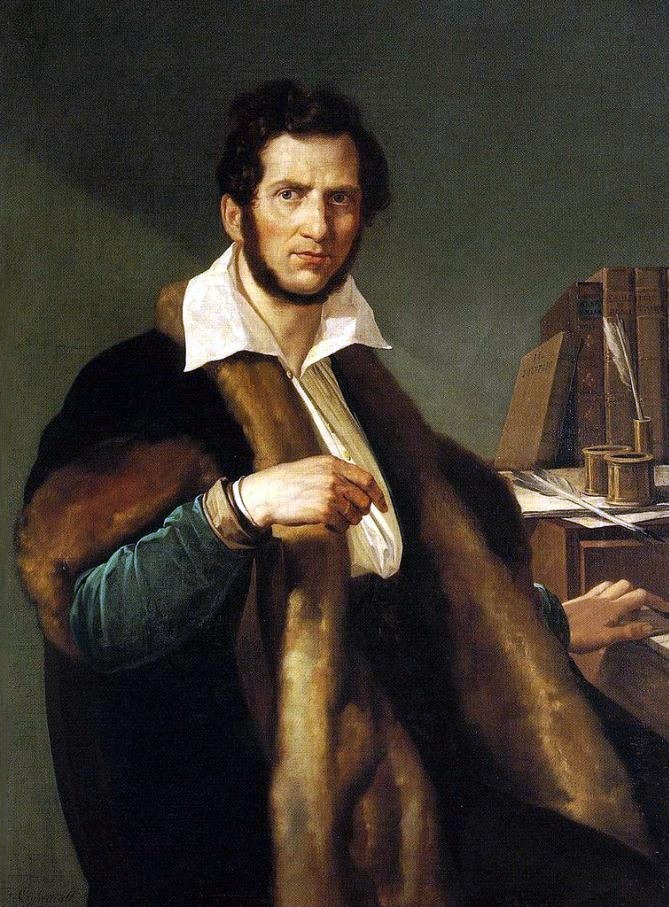
Gaetano Donizetti, a name synonymous with the golden age of Italian opera, remains one of the most prolific and influential composers of the 19th century. Born Domenico Gaetano Maria Donizetti on November 29, 1797, in Bergamo, Italy, his life and work encapsulate the essence of the Romantic era in music. Donizetti’s career is marked by an extraordinary output of operas, many of which are still performed today, and his ability to create deeply emotional, melodic, and dramatic compositions. His works have left an indelible mark on the world of opera, influencing generations of composers that followed.
Early Life and Musical Education
Gaetano Donizetti was born into a humble family as the fifth of six children. His early life was marked by financial hardships, but despite these challenges, he showed a remarkable aptitude for music from a young age. In 1806, at the age of nine, Donizetti was admitted to the “Lezioni Caritatevoli di Musica,” a charitable music school in Bergamo founded and directed by the German composer Simone Mayr. This institution was designed to prepare young boys for careers in church music, but for Donizetti, it was the start of something much greater.
Simone Mayr quickly recognized the young Donizetti’s talent and took a personal interest in his education. Mayr provided him with instruction in the fundamentals of music, including composition and the harpsichord. Under Mayr’s guidance, Donizetti began to flourish, showing not only technical skill but also a deep creative drive. By the age of 14, Donizetti had composed his first piece, “Il Piccolo compositore di Musica,” a short work created for a school performance. Mayr’s influence on Donizetti cannot be overstated; he not only nurtured the young composer’s talent but also provided him with the financial and emotional support needed to pursue a career in music.
Formative Years and Early Compositions
In 1815, under Mayr’s recommendation, Donizetti moved to Bologna to further his studies under the tutelage of Padre Stanislao Mattei, a renowned composer and teacher who had also instructed the great Gioachino Rossini. Donizetti studied counterpoint and composition with Mattei, receiving a rigorous education that equipped him with the skills necessary to succeed in the highly competitive world of opera. Although his relationship with Mattei was somewhat strained due to the teacher’s stern demeanor, the experience was invaluable in shaping Donizetti’s approach to composition.
Upon completing his studies, Donizetti returned to Bergamo in 1817. With Mayr’s continued support, he quickly secured a contract to compose four operas for the impresario Zancla. His first opera, “Enrico di Borgogna,” premiered in Venice in 1818, followed by “Il falegname di Livonia” in 1819. While these early works did not achieve widespread acclaim, they showcased Donizetti’s growing talent and his potential as a composer of opera.
Breakthrough and the Path to Fame
Donizetti’s breakthrough came in 1822 with the opera “Zoraida di Granata,” which premiered at the Teatro Argentina in Rome. This work marked the beginning of his rise to fame and established him as a significant figure in the Italian operatic scene. The success of “Zoraida di Granata” caught the attention of the influential impresario Domenico Barbaja, who was known for managing the careers of Rossini, Bellini, and other prominent composers of the time. Barbaja commissioned Donizetti to write a semiseria opera for the San Carlo Theatre in Naples, leading to the creation of “La Zingara” later that year. The opera was well received and solidified Donizetti’s reputation as a rising star.
Over the next decade, Donizetti’s career blossomed. He composed prolifically, often completing several operas within a single year. Unlike his contemporaries Rossini and Bellini, who were known for their meticulous and measured approach to composition, Donizetti worked at a frenetic pace. This “poetica della fretta” or “poetics of haste” became a defining characteristic of his career. While this rapid production sometimes led to accusations of carelessness and repetitiveness, Donizetti’s works generally maintained a high standard of quality, showcasing his extraordinary talent and adaptability.
The Golden Years: Masterpieces and International Success
The 1830s were the most productive and successful period of Donizetti’s career. In 1830, he achieved his first major triumph with “Anna Bolena,” an opera that tells the tragic story of Anne Boleyn, the second wife of King Henry VIII. The opera was a critical and commercial success, premiering at the Teatro Carcano in Milan and later being performed in Paris and London. The success of “Anna Bolena” marked the beginning of Donizetti’s international career and established him as one of the leading composers of his time.
Following “Anna Bolena,” Donizetti continued to produce operas at an astonishing rate. In 1832, he composed “L’elisir d’amore,” a comic opera that remains one of his most beloved works. Written in less than a month, the opera premiered at the Teatro della Canobbiana in Milan and was an immediate hit. The charming story of love and magic, combined with Donizetti’s lyrical melodies, ensured the opera’s enduring popularity. Today, “L’elisir d’amore” is one of the most frequently performed operas in the world, beloved for its humor, romance, and unforgettable music.
Another significant work from this period is “Lucrezia Borgia,” which premiered at La Scala in 1833. Based on the controversial life of the historical figure Lucrezia Borgia, the opera was praised for its dramatic intensity and complex characters. Despite its initial success, the opera faced challenges due to censorship, a common issue in Donizetti’s time. Nevertheless, “Lucrezia Borgia” remains a powerful example of Donizetti’s ability to blend historical drama with poignant music.
In 1835, Donizetti reached new heights with “Lucia di Lammermoor,” arguably his most famous opera. Based on Sir Walter Scott’s novel “The Bride of Lammermoor,” the opera is a quintessential example of Romantic opera, with its themes of love, madness, and tragedy. The famous “mad scene” in “Lucia di Lammermoor” is one of the most iconic moments in opera, showcasing Donizetti’s mastery of dramatic composition and his ability to express intense emotion through music. The opera’s success further cemented Donizetti’s status as one of the great composers of his time, and it continues to be a staple of the operatic repertoire.
Challenges and Triumphs in Later Years
Despite his incredible success, Donizetti’s later years were marked by personal tragedy and professional challenges. The deaths of his parents, a daughter, and his beloved wife, Virginia Vasselli, in quick succession during the mid-1830s had a profound impact on him. These losses, coupled with the increasingly demanding pace of his career, took a toll on Donizetti’s health and well-being.
In 1838, Donizetti moved to Paris, attracted by the city’s vibrant musical scene and the promise of lucrative commissions. During this time, he composed several operas for the Parisian stage, including “La Fille du Régiment” (1840) and “Don Pasquale” (1843). Both operas were well received, with “La Fille du Régiment” becoming particularly popular in France and later worldwide. “Don Pasquale,” a comic opera, is considered one of Donizetti’s masterpieces, praised for its wit, lively characters, and sophisticated orchestration.
While in Paris, Donizetti also faced professional challenges. He was often at odds with the strict censorship laws that governed opera production in France, and he struggled with the pressures of maintaining his prolific output. Nevertheless, he continued to compose, driven by both financial necessity and a relentless creative spirit.
Decline and Legacy
Tragically, Donizetti’s final years were overshadowed by illness. In the early 1840s, he began to exhibit symptoms of syphilis, a disease that would ultimately lead to his mental and physical decline. By 1845, Donizetti’s condition had worsened to the point where he could no longer compose. His behavior became erratic, and he suffered from memory loss and paralysis, symptoms of the late stages of syphilis.
In 1846, Donizetti was admitted to a sanatorium near Paris, where he spent the last years of his life. His nephew eventually arranged for him to be brought back to Bergamo in October 1847, where he was cared for by friends until his death on April 8, 1848, at the age of 50.
Despite his tragic end, Donizetti’s legacy as one of the greatest opera composers endures. He left behind a remarkable body of work, including around 70 operas, as well as numerous cantatas, symphonies, chamber music, and sacred works. His operas, particularly “Lucia di Lammermoor,” “L’elisir d’amore,” and “Don Pasquale,” continue to be celebrated and performed by opera companies around the world.
Donizetti’s influence on the development of Italian opera was profound. He was a key figure in the transition from the Classical style of the 18th century to the more expressive and dramatic Romantic style that would dominate the 19th century. His ability to combine beautiful melodies with powerful emotions and compelling narratives set a new standard for opera and paved the way for future composers like Giuseppe Verdi.
Conclusion
Gaetano Donizetti’s life was one of extraordinary creativity, marked by both immense achievements and profound personal tragedies. His ability to produce works of lasting beauty and emotional depth, often under intense pressure and in the face of great adversity, is a testament to his genius. Today, his music continues to resonate with audiences, reminding us of the timeless power of opera to move and inspire. Donizetti’s contribution to the world of music is immeasurable, and his legacy as a master of Italian opera remains secure.


