
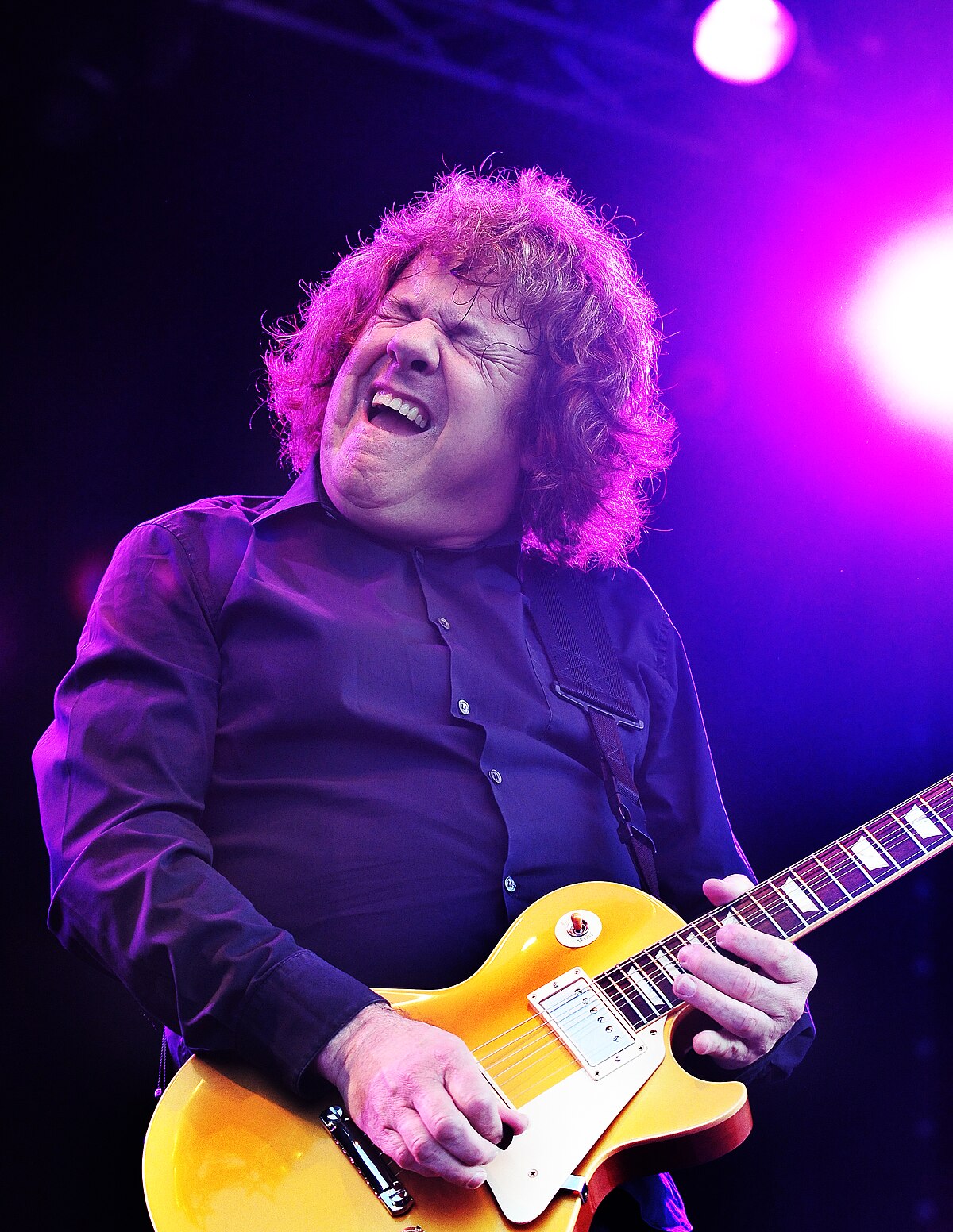
Gary Moore, born Robert William Gary Moore on April 4, 1952, in Belfast, Northern Ireland, was a legendary figure in the world of music, known for his exceptional guitar skills and his ability to seamlessly blend different genres. From his early days in Belfast to his rise as a global rock and blues icon, Moore’s life was marked by his relentless pursuit of musical excellence. This article explores the life, career, and legacy of Gary Moore, providing detailed insights into his journey, his influence on the music industry, and his enduring fame.
Early Life and Musical Beginnings
Gary Moore’s passion for music was evident from a young age. His father, who was involved in organizing concerts, recognized his son’s interest in music and gifted him an acoustic guitar when Gary was just eight years old. Despite being left-handed, Moore learned to play the guitar right-handed, which was the first indication of his determination and adaptability—traits that would define his career.
Growing up in Belfast during the 1960s, Moore was heavily influenced by the burgeoning rock and roll scene. He was particularly captivated by the music of The Beatles and Elvis Presley, whose songs fueled his desire to pursue a career in music. By the age of 14, Moore had saved enough money to buy his first electric guitar, marking the beginning of his lifelong journey with the instrument.
At 16, Moore made a pivotal decision to move from Belfast to Dublin, where he joined the band Skid Row. The band, which played a blend of rock and blues, quickly gained recognition in the Irish music scene. During this time, Moore developed a close friendship with Phil Lynott, the lead singer of the band Thin Lizzy. This friendship would later prove to be instrumental in Moore’s career, as the two collaborated on several projects over the years.
The Rise of Skid Row and Gary Moore’s Early Career
Skid Row’s rise to fame in the late 1960s and early 1970s was swift. The band opened for several major acts, including Fleetwood Mac, whose leader, Peter Green, became a significant influence on Moore. Green’s mentorship and guidance helped Moore secure a contract with CBS Records, which marked the beginning of his professional recording career.
One of the most significant moments in Moore’s early career came when Peter Green sold him his 1959 Gibson Les Paul guitar—a transaction that would become legendary in the music world. Moore’s deep admiration for Green was evident throughout his life, culminating in the release of the album “Blues for Greeny” in 1995, which was dedicated entirely to Green’s music.
In 1973, Moore released his first solo album, “Grinding Stone,” which showcased his versatility as a musician. The album featured a mix of progressive rock, experimental sounds, and jazz influences, reflecting Moore’s desire to explore different musical genres. While the album did not achieve significant commercial success, it established Moore as a serious and innovative artist.
The Thin Lizzy Years and the Pursuit of a Solo Career
Gary Moore’s association with Thin Lizzy, one of the most iconic rock bands of the 1970s, was a defining period in his career. Although his tenure with the band was brief, it was highly impactful. Moore first joined Thin Lizzy in 1974 as a temporary replacement for guitarist Eric Bell, but he left the band shortly thereafter. However, his association with Phil Lynott remained strong, and Moore returned to collaborate with Thin Lizzy on several occasions.
One of Moore’s most famous collaborations with Thin Lizzy was the 1979 album “Black Rose: A Rock Legend,” which featured the hit single “Parisienne Walkways.” The song became one of Moore’s signature tracks, showcasing his exceptional guitar skills and his ability to evoke deep emotions through his music. “Parisienne Walkways” remains a classic in the rock and blues canon, and it solidified Moore’s reputation as one of the leading guitarists of his generation.
After his time with Thin Lizzy, Moore focused on his solo career, exploring a wide range of musical styles. The 1980s were a particularly prolific period for Moore, as he released several albums that demonstrated his versatility. Albums like “Run for Cover” (1985) and “Wild Frontier” (1987) featured a mix of rock, heavy metal, and pop-metal influences. These albums were commercially successful and helped to expand Moore’s fanbase beyond the blues and rock audiences.
Gary Moore’s Blues Renaissance
While Gary Moore had dabbled in various genres throughout his career, it was his return to blues music in the early 1990s that truly defined his legacy. The release of the album “Still Got the Blues” in 1990 marked a significant turning point in Moore’s career. The album, which included collaborations with blues legends like Albert King and B.B. King, was a commercial and critical success, earning Moore widespread acclaim for his passionate and soulful approach to the blues.
The title track, “Still Got the Blues (For You),” became one of Moore’s most iconic songs, resonating with audiences worldwide. The album’s success revitalized Moore’s career, leading to a series of blues-focused albums in the 1990s, including “After Hours” (1992) and “Blues for Greeny” (1995). These albums solidified Moore’s status as a blues virtuoso, and they remain some of the most celebrated works in his discography.
Moore’s blues renaissance was not just a return to his roots but also a reflection of his deep respect for the genre’s history and its legendary figures. His collaborations with blues icons and his ability to infuse traditional blues with his unique style helped to introduce the genre to new audiences and to preserve its legacy for future generations.
Collaborations and Musical Influence
Throughout his career, Gary Moore collaborated with some of the most influential musicians in the rock and blues genres. His ability to adapt to different musical styles made him a sought-after collaborator. Moore worked with a diverse array of artists, including Thin Lizzy, Jack Bruce and Ginger Baker of Cream, Greg Lake, Cozy Powell, George Harrison, Ozzy Osbourne, and B.B. King.
These collaborations not only showcased Moore’s versatility but also highlighted his ability to seamlessly integrate his guitar work into different musical contexts. Whether playing hard rock, heavy metal, or blues, Moore’s guitar always stood out for its expressiveness, technical precision, and emotional depth.
Moore’s influence extended beyond his collaborations, as his music inspired a new generation of guitarists. Artists like Randy Rhoads, John Sykes, and Kirk Hammett of Metallica have all cited Moore as a significant influence on their playing. Moore’s ability to combine technical proficiency with emotional expression made him a role model for guitarists across genres.
Later Years and Legacy
Gary Moore continued to release music and tour extensively throughout the 2000s, maintaining a loyal fanbase and earning new admirers along the way. His final studio album, “Bad for You Baby,” was released in 2008, and it showcased Moore’s continued dedication to the blues. The album was well-received by critics and fans alike, further cementing Moore’s reputation as a master of the genre.
Tragically, Gary Moore’s life was cut short when he passed away on February 6, 2011, at the age of 58 while on vacation in Estepona, Spain. His sudden death shocked the music world, and tributes poured in from fans and fellow musicians who recognized the profound impact Moore had on the industry.
Moore’s legacy lives on through his music, which continues to inspire guitarists and music lovers around the world. His ability to bridge the gap between rock and blues, his innovative approach to guitar playing, and his unwavering commitment to his craft have left an indelible mark on the music industry.
Conclusion: The Enduring Impact of Gary Moore
Gary Moore was more than just a guitarist; he was a musical pioneer who pushed the boundaries of what the guitar could do. His ability to blend different genres, his technical brilliance, and his emotional depth made him one of the most respected and influential musicians of his time.
From his early days in Belfast to his rise as a global rock and blues icon, Moore’s life was a testament to his passion for music and his relentless pursuit of excellence. His collaborations with legendary musicians, his impact on the next generation of guitarists, and his contributions to the blues genre have ensured that his legacy will endure for years to come.
Gary Moore’s music continues to resonate with audiences, reminding us of the power of the guitar and the timeless appeal of the blues. As we look back on his life and career, it is clear that Moore’s influence will continue to be felt in the music world for generations to come.


